

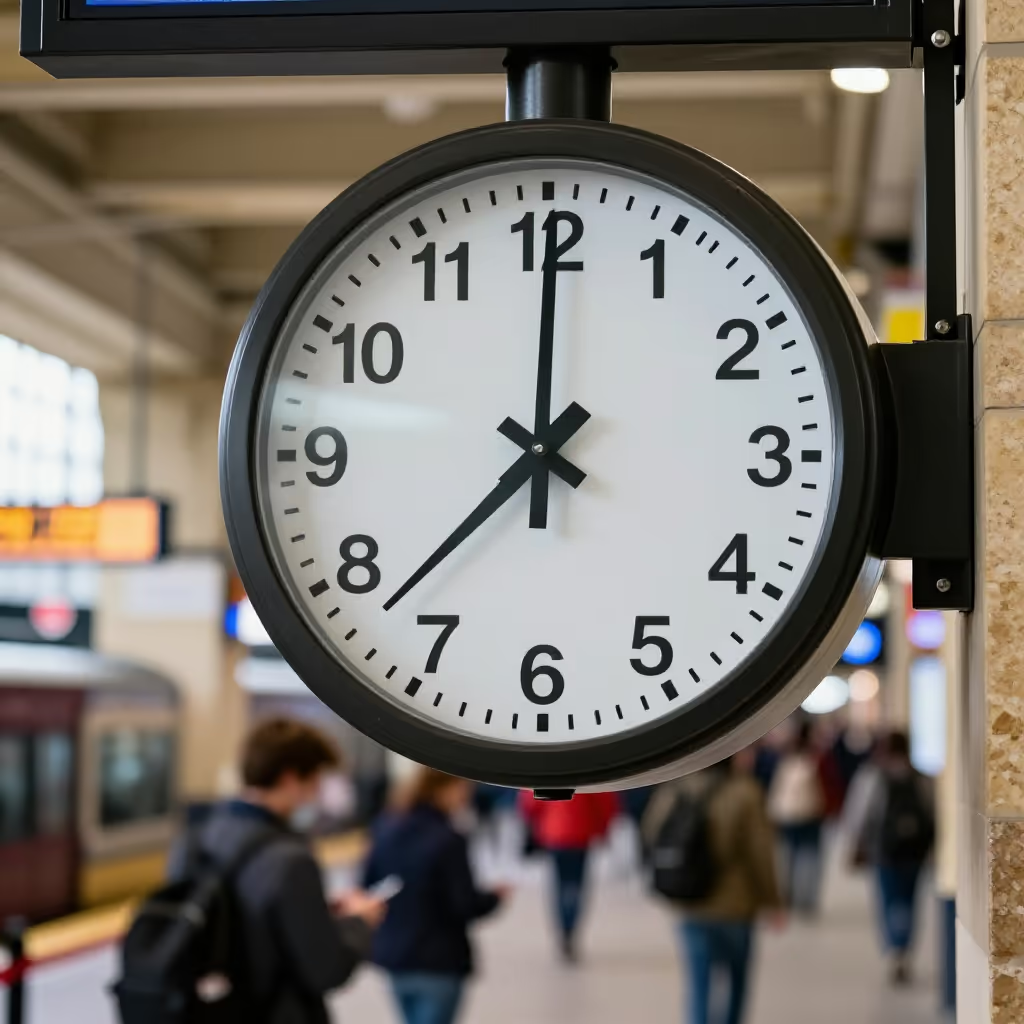
die Uhrzeit
time
The exact time of day shown by a clock, usually in hours, minutes, and seconds.
EXAMPLE
Können Sie mir bitte die genaue Uhrzeit sagen?
Could you please tell me the exact time?
time
Loading your saved state.
time
The exact time of day shown by a clock, usually in hours, minutes, and seconds.
Können Sie mir bitte die genaue Uhrzeit sagen?
Could you please tell me the exact time?
'Die Uhrzeit' is made up of 'die Uhr' (the clock/watch) and 'die Zeit' (the time). So it literally refers to the 'time from the clock' and always means a specific time of day.
Die digitale Anzeige zeigt die Uhrzeit auf die Sekunde genau.
The digital display shows the time down to the second.
Although the word 'Uhrzeit' exists, in everyday language people usually ask 'Wie spät ist es?' (What time is it?). The more formal question is 'Können Sie mir die Uhrzeit sagen?' (Can you tell me the time?).
Entschuldigung, wissen Sie zufällig, wie spät es ist?
Excuse me, do you happen to know what time it is?
To state a time at which something takes place, you use the preposition 'um' (at). To the question 'Wann beginnt der Film?' (When does the film start?), you answer 'Um 20 Uhr' (At 8 p.m.).
Der Termin ist morgen um 10:30 Uhr.
The appointment is tomorrow at 10:30.
time
Zeit can refer to a point in time determined by a clock, but it is the broader word. Uhrzeit explicitly means the exact reading in hours and minutes. When a specific clock reading is meant, Uhrzeit is therefore clearer and usually more appropriate.

Welche Uhrzeit zeigt die Bahnhofsuhr genau an?
What exact time does the station clock show?
Welche Zeit zeigt die Bahnhofsuhr an?
What time does the station clock show?