


der Tanz
dance
The movement of the body to music, often following a specific rhythm or choreography.
EXAMPLE
Der Tanz des Paares war elegant und ausdrucksstark.
The couple's dance was elegant and expressive.
dance
Loading your saved state.
dance
The movement of the body to music, often following a specific rhythm or choreography.
Der Tanz des Paares war elegant und ausdrucksstark.
The couple's dance was elegant and expressive.
dance
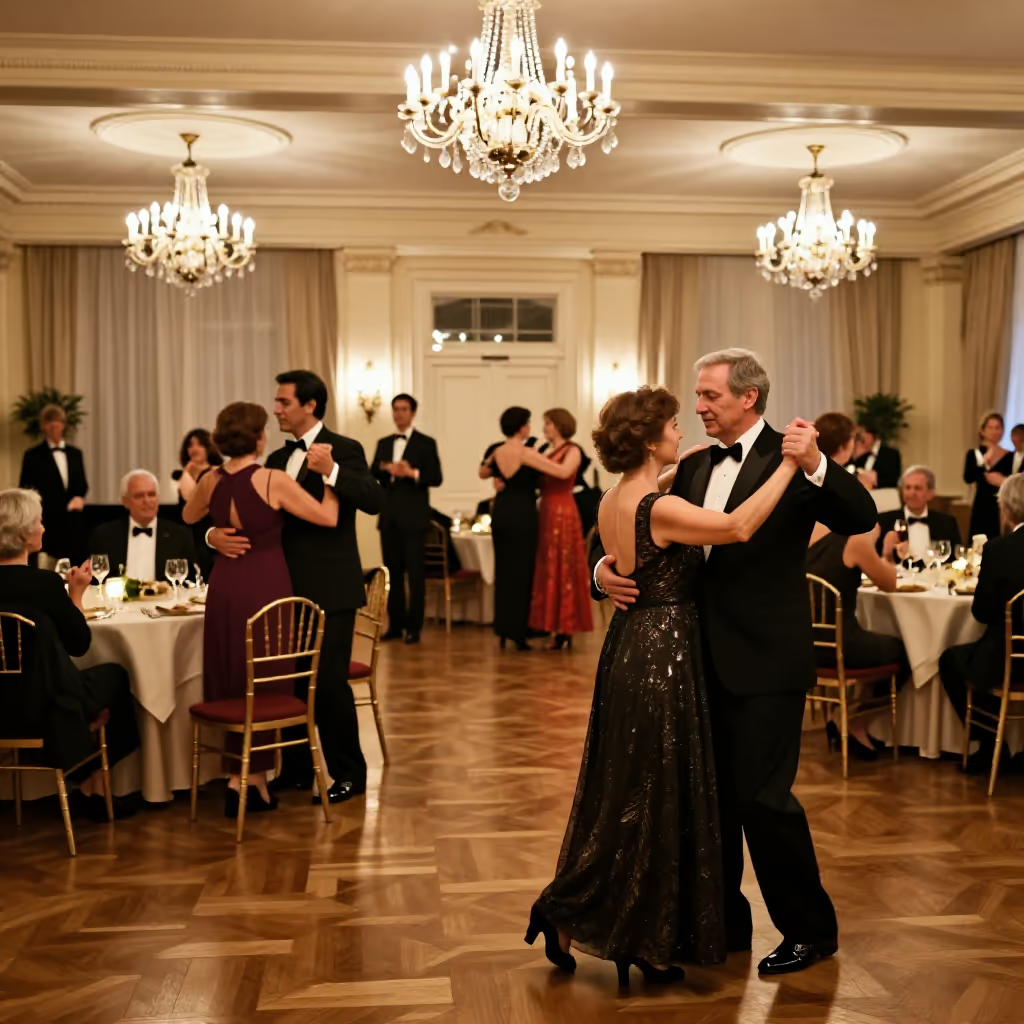
A social event where people dance; a ball.
Gehen wir am Samstag zum Tanz im Gemeindesaal?
Shall we go to the dance in the community hall on Saturday?
dance
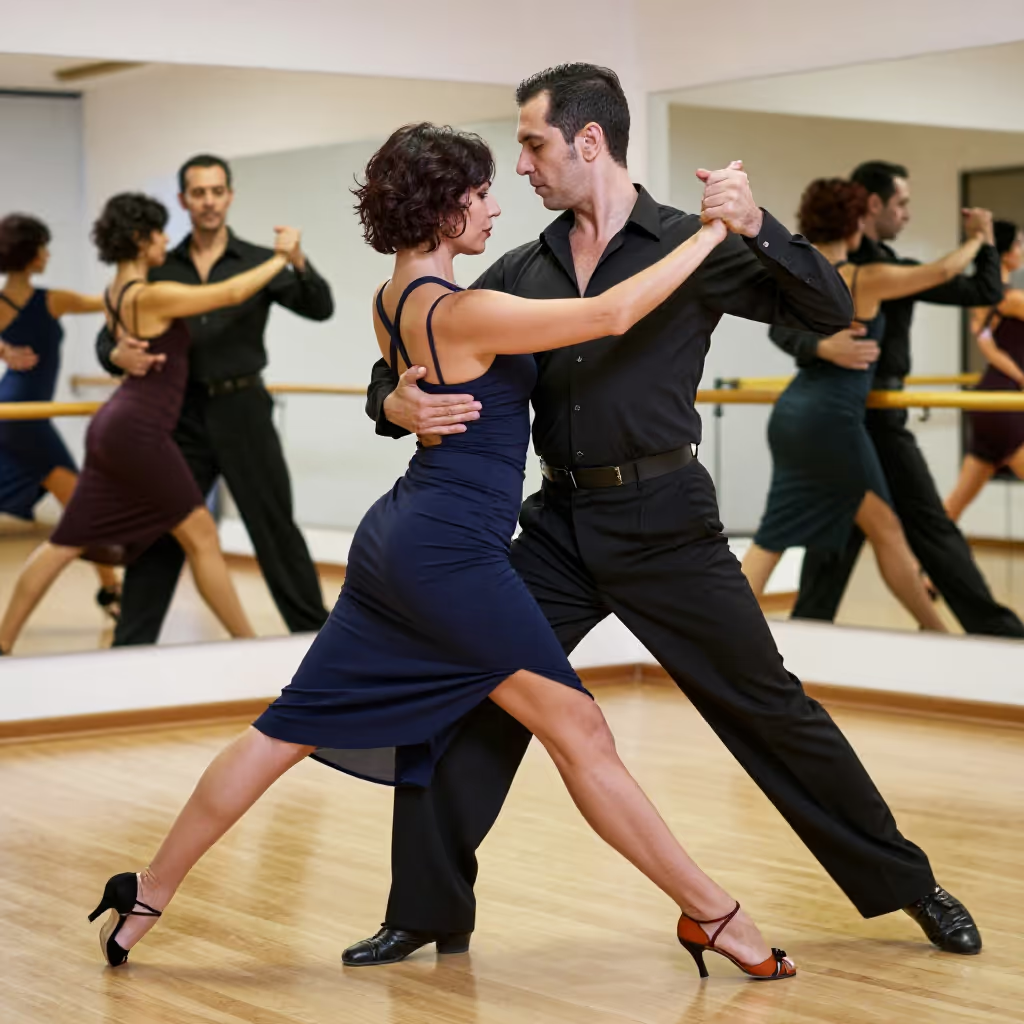
A specific, fixed sequence of steps and figures that has its own name (e.g., waltz, tango).
Der Wiener Walzer ist ein schneller und anspruchsvoller Tanz.
The Viennese waltz is a fast and demanding dance.

dance
Figuratively, a complicated, often difficult or risky process or conflict.
Der Versuch, die Baugenehmigung zu bekommen, war ein einziger Tanz mit den Behörden.
The attempt to get the building permit was one long dance with the authorities.
The noun 'der Tanz' (dance) is the nominalization of the verb 'tanzen' (to dance). It describes both the action and the result of dancing.
Tanzen ist ihr liebstes Hobby.
Dancing is her favorite hobby.
The phrase 'jemanden zum Tanz auffordern' (to ask someone to dance) is a fixed expression and means to ask someone whether he or she would like to dance with you.
Er war zu schüchtern, sie zum Tanz aufzufordern.
He was too shy to ask her to dance.
In a figurative sense, 'der Tanz' (dance) describes a complicated, difficult, or nerve-racking process. The phrase 'ein Tanz mit...' (a dance with...) is typical here.
Die Verhandlungen waren ein langer Tanz mit vielen Kompromissen.
The negotiations were a long dance with many compromises.
When 'Tanz' (dance) refers to a specific choreography or performance, it is often combined with verbs like 'lernen' (to learn), 'üben' (to practice), or 'aufführen' (to perform).
Die Kinder führen bei der Schulfeier einen Tanz auf.
The children are performing a dance at the school celebration.
When referring to a dance event, prepositions like 'zum' or 'auf dem' are often used. 'Zum Tanz gehen' means to attend a dance party.
Wir gehen am Wochenende auf den Tanz in der Stadthalle.
We're going to the dance at the town hall this weekend.
ball
Both words can refer to an event where people dance. A Ball is usually a large, festive, and often formal occasion, while „Tanz“ as the name of an event is more general and sounds somewhat dated. Use „Ball“ for an elegant formal occasion and „Tanz“ as a more general term.
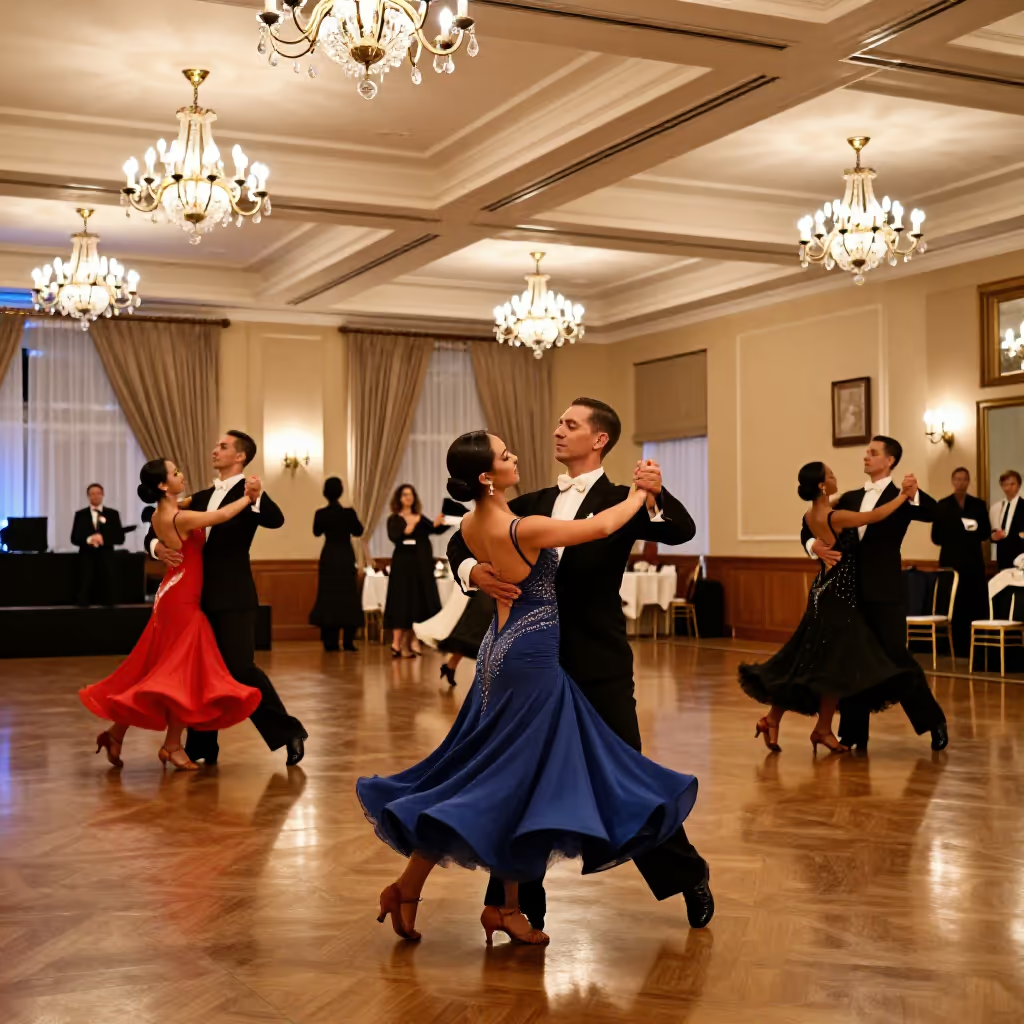
Am Samstag besucht das Paar den Tanz im örtlichen Vereinshaus.
On Saturday, the couple is attending the dance at the local community center.
Am Samstag besucht das Paar den festlichen Ball im alten Rathaus.
On Saturday, the couple is attending the formal ball at the old town hall.