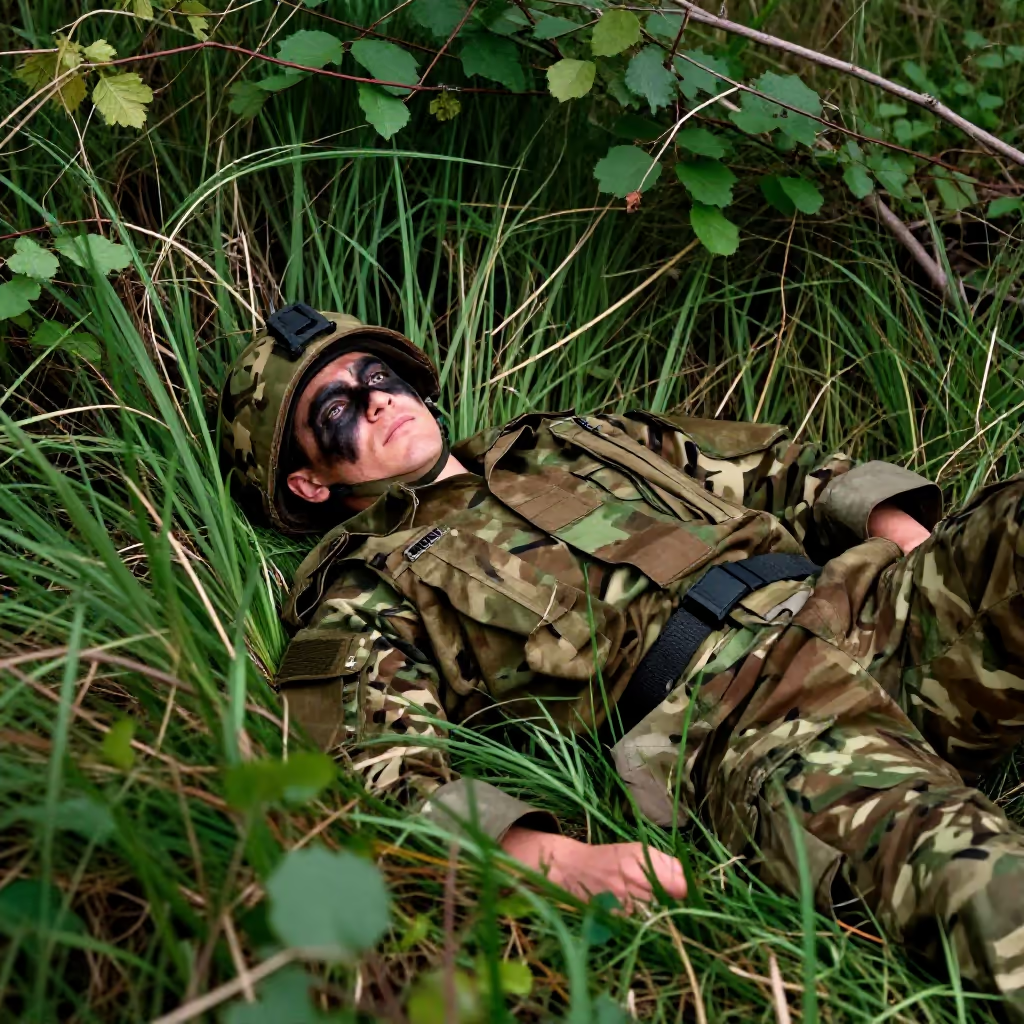
The adaptation of outward appearance to the surroundings in order not to be discovered. This is used by animals for hunting or protection and by the military to hide people and equipment.
example
Das Chamäleon ist ein Meister der Tarnung und kann seine Farbe dem Untergrund anpassen.
The chameleon is a master of camouflage and can adapt its color to the surface beneath it.

Usage tips
Word family
The noun 'die Tarnung' (camouflage/disguise) comes from the verb 'sich tarnen' (to camouflage oneself / to disguise oneself). When an animal or person camouflages or disguises themselves, they use 'eine Tarnung' (a camouflage/disguise). The ending '-ung' turns the verb into a feminine noun.
EXAMPLE
Der Soldat tarnte sich mit Blättern und Ästen.
The soldier camouflaged himself with leaves and branches.
Context clue
You can recognize the meaning from the context. If it is about animals, nature, or the military, the literal 'Tarnung' (camouflage) is meant. If it is about human behavior, feelings, or intentions, the figurative meaning (pretense/disguise) is meant.
EXAMPLE
Die weiße Farbe des Fells dient dem Polarfuchs im Winter als Tarnung.
The white color of its fur serves as camouflage for the Arctic fox in winter.
Typical collocations
In the literal sense, 'Tarnung' (camouflage) is often combined with adjectives like 'perfekt' (perfect) or 'gut' (good). A typical fixed expression is 'als Tarnung dienen' (to serve as camouflage).
EXAMPLE
Die Streifen des Zebras dienen als perfekte Tarnung in der Gruppe.
The zebra's stripes serve as perfect camouflage in the group.
Figurative use
In the figurative meaning, 'Tarnung' (disguise/cover) describes a façade. People often speak of a 'Tarnung der Gefühle' (disguise of feelings) or use the structure 'etwas als Tarnung benutzen' (to use something as a cover).
EXAMPLE
Er benutzte seine Geschäftsreise als Tarnung für ein heimliches Treffen.
He used his business trip as a cover for a secret meeting.
Compare with
near_synonym · confusable
Tarnung vs Maske
mask
'die Maske' and 'die Tarnung' can both hide something. A mask usually covers the face, or figuratively refers to behavior with which someone does not show their feelings. 'Tarnung' has a stronger purpose of not being discovered or recognized. It can be created through colors, clothing, surroundings, or a particular behavior. Learners may confuse the words because both hide something. As a practical rule: 'Maske' is especially suitable for the face or for a performed expression; 'Tarnung' fits when someone or something is meant to disappear into the surroundings or hide their intention.
Tarnung
Die grüne Kleidung ist im Wald eine gute Tarnung für die Soldaten.
The green clothing is good camouflage for the soldiers in the forest.
Maske
Im Krankenhaus muss Paul eine Maske tragen, weil viele Menschen krank sind.
In the hospital, Paul has to wear a mask because many people are sick.