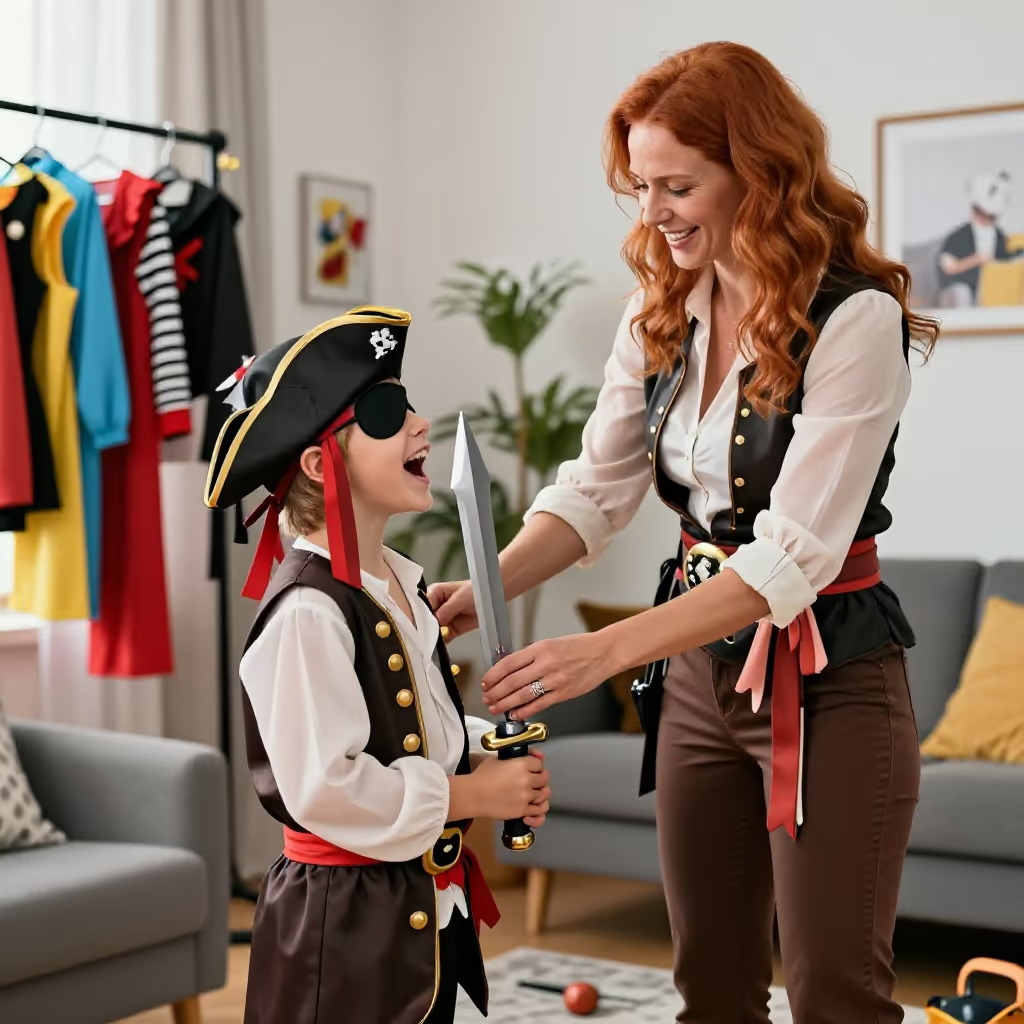
Clothing and accessories that you wear in order to look like another person or character, often for Carnival, Halloween, or a costume party.
example
Seine Verkleidung als Pirat war auf der Faschingsparty die beste.
His pirate costume was the best one at the Carnival party.

Usage tips
Word structure
The word is derived from the verb 'verkleiden'. This verb means both 'to dress up' and 'to cover something'. The ending '-ung' turns it into a noun that keeps both meanings.
EXAMPLE
Er verkleidet sich jedes Jahr zu Karneval.
He dresses up for Carnival every year.
Context clue
You can tell which meaning is intended from the context. If it is about celebrations like Carnival, parties, or costumes, it means clothing for dressing up. If it is about construction, crafts, or technology, it means a covering.
EXAMPLE
Für die Mottoparty brauche ich noch eine gute Verkleidung.
I still need a good costume for the themed party.
Use with 'als'
When describing what a disguise or costume represents, the preposition 'als' (as) is used. You wear a costume as a witch, as a cowboy, or as a superhero.
EXAMPLE
Seine Verkleidung als Baum war sehr kreativ.
His costume as a tree was very creative.
Typical collocations
In a technical or craft context, 'Verkleidung' (covering/paneling) is often combined with the verbs 'anbringen' (to attach/install) or 'entfernen' (to remove). The material is often named with the preposition 'aus' (made of).
EXAMPLE
Der Monteur muss zuerst die Verkleidung des Motors entfernen.
The mechanic first has to remove the engine cover.
Compare with
confusable
Verkleidung vs Kleidung
clothing
'Kleidung' and 'Verkleidung' can both consist of items of clothing, but they do not have the same purpose. You wear 'Kleidung' in everyday life, at work, or for special occasions, without playing a different role. You wear a 'Verkleidung' in order to look like someone or something else, for example at Carnival, Halloween, or a costume party. The words can be confused because a 'Verkleidung' is also clothing. The important difference is the intention: normal 'Kleidung' covers the body and fits the situation, while a 'Verkleidung' changes your role or character.
Verkleidung
Für die Kostümparty suchen wir morgen eine lustige Verkleidung.
Tomorrow we are looking for a funny costume for the costume party.
Kleidung
Am Abend legt die Lehrerin ihre Kleidung für den nächsten Schultag bereit.
In the evening, the teacher lays out her clothes for the next school day.