

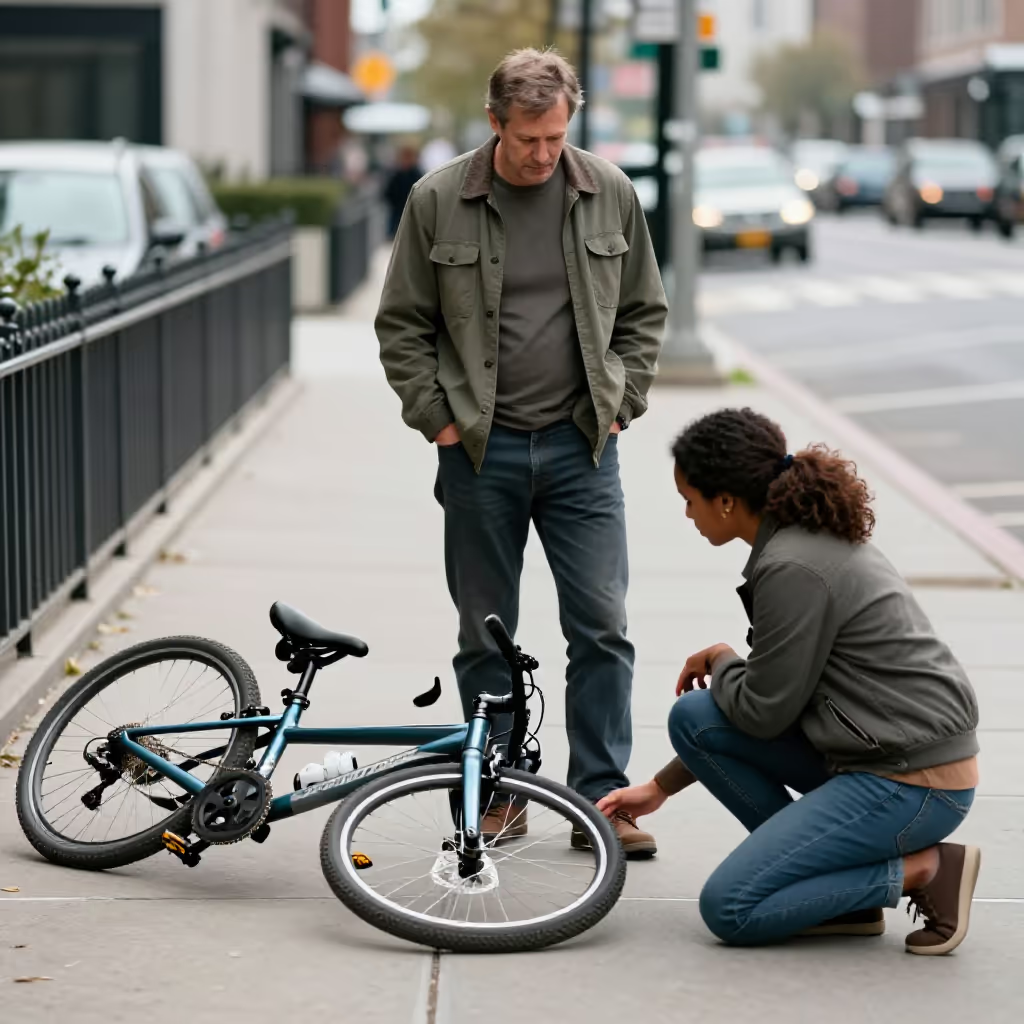
Describes a state in which someone does nothing or does not intervene, even though action would be possible or necessary.
example
Er sah tatenlos zu, wie der Dieb mit dem Fahrrad davonfuhr.
He stood by idly as the thief rode away with the bicycle.

Usage tips
Word composition
The word is easy to understand if you know its parts: 'Tat' (action, deed) and the ending '-los' (without). 'Tatenlos' therefore literally means 'without a deed' or 'without action.'
EXAMPLE
Die Regierung blieb angesichts der Krise nicht tatenlos.
The government did not remain inactive in the face of the crisis.
Typical collocations
'Tatenlos' is very frequently used in the fixed combination 'tatenlos zusehen' (to stand by idly). It describes someone observing a situation without intervening.
EXAMPLE
Die Nachbarn sahen tatenlos zu, wie der Streit eskalierte.
The neighbors stood by idly as the argument escalated.
Sentence structure
You can use 'tatenlos' as an adverb to describe a verb, or as a predicative adjective with verbs like 'bleiben' (to remain) or 'sein' (to be).
EXAMPLE
Man darf in so einer Situation nicht tatenlos bleiben.
You must not remain inactive in a situation like that.
Compare with
antonym
tatenlos vs aktiv
active
'aktiv' and 'tatenlos' form a clear contrast. 'aktiv' means that someone acts, participates, or does something. 'tatenlos' means that someone does nothing or does not intervene, even though it would be possible or necessary. 'tatenlos' is especially often used when a situation calls for action, for example with a problem or danger. It therefore sounds more critical than just 'not active'.
tatenlos
Mein Freund bleibt nicht tatenlos, wenn jemand in der Stadt Hilfe braucht.
My friend does not stand by idly when someone in the city needs help.
aktiv
Für die Prüfung sind wir schon seit zwei Wochen aktiv am Lernen.
We have already been actively studying for the exam for two weeks.