

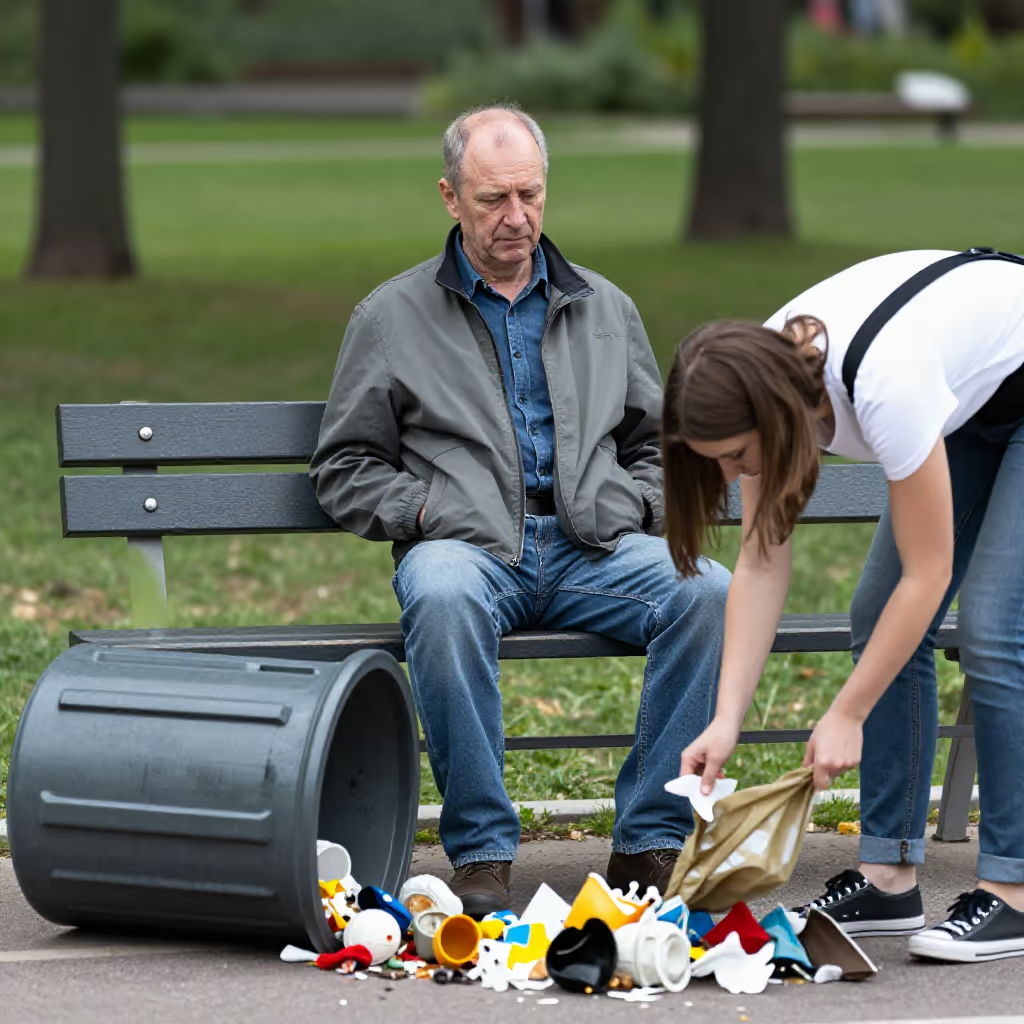
Describes a state in which someone does nothing, is passive, or does not act, even though action would be possible or expected.
example
Er sah nicht untätig zu, sondern griff sofort ein, um zu helfen.
He did not stand idly by, but intervened immediately to help.

Usage tips
Word structure
The word consists of the prefix 'un-', which expresses negation, and the adjective 'tätig' (active, acting). So 'untätig' literally means 'not active' or 'not acting'.
EXAMPLE
Während die anderen diskutierten, stand er untätig in der Ecke.
While the others were discussing, he stood idly in the corner.
Typical collocations
'Untätig' is very often combined with the verbs 'bleiben' (to remain) or 'zusehen' (to watch). These expressions emphasize passive behavior in a situation that actually requires a response.
EXAMPLE
Die Polizei konnte bei dem Verbrechen nicht einfach untätig zusehen.
The police could not simply stand idly by during the crime.
Use in the negative
The expression is often negated ('nicht untätig bleiben' — not to remain idle) to emphasize that someone became active and took action.
EXAMPLE
Als sie die Ungerechtigkeit sah, blieb sie nicht untätig und organisierte eine Protestaktion.
When she saw the injustice, she did not remain idle and organized a protest.
Compare with
antonym
untätig vs aktiv
active
'aktiv' and 'untätig' are opposites when it comes to taking action. 'aktiv' describes someone who does something, participates, or is involved. 'untätig' describes someone who does nothing, even though they could or should act. 'untätig' often sounds slightly critical because the person is expected to do something. 'aktiv', by contrast, is neutral or positive and fits movement, participation, and involvement.
untätig
Er sitzt am Morgen untätig am Bahnhof, obwohl sein Zug ausfällt.
He sits idly at the station in the morning, even though his train is canceled.
aktiv
Vor dem Termin bleiben wir aktiv und bereiten alle Unterlagen vor.
Before the appointment, we stay active and prepare all the documents.