

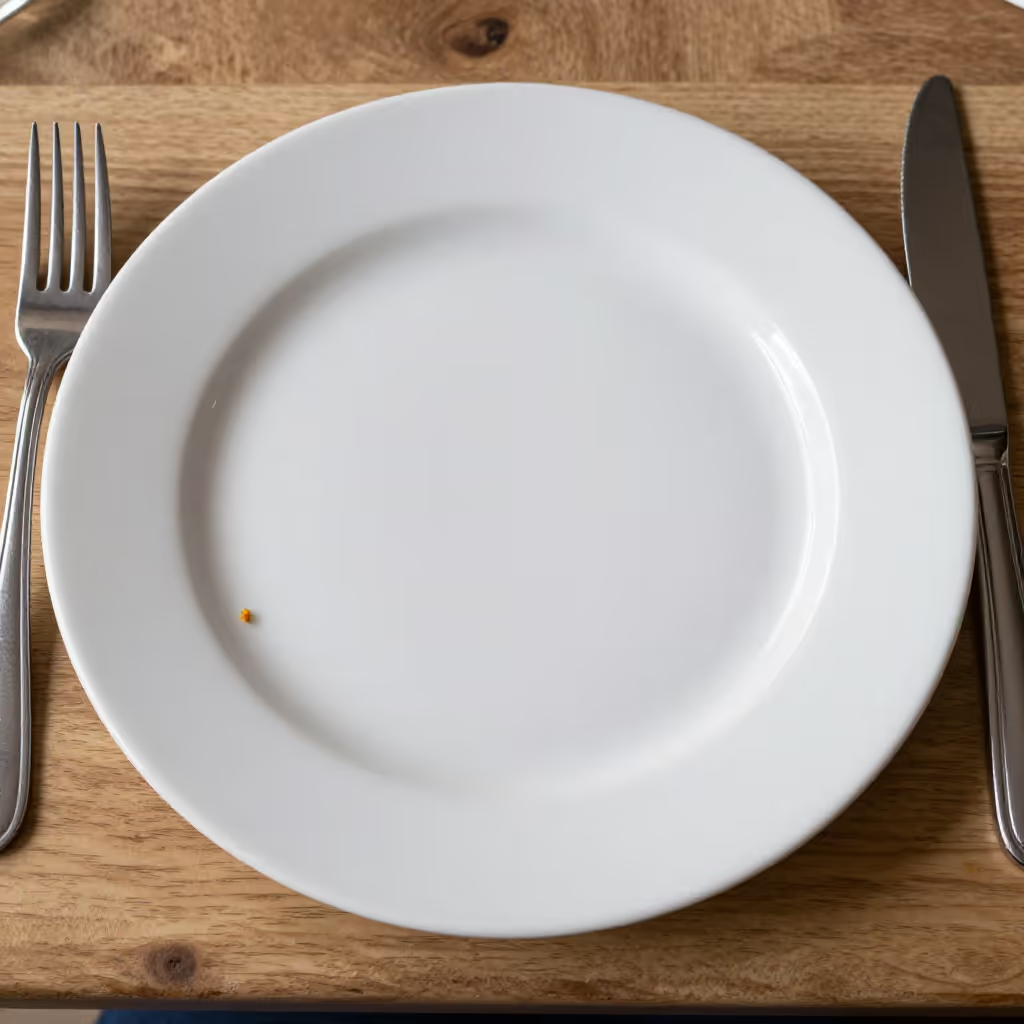
der Teller
plate
A flat or slightly hollow dish from which food is eaten.
EXAMPLE
Nach dem Essen stelle bitte deinen Teller in die Spülmaschine.
After eating, please put your plate in the dishwasher.
plate
Loading your saved state.
plate
A flat or slightly hollow dish from which food is eaten.
Nach dem Essen stelle bitte deinen Teller in die Spülmaschine.
After eating, please put your plate in the dishwasher.

plate
A portion of food served on a plate.
Er hat einen ganzen Teller Nudeln allein gegessen.
He ate a whole plate of noodles by himself.
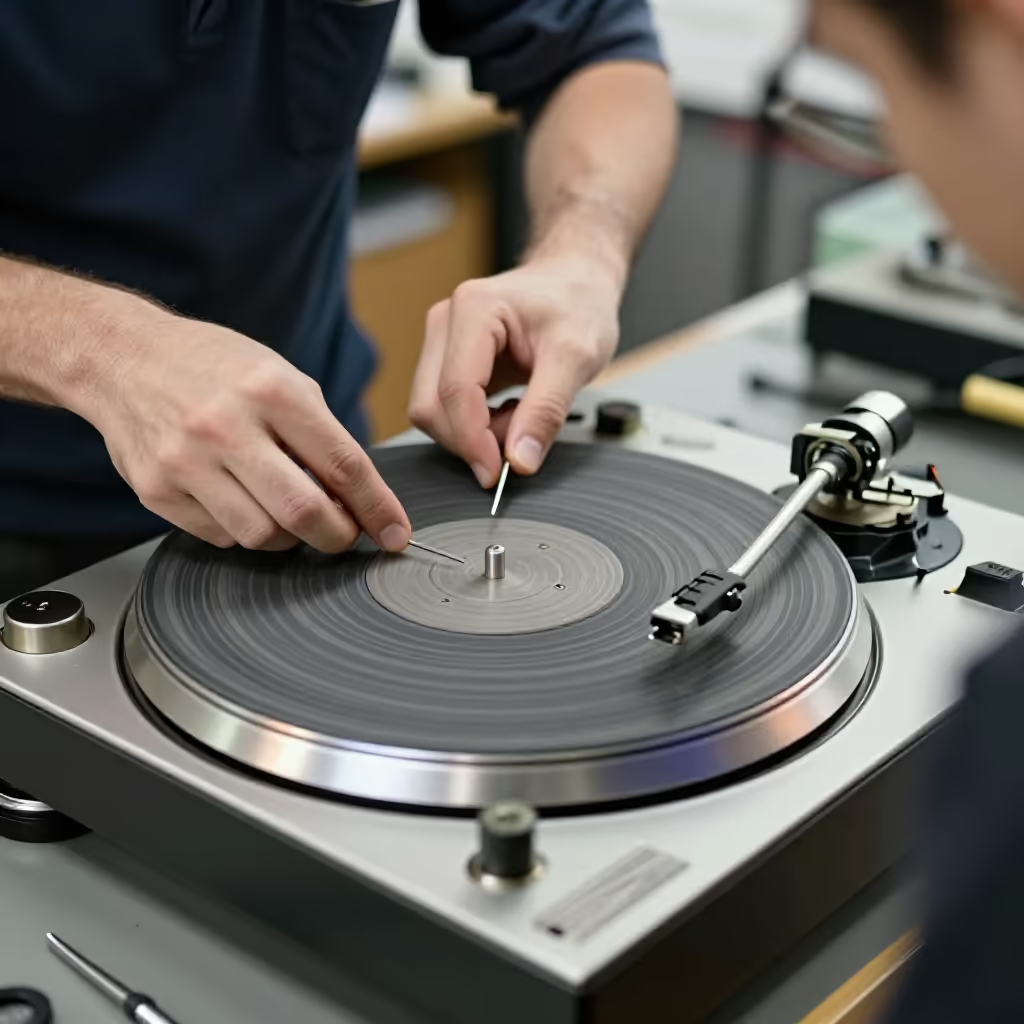
plate / disk
A flat, usually round component in technical devices, such as in a record player or a grinding machine.
Der Plattenspieler dreht sich nicht mehr, weil der Teller klemmt.
The record player is no longer turning because the platter is stuck.
The verb in the sentence reveals the meaning: verbs like 'abwaschen' (to wash up) or 'decken' (to set the table) refer to the dishware. Verbs like 'essen' (to eat) or 'aufessen' (to finish eating) refer to the meal on it.
Kannst du bitte die sauberen Teller in den Schrank stellen?
Can you please put the clean plates in the cupboard?
The idiom 'über den Tellerrand schauen' literally means to look beyond the edge of one's plate. It means to be open to new things and to look beyond one's own horizon. It is used very frequently.
Wer eine neue Sprache lernt, schaut automatisch über den eigenen Tellerrand.
Anyone who learns a new language automatically looks beyond their own horizon.
In everyday life, people often distinguish between a 'flacher Teller' (flat plate) for main courses and a 'tiefer Teller' (deep plate/bowl) for soups or stews.
Für die Suppe brauchst du einen tiefen Teller.
You need a deep plate for the soup.
When 'Teller' (plate) describes a portion, the dish often follows directly, e.g. 'ein Teller Nudeln' (a plate of noodles) or 'ein Teller Salat' (a plate of salad).
Zum Mittagessen gab es einen großen Teller Gemüse.
For lunch, there was a large plate of vegetables.
This meaning occurs only in technical contexts. It often describes a round, flat disk in a device, for example the 'Plattenteller' (turntable platter) in a record player.
Beim Ventilmotor schließt der Ventilteller die Öffnung.
In a valve engine, the valve plate closes the opening.
plate / record
Platte and Teller can both hold food. Platte is usually larger and is used to arrange food for several people; a Teller is normally used by one person for eating. The key difference is whether the food is being served for everyone to share or eaten individually.
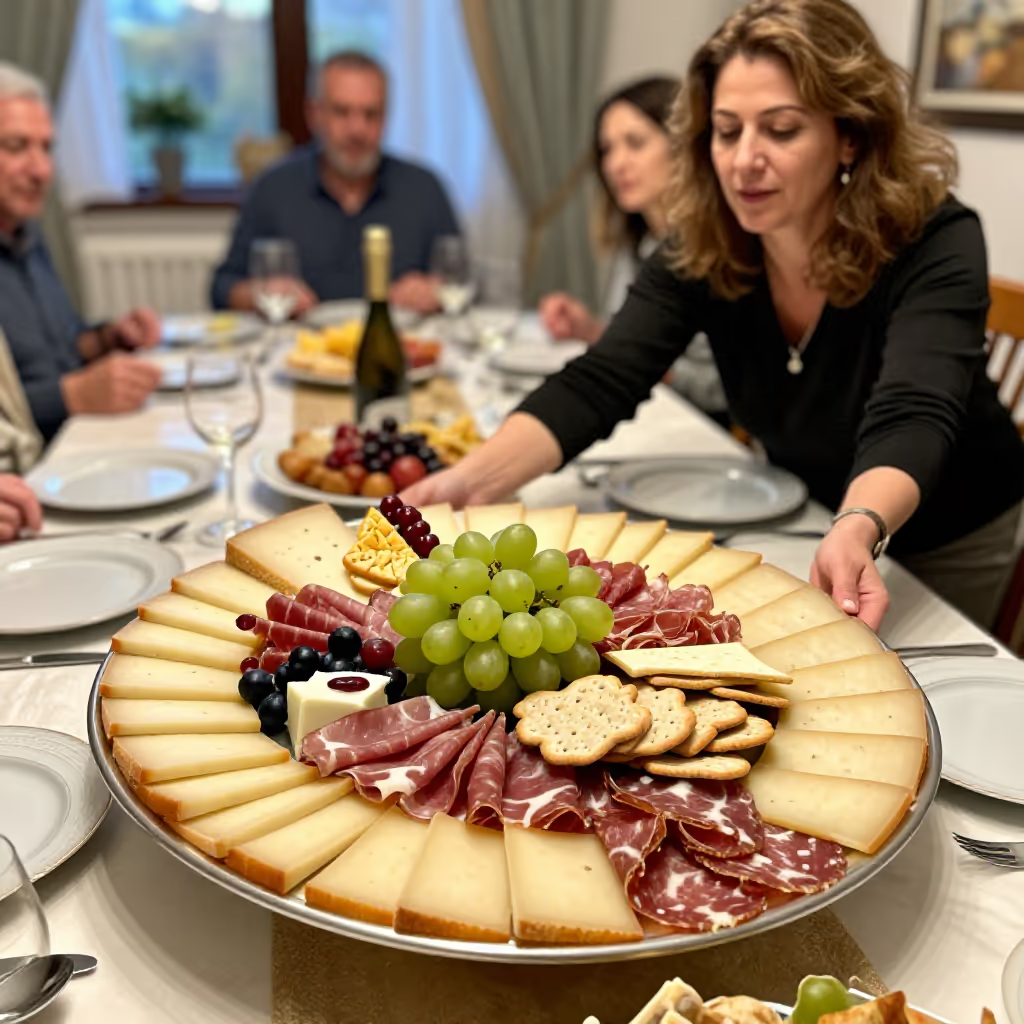
Für einen Gast legt Mia den Käse auf einen kleinen Teller.
Mia puts the cheese on a small plate for one guest.
Für alle Gäste richtet Mia den Käse auf einer großen Platte an.
Mia arranges the cheese on a large platter for all the guests.