

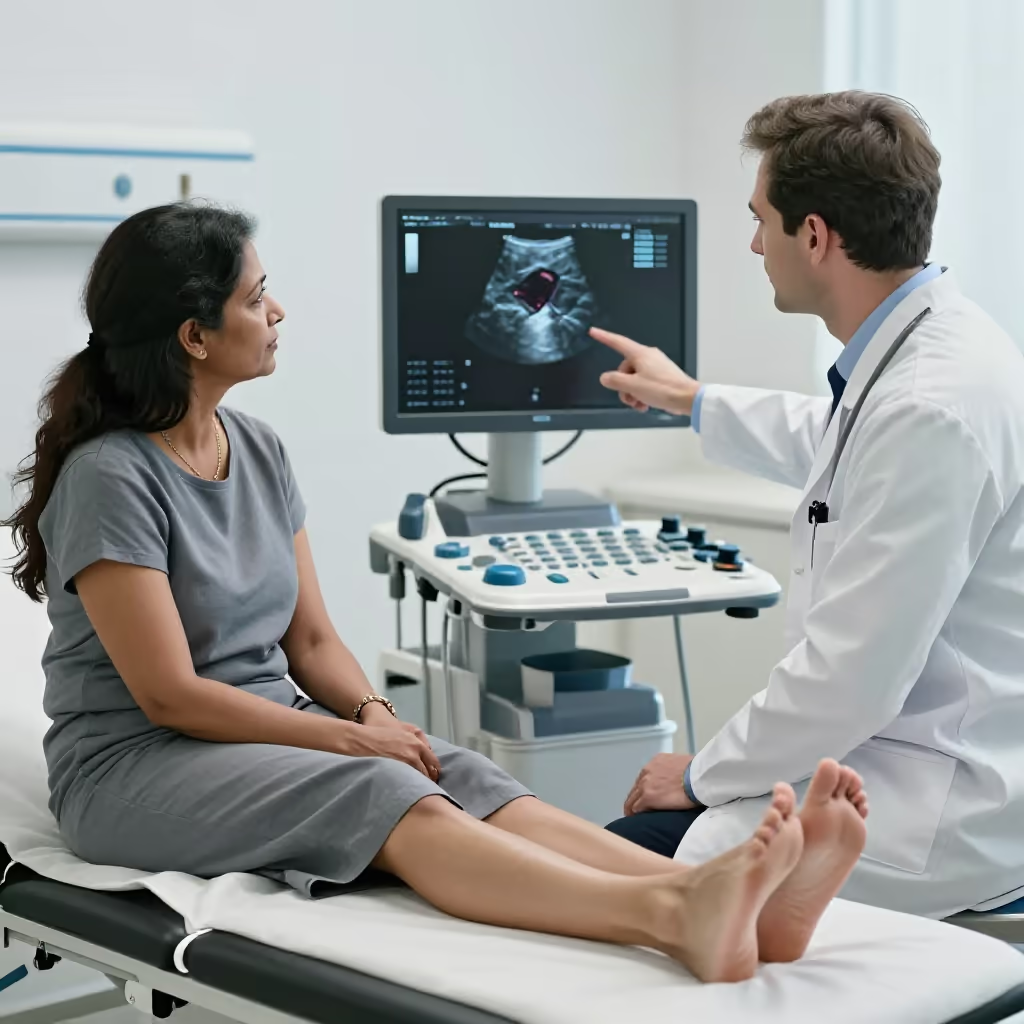
A medical condition in which a blood clot (a thrombus) forms in a blood vessel, which can hinder or completely block blood flow.
example
Langes Sitzen im Flugzeug ohne Bewegung kann das Risiko für eine Thrombose im Bein erhöhen.
Sitting for a long time on a plane without moving can increase the risk of thrombosis in the leg.
Usage tips
Word structure
The ending '-ose' is typical in medicine for names of diseases or pathological conditions. When you see this ending, it is often a medical term.
EXAMPLE
Eine frühzeitige Diagnose der Thrombose ist sehr wichtig.
Early diagnosis of thrombosis is very important.
Typical collocations
In connection with 'Thrombose' (thrombosis), you often hear the verbs 'bekommen' (to get), 'erleiden' (to suffer), or 'vorbeugen' (to prevent). People also often speak of a 'tiefe Venenthrombose' (deep vein thrombosis).
EXAMPLE
Um einer Thrombose vorzubeugen, sollte man sich regelmäßig bewegen.
To prevent thrombosis, you should move regularly.
Register
'Thrombose' (thrombosis) is a medical technical term. However, it is also frequently used in everyday language, especially when talking about health risks on long journeys.
EXAMPLE
Der Arzt erklärte dem Patienten das Risiko einer Thrombose.
The doctor explained the risk of thrombosis to the patient.