
Describes thoughts, conversations, works, or people that are not superficial, but show intellectual depth, complexity, and seriousness.
example
Wir führten ein tiefgründiges Gespräch über den Sinn des Lebens.
We had a profound conversation about the meaning of life.
Usage tips
Word composition
The adjective is made up of 'tief' (deep) and 'Grund' (ground/reason). This structure helps you understand both meanings: a discussion with 'tiefem Grund' (deep ground/reason, intellectually) and soil with 'tiefem Grund' (deep ground, physically).
EXAMPLE
Seine Analyse des Problems war überraschend tiefgründig.
His analysis of the problem was surprisingly profound.
Context clue
You can tell which meaning is intended from the noun. If 'tiefgründig' (profound/deep) refers to something abstract like a conversation, a thought, or a film, intellectual depth is meant. If it refers to soil or earth, physical depth is meant.
EXAMPLE
Ich mag seine Filme, weil sie immer sehr tiefgründig sind.
I like his films because they are always very profound.
Typical collocations
In the figurative meaning, 'tiefgründig' (profound) is often used to describe conversations, questions, thoughts, books, films, or even people.
EXAMPLE
Sie ist eine sehr tiefgründige Person, mit der man über alles reden kann.
She is a very profound person with whom you can talk about anything.
Register
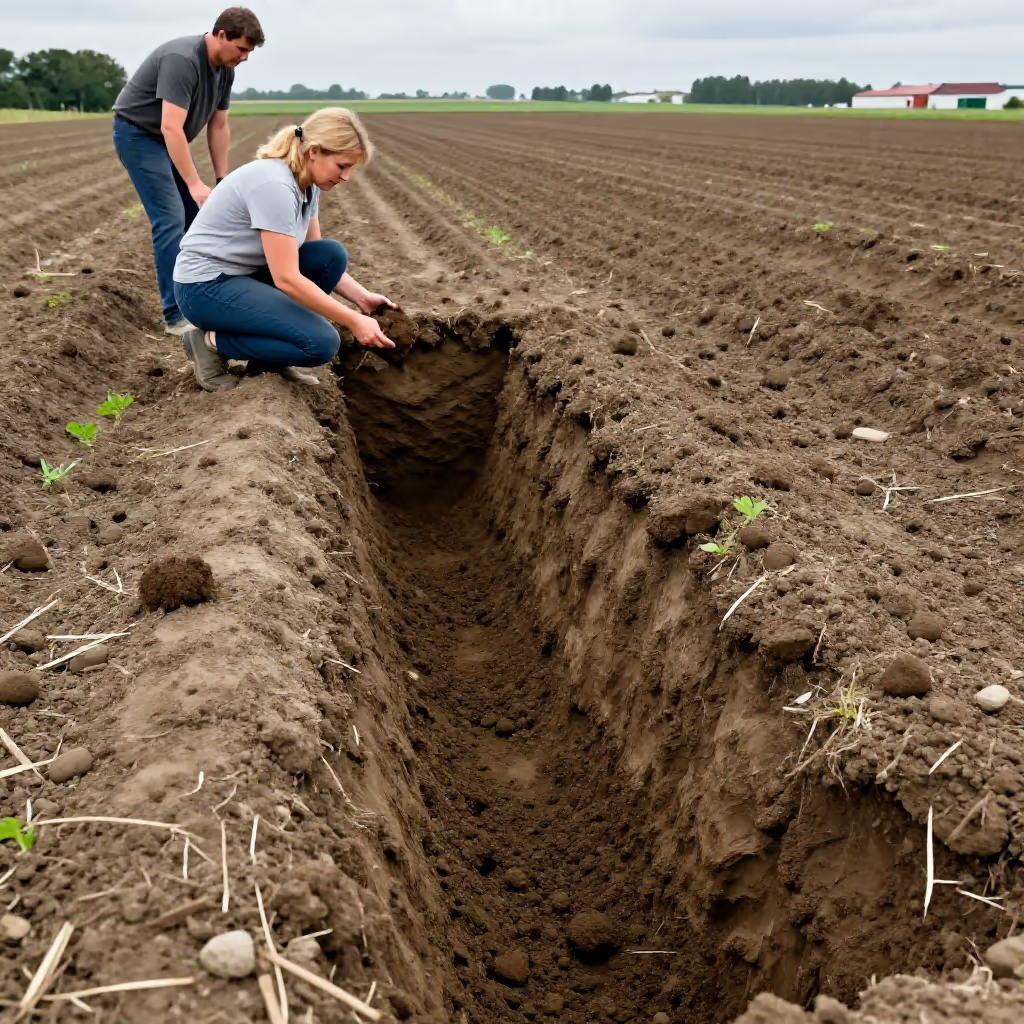
The meaning 'tiefgründiger Boden' (deep soil) is technical language and is mainly used in agriculture, horticulture, or geology.
EXAMPLE
Die Wurzeln dieser Pflanze benötigen einen lockeren und tiefgründigen Boden.
The roots of this plant need loose, deep soil.
Compare with
near_synonym · confusable
tiefgründig vs tief
deep
'tief' and 'tiefgründig' can both describe something that is not simple or superficial. 'tief' is more general here: it can describe a strong feeling, a serious thought, or an intense state. 'tiefgründig' fits especially well for conversations, thoughts, books, films, or people when they have a lot of content, seriousness, and intellectual depth. The words can be confused because 'tiefgründig' is formed from 'tief'. Still, you do not say 'tiefgründig' in every situation. A feeling can be 'tief', but a conversation is more likely to be 'tiefgründig' if it really deals with important topics.
tiefgründig
Nach dem Gespräch fand Anna den Film noch tiefgründiger.
After the conversation, Anna found the film even more profound.
tief
Nach der Nachricht fühlte sie eine tiefe Traurigkeit.