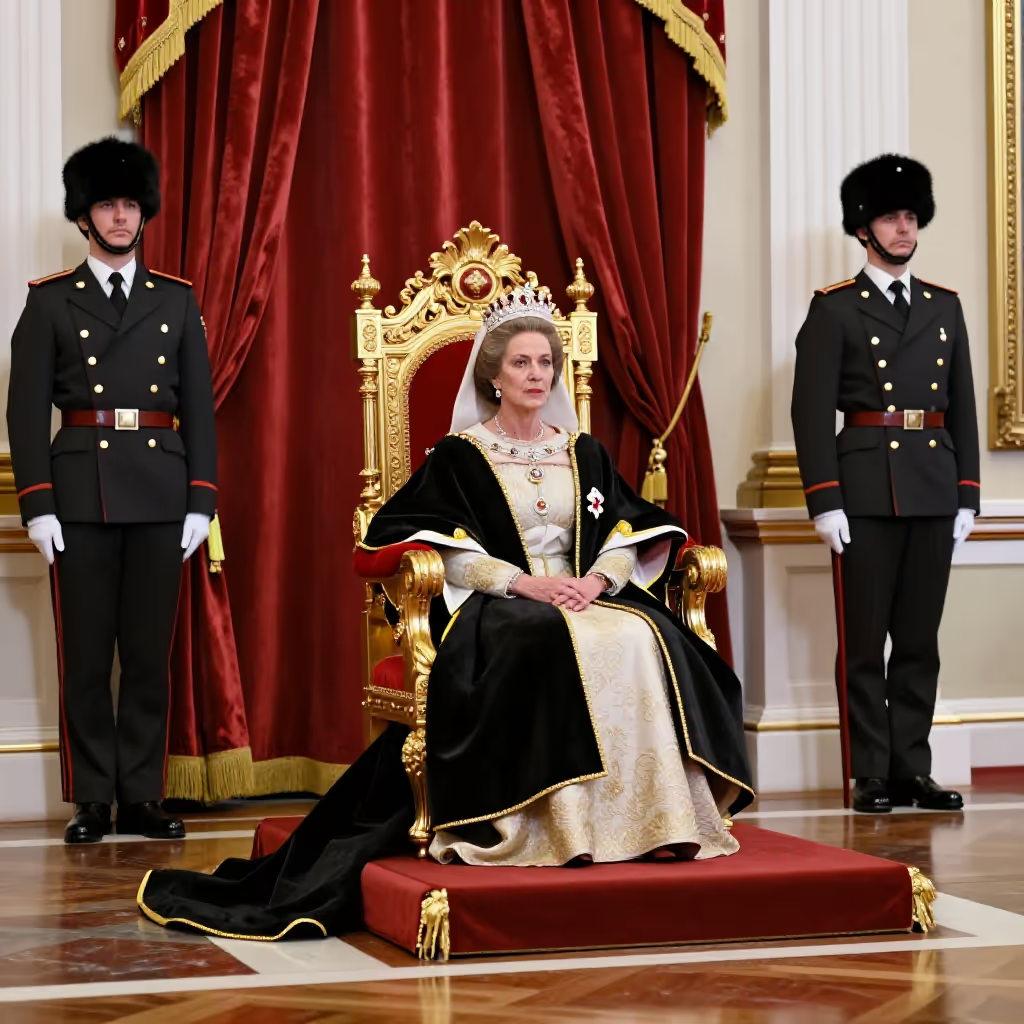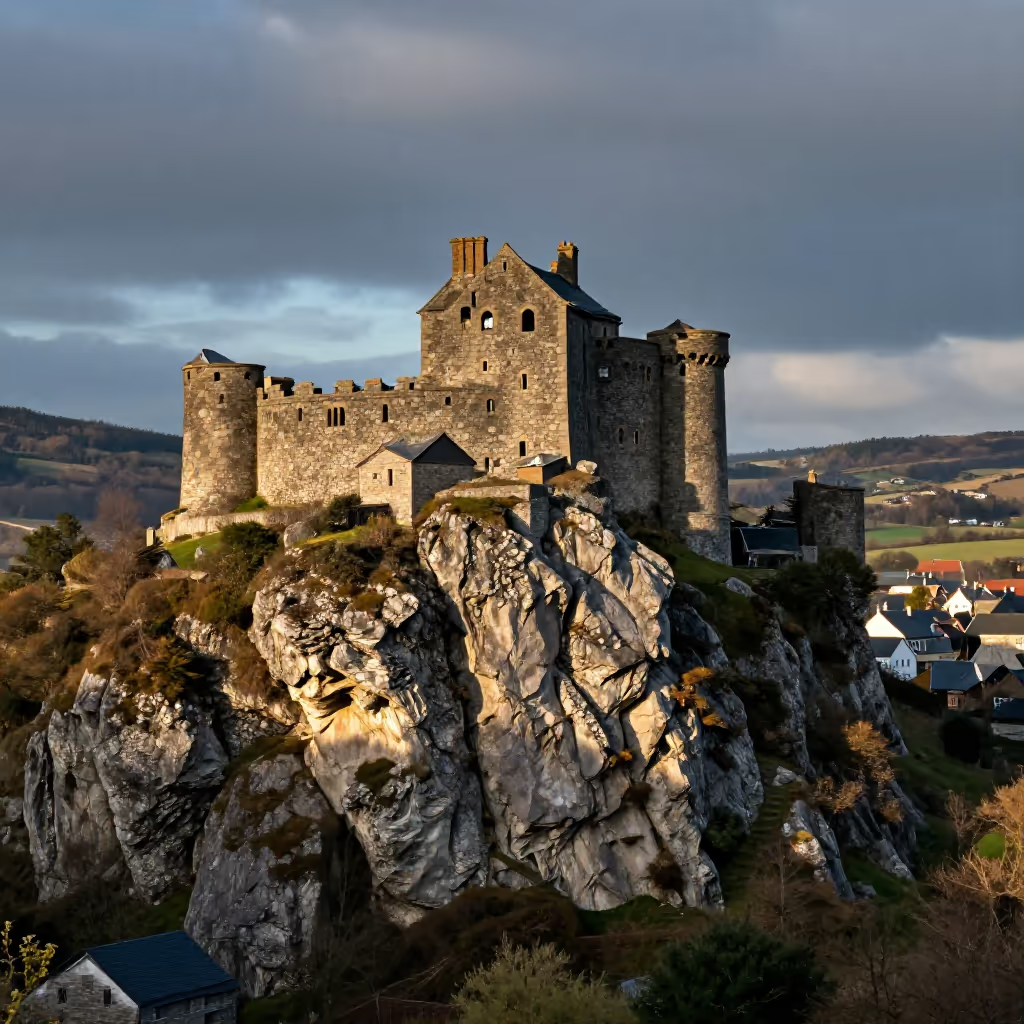
To be located in an elevated, prominent, or commanding position. Often used figuratively for buildings, mountains, or other large objects.
example
Die alte Burg thront majestätisch auf dem Hügel über der Stadt.
The old castle towers majestically on the hill above the town.

Usage tips
Word family
The verb 'thronen' (to tower/sit enthroned) derives directly from the noun 'der Thron' (the throne). It describes a position or posture that is so majestic or elevated as if someone or something were sitting on a throne.
EXAMPLE
Der Firmenchef thronte hinter seinem riesigen Schreibtisch.
The company boss sat enthroned behind his enormous desk.
Register and style
'Thronen' (to tower/sit enthroned) is a vivid and elevated verb. It is not used for simply sitting or standing, but to express special prominence, power, or grandeur.
EXAMPLE
Die stolze Katze thronte auf dem höchsten Punkt des Kratzbaums.
The proud cat sat enthroned on the highest point of the cat tree.
Sentence structure and usage
The verb 'thronen' (to tower/sit enthroned) is almost always used with an indication of place that describes the elevated or dominant position. Typical prepositions are 'auf' (on), 'über' (above/over), or 'an' (at).
EXAMPLE
Über dem Tal thront eine alte Ruine.
An old ruin towers above the valley.
Context clue
In this figurative meaning, the subjects are typically large, immovable objects such as a fortress, a castle, a monument, or a mountain. The verb gives them a majestic presence in the landscape.
EXAMPLE
Das Schloss Neuschwanstein thront auf einem Felsen in den bayerischen Alpen.
Neuschwanstein Castle towers on a rock in the Bavarian Alps.
Compare with
near_synonym · confusable
thronen vs sitzen
to sit
'sitzen' and 'thronen' can both describe that someone is sitting or that something stands in a particular place. 'Sitzen' is neutral and everyday. You use it for people on a chair, or also for things that are fixed in one place. 'Thronen' sounds stronger and more figurative. It fits when someone is sitting especially high up, importantly, or majestically, or when a building stands high up and prominently in a place. Learners may confuse the words because 'thronen' can sometimes also mean a kind of sitting. In everyday language, 'sitzen' is almost always correct; 'thronen' is used only when the elevated or commanding effect is important.
thronen
Über dem kleinen Dorf thront eine alte Burg auf dem Felsen.
An old castle towers above the small village on the rock.
sitzen
Beim Termin sitzt Herr Krüger am Fenster und macht sich Notizen.
During the appointment, Mr. Krüger sits by the window and takes notes.