


sitzen
to sit
To sit down or be seated with one's buttocks on a surface, for example on a chair or on the floor.
EXAMPLE
Wir saßen gemütlich auf dem Sofa und sahen einen Film.
We sat comfortably on the sofa and watched a film.
to sit
Loading your saved state.
to sit
To sit down or be seated with one's buttocks on a surface, for example on a chair or on the floor.
Wir saßen gemütlich auf dem Sofa und sahen einen Film.
We sat comfortably on the sofa and watched a film.

to fit
To fit well or have the right shape, usually in reference to clothing.
Der neue Anzug sitzt wie angegossen.
The new suit fits like a glove.
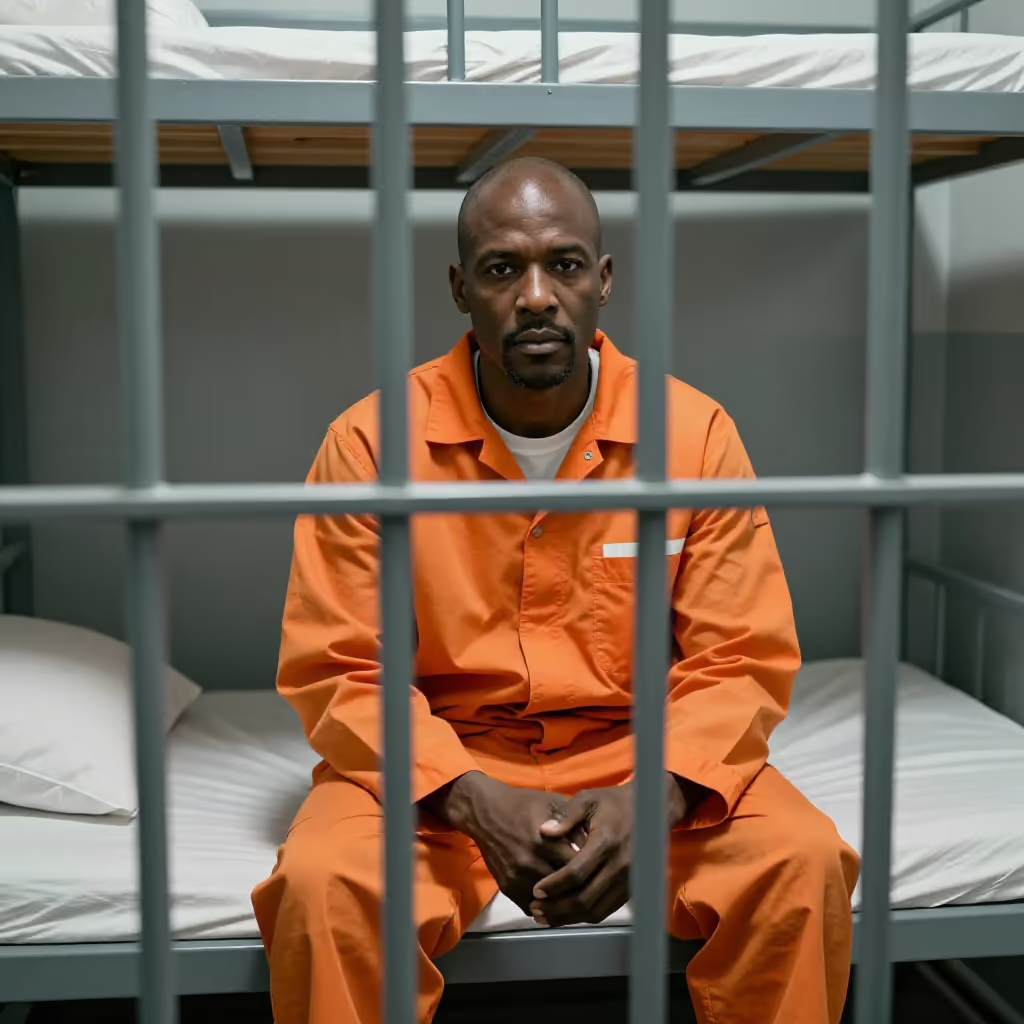
to be in prison
Colloquial for serving a prison sentence.
Er hat drei Jahre wegen Diebstahls gesessen.
He was in prison for three years for theft.
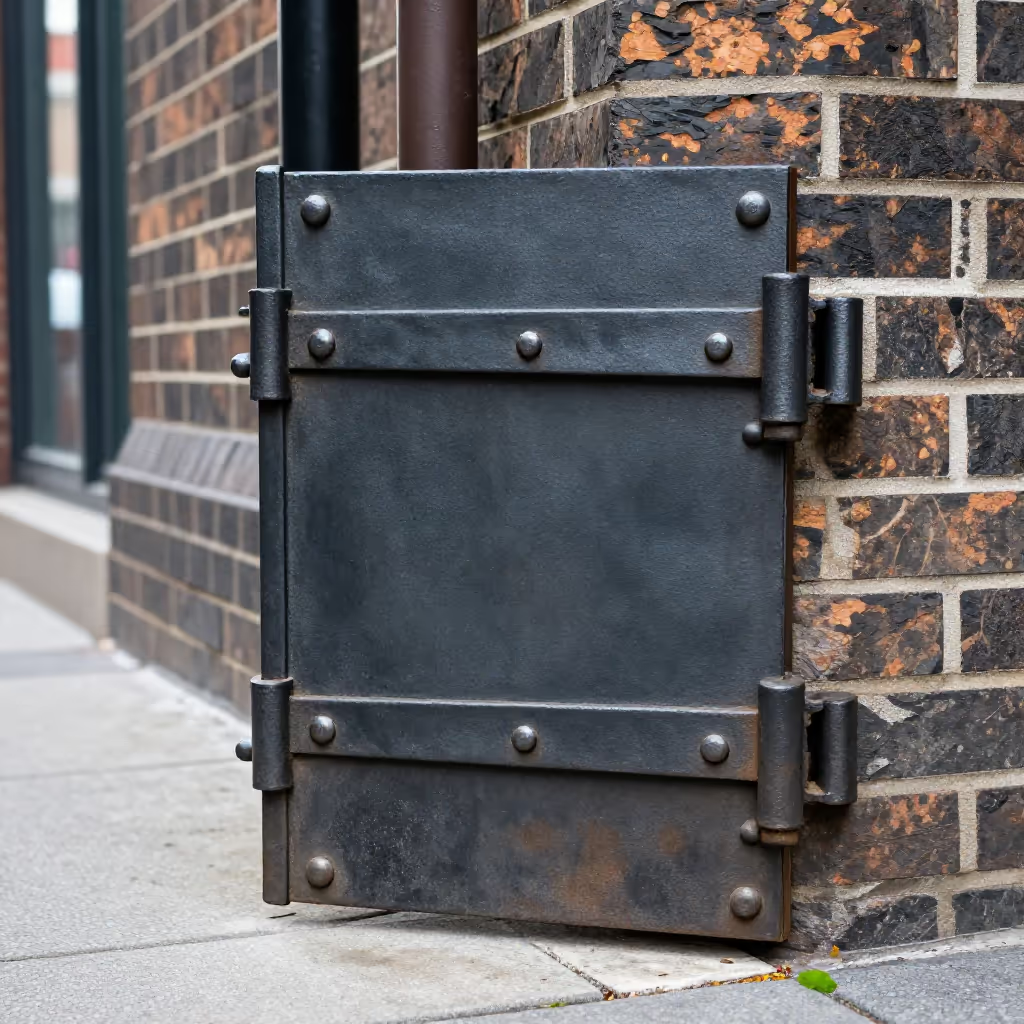
to be lodged
To be located in a specific place or be firmly embedded there.
Der Fleck sitzt so tief im Teppich, dass ich ihn nicht mehr herausbekomme.
The stain is lodged so deep in the carpet that I can't get it out anymore.
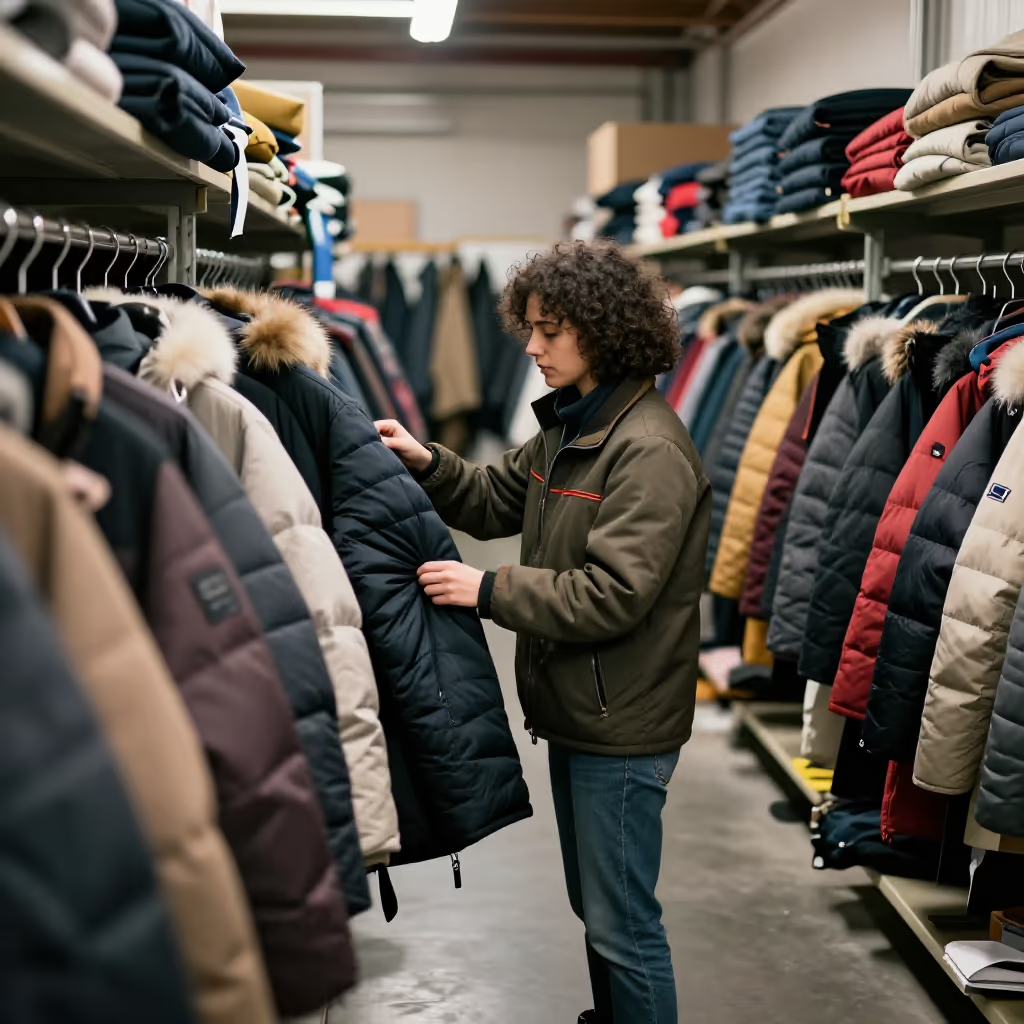
to be stuck with
To have something in excess and be unable to get rid of it or sell it.
Der Händler sitzt nach Weihnachten auf hunderten von unverkauften Kalendern.
After Christmas, the retailer is stuck with hundreds of unsold calendars.

to repeat a grade
Colloquial for repeating a school grade, in the expression 'sitzen bleiben'.
Wegen seiner schlechten Noten in Mathe musste er in der siebten Klasse sitzen.
Because of his bad grades in math, he had to repeat seventh grade.
'Sitzen' (to sit) describes a position (Wo? + dative). The corresponding movement is expressed with the reflexive verb 'sich setzen' (to sit down) (Wohin? + accusative).
Er sitzt schon auf dem Stuhl.
He is already sitting on the chair.
The perfect tense of 'sitzen' (to sit) is formed with 'haben' in standard German. In southern Germany, Austria, and Switzerland, however, you also often hear the form with 'sein'.
Wir haben den ganzen Abend auf der Terrasse gesessen.
We sat on the terrace the whole evening.
Different prepositions are used depending on the type of seat: you sit 'auf' einem Stuhl (on a chair), 'in' einem Sessel (in an armchair), but 'an' einem Tisch (at a table).
Die Familie saß gemeinsam am Abendbrottisch.
The family sat together at the dinner table.
When 'sitzen' (to fit) means that clothing fits, the item of clothing is the subject of the sentence. A very common expression for this is 'sitzt wie angegossen' (fits like a glove).
Die Jacke ist perfekt, sie sitzt wie angegossen.
The jacket is perfect; it fits like a glove.
The meaning 'im Gefängnis sein' (to be in prison) is colloquial. You can indicate the reason with 'wegen' (+ genitive) or the duration with 'für' (+ accusative).
Er musste für zwei Jahre sitzen.
He had to be in prison for two years.
The expression 'sitzen bleiben' (to repeat a grade) is a fixed expression for having to repeat a school grade. It is often used in the passive.
Er ist in der achten Klasse sitzen geblieben.
He repeated eighth grade.
The construction 'auf etwas sitzen' (to be stuck with something) (with dative) means that you have a large amount of something and cannot sell it. The expression is often expanded to 'auf etwas sitzen bleiben' (to be left stuck with something).
Nach dem warmen Winter blieben die Händler auf ihren dicken Jacken sitzen.
After the warm winter, the retailers were left stuck with their thick jackets.
to set / put
Sich setzen and sitzen both refer to a sitting position, but they differ in when that position occurs. Sich setzen describes the change into that position, while sitzen describes the state afterward or remaining there. Someone who is taking a seat says sich setzen; someone who is already on the chair says sitzen.
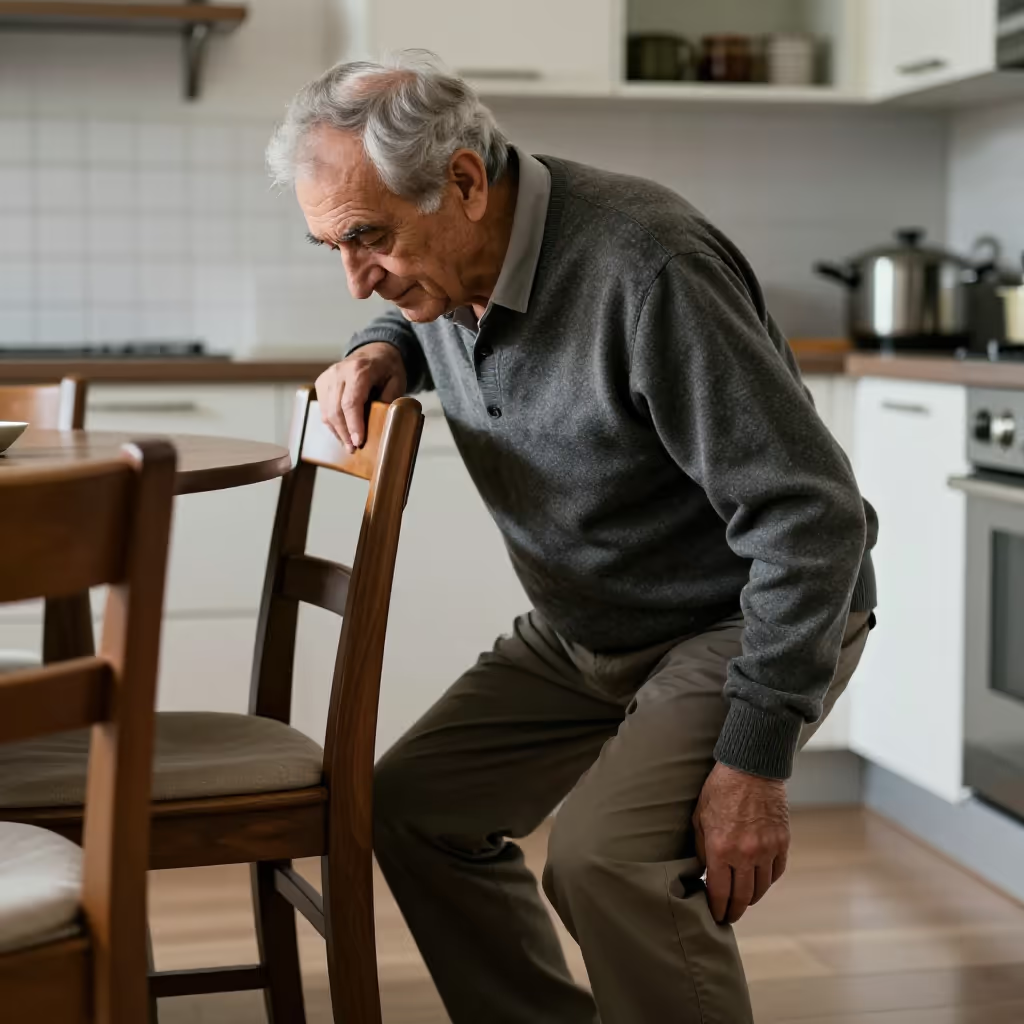
Während der Fahrt saß ich auf dem freien Sitz.
During the journey, I sat in the empty seat.
Als der Bus kam, setzte ich mich auf den freien Sitz.
When the bus arrived, I sat down in the empty seat.