

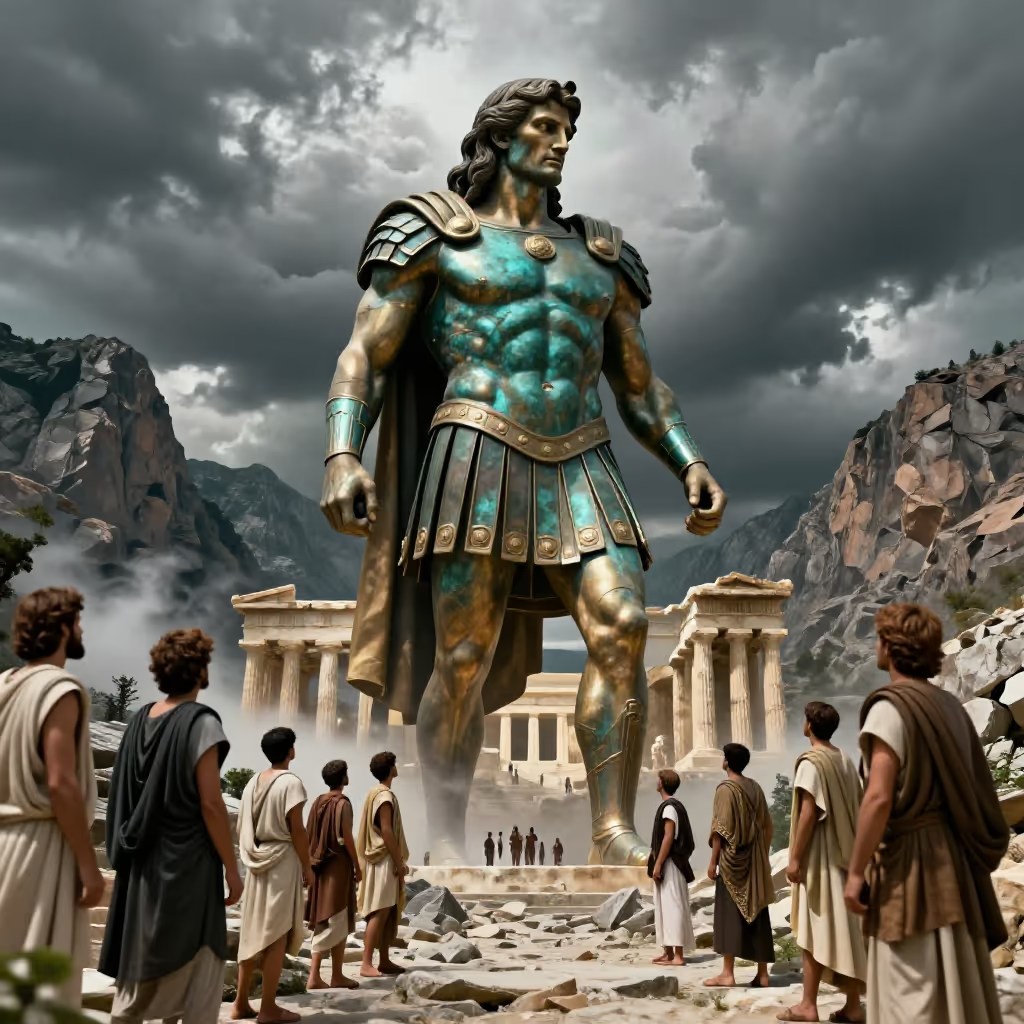
der Titan
Titan
In Greek mythology, a member of a race of giant gods who ruled before the Olympian gods.
EXAMPLE
Kronos war ein Titan und der Vater von Zeus.
Cronus was a Titan and the father of Zeus.
titan
Loading your saved state.
Titan
In Greek mythology, a member of a race of giant gods who ruled before the Olympian gods.
Kronos war ein Titan und der Vater von Zeus.
Cronus was a Titan and the father of Zeus.

titan
A person of extraordinary strength, greatness, intelligence, or importance in a particular field.
Goethe gilt als ein Titan der deutschen Literatur.
Goethe is considered a titan of German literature.
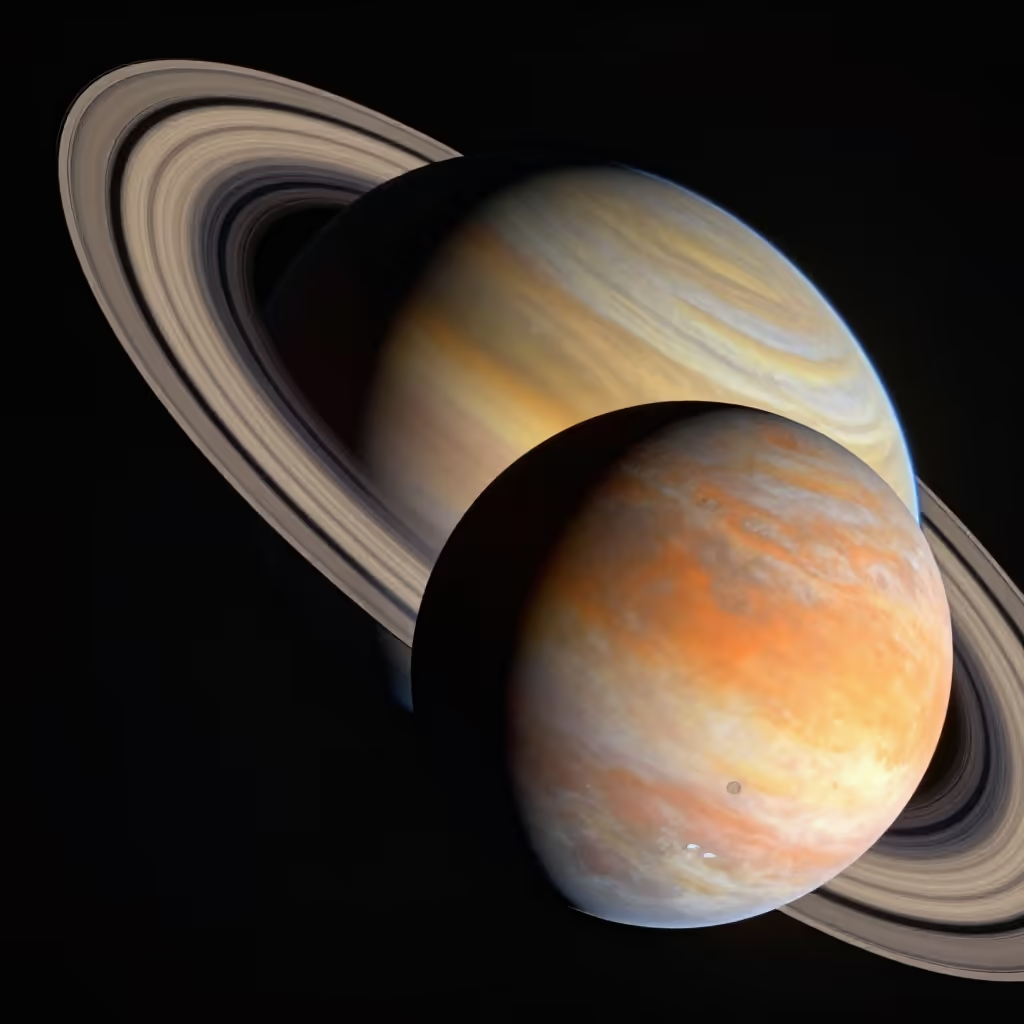
Titan
The largest moon of the planet Saturn.
Die Raumsonde Huygens landete auf dem Saturnmond Titan.
The Huygens space probe landed on Saturn's moon Titan.
'Der Titan' is an N-declension noun. This means it takes the ending '-en' in the accusative, dative, and genitive singular.
Die Götter kämpften gegen die Titanen.
The gods fought against the Titans.
The gender helps determine the meaning. 'Der Titan' (masculine) refers to the mythological figure, an outstanding person, or the moon. 'Das Titan' (neuter) refers to the chemical element, meaning the metal.
Dieses Fahrrad hat einen Rahmen aus Titan.
This bicycle has a frame made of titanium.
The context reveals the meaning. In mythology, it is about gods; in astronomy, it is about Saturn's moon; and when referring to people, it is about their outstanding achievements in a field such as art or science.
Die Titanen waren die Vorgänger der olympischen Götter.
The Titans were the predecessors of the Olympian gods.
When a person is described as a 'Titan' (titan), the genitive or the preposition 'von' (of) is often used to specify the field in which they are outstanding. For example: 'ein Titan der Wissenschaft' (a titan of science) or 'ein Titan auf dem Gebiet der Musik' (a titan in the field of music).
Beethoven ist ein Titan der klassischen Musik.
Beethoven is a titan of classical music.
giant
Titan and Gigant can both refer to an exceptionally important person. Titan is more likely to honor outstanding achievement or importance, while Gigant emphasizes size, power, or influence more strongly. Use “Titan” for an outstanding personality and “Gigant” for a dominant player.

Als Titan der Forschung wurde sie für ihre bahnbrechenden Entdeckungen geehrt.
She was honored as a titan of research for her groundbreaking discoveries.
Der Konzern gilt als Gigant der internationalen Wirtschaft.
The corporation is considered a giant in the international economy.