


der Gigant
giant
A person, company, or organization of exceptional size, power, or economic influence.
EXAMPLE
Der amerikanische Software-Gigant hat ein neues Produkt auf den Markt gebracht.
The American software giant has launched a new product.
giant
Loading your saved state.
giant
A person, company, or organization of exceptional size, power, or economic influence.
Der amerikanische Software-Gigant hat ein neues Produkt auf den Markt gebracht.
The American software giant has launched a new product.

giant
A person of very large and strong build; a giant.
Mit seinen über zwei Metern Körpergröße war der Basketballspieler ein wahrer Gigant.
At over two meters tall, the basketball player was a true giant.
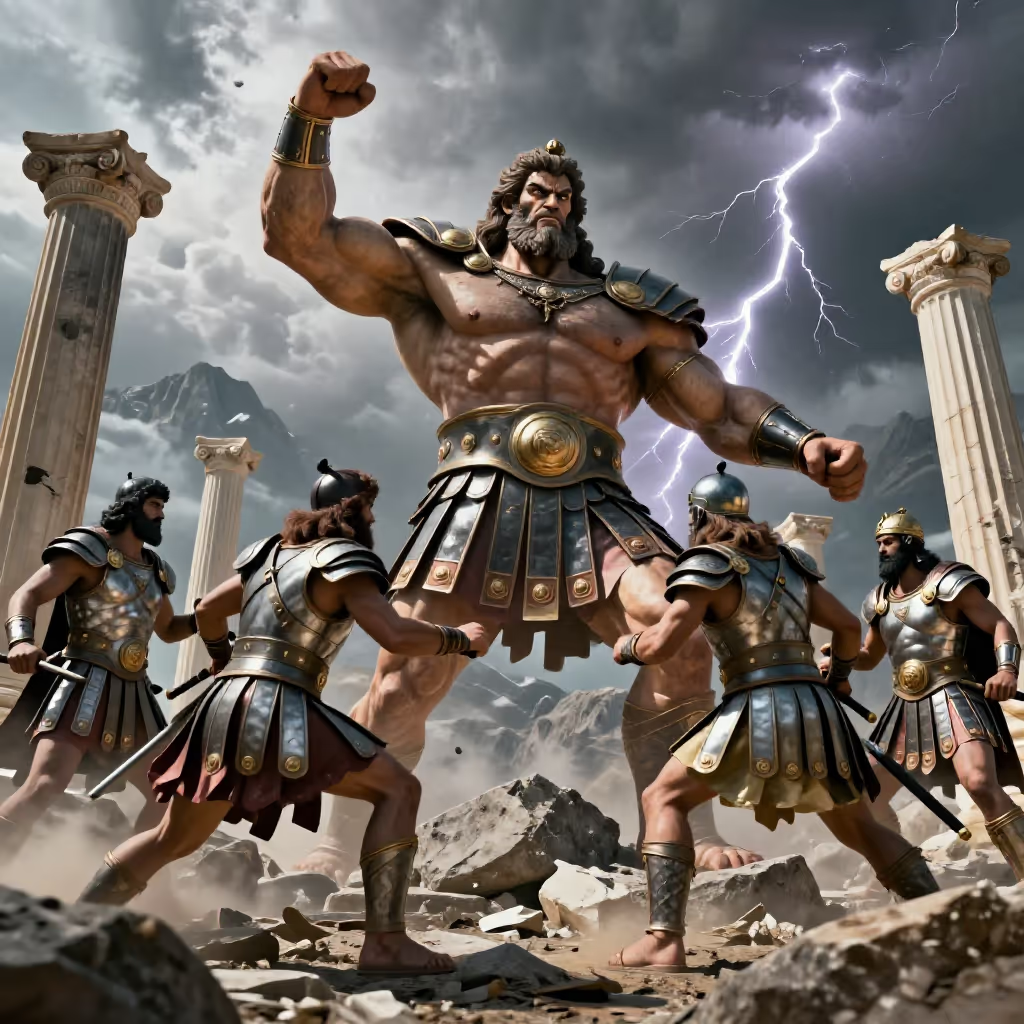
Giant
In Greek mythology, a gigantic being that fought against the gods.
Die Sage erzählt vom Kampf der olympischen Götter gegen die Giganten.
The legend tells of the battle of the Olympian gods against the Giants.
“Gigant” (giant) is a weak masculine noun and belongs to the N-declension. This means it takes the ending “-en” in the accusative, dative, and genitive singular, as well as throughout the plural.
Die Presse feierte den Unternehmer als Giganten.
The press celebrated the entrepreneur as a giant.
The word “Gigant” (giant) belongs to the word family of “gigantisch” (gigantic). If you know that “gigantisch” means “riesengroß” (huge/enormous), you can easily derive the meaning of “Gigant” as “riesige Person” (huge person) or “riesiges Unternehmen” (huge company).
Der Bau des gigantischen Staudamms dauerte zehn Jahre.
The construction of the gigantic dam took ten years.
In an economic context, “Gigant” (giant) is often combined with an industry to specify the type of company. Common examples are “Software-Gigant” (software giant), “Industrie-Gigant” (industrial giant), or “Finanz-Gigant” (financial giant).
Der deutsche Automobil-Gigant hat ein neues Werk im Ausland eröffnet.
The German automotive giant has opened a new factory abroad.
The context makes clear which meaning is intended. If it is about business or technology, a company is meant. If people are talking about a person’s height, it means a giant. In a historical context, it is usually about mythology.
Der Internet-Gigant kaufte mehrere kleine Firmen auf.
The internet giant bought up several small companies.
titan
Titan and Gigant can both refer to an exceptionally important person. Titan is more likely to honor outstanding achievement or importance, while Gigant emphasizes size, power, or influence more strongly. Use “Titan” for an outstanding personality and “Gigant” for a dominant player.

Der Konzern gilt als Gigant der internationalen Wirtschaft.
The corporation is considered a giant in the international economy.
Als Titan der Forschung wurde sie für ihre bahnbrechenden Entdeckungen geehrt.
She was honored as a titan of research for her groundbreaking discoveries.