


der Tod
death
The end of life; the state of no longer being alive.
EXAMPLE
Der Tod ist ein natürlicher Teil des Lebens.
Death is a natural part of life.
death
Loading your saved state.
death
The end of life; the state of no longer being alive.
Der Tod ist ein natürlicher Teil des Lebens.
Death is a natural part of life.
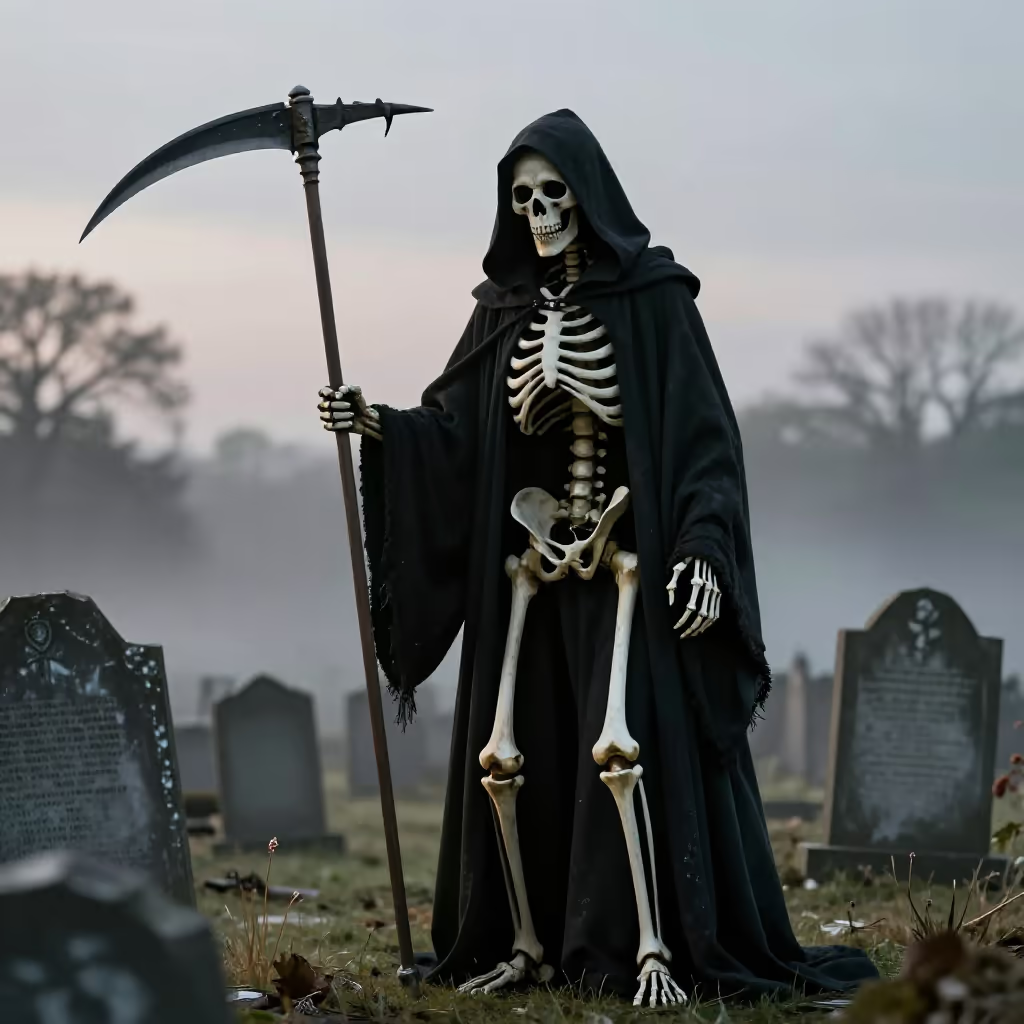
Death
The personification of death, often depicted as a skeleton with a scythe (the Grim Reaper).
Im Mittelalter fürchteten die Menschen, der Tod könnte sie jederzeit holen.
In the Middle Ages, people feared that Death could come for them at any time.
'Der Tod' (noun) belongs to a word family with the adjective 'tot' (dead) and the verb 'töten' (to kill). Be careful not to confuse the three parts of speech.
Der plötzliche Tod des Königs war ein Schock für das Land.
The sudden death of the king was a shock for the country.
A typical mistake is confusing the noun 'der Tod' (death) with the adjective 'tot' (dead). 'Der Tod' describes the concept or event, while 'tot' describes the state of a person or thing.
Sein Tod hat uns alle sehr traurig gemacht.
His death made us all very sad.
There are many fixed expressions with 'Tod'. Common ones include 'zu Tode kommen' (to die), 'sich zu Tode langweilen' (to be extremely bored), or 'ein Kampf auf Leben und Tod' (a fight to the death).
Bei dem schweren Erdbeben sind viele Menschen zu Tode gekommen.
Many people died in the severe earthquake.
'Der Tod' can also be represented as a person, often as a skeleton with a scythe (the 'Sensenmann' = Grim Reaper). In this case, the word is treated like a name and describes an active figure.
In dem alten Märchen versucht der Held, den Tod zu überlisten.
In the old fairy tale, the hero tries to outwit Death.
end
Ende can be used as a euphemistic or formal way to refer to a person's death, while Tod states the fact directly. If you want to avoid a harsh statement, you can speak of the Ende; Tod is more suitable for a clear, factual statement.

Nach langer Krankheit bestätigte der Arzt seinen Tod.
After a long illness, the doctor confirmed his death.
Nach langer Krankheit kam sein Ende ruhig und friedlich.
After a long illness, his end came quietly and peacefully.