


das Ende
end
The last part or final point of something temporal, such as a film, a book, or an event.
EXAMPLE
Das Ende des Buches hat mich sehr überrascht.
The end of the book really surprised me.
end
Loading your saved state.
end
The last part or final point of something temporal, such as a film, a book, or an event.
Das Ende des Buches hat mich sehr überrascht.
The end of the book really surprised me.
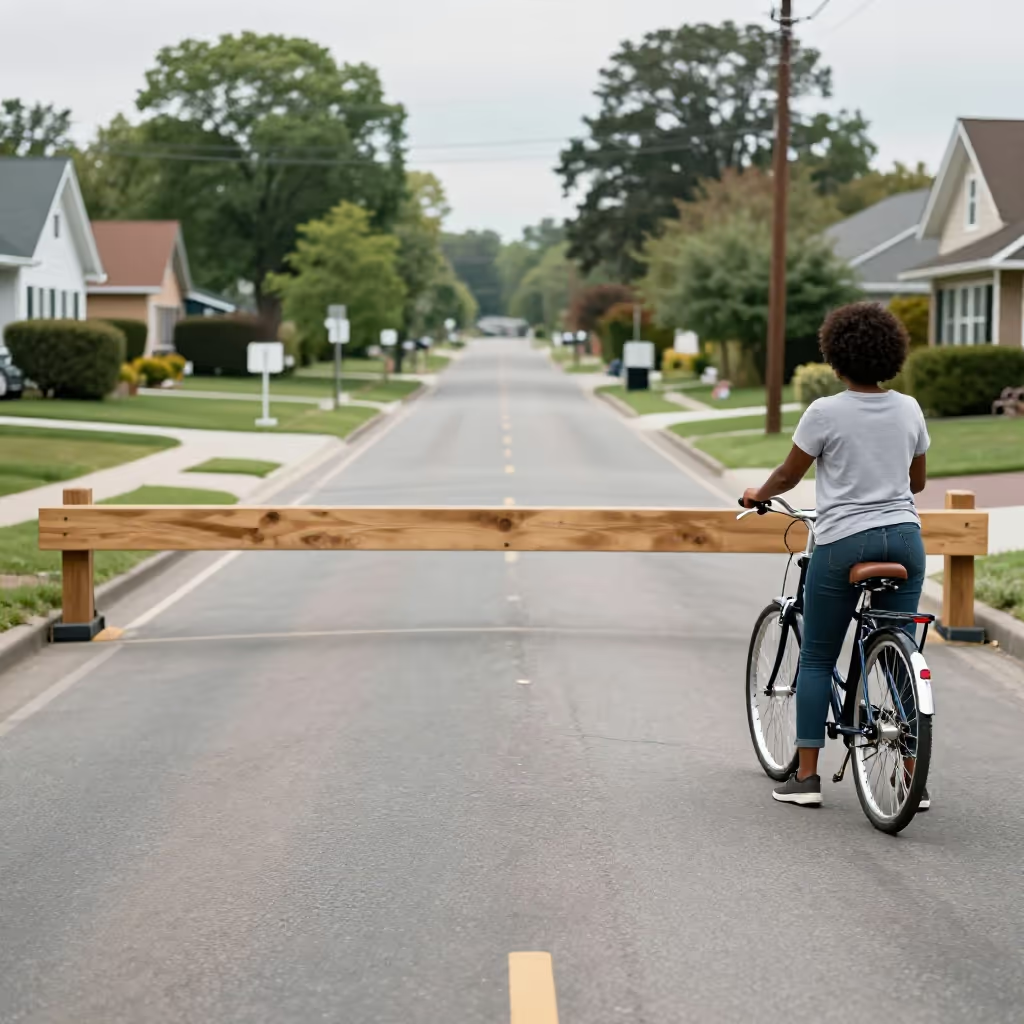
end
The outermost point or boundary of something spatial, such as a street or a rope.
Das Postamt befindet sich am Ende dieser Straße.
The post office is located at the end of this street.

in the end
Ultimately; finally; after everything has been taken into account.
Wir hatten viele Probleme, aber am Ende hat alles geklappt.
We had many problems, but in the end everything worked out.
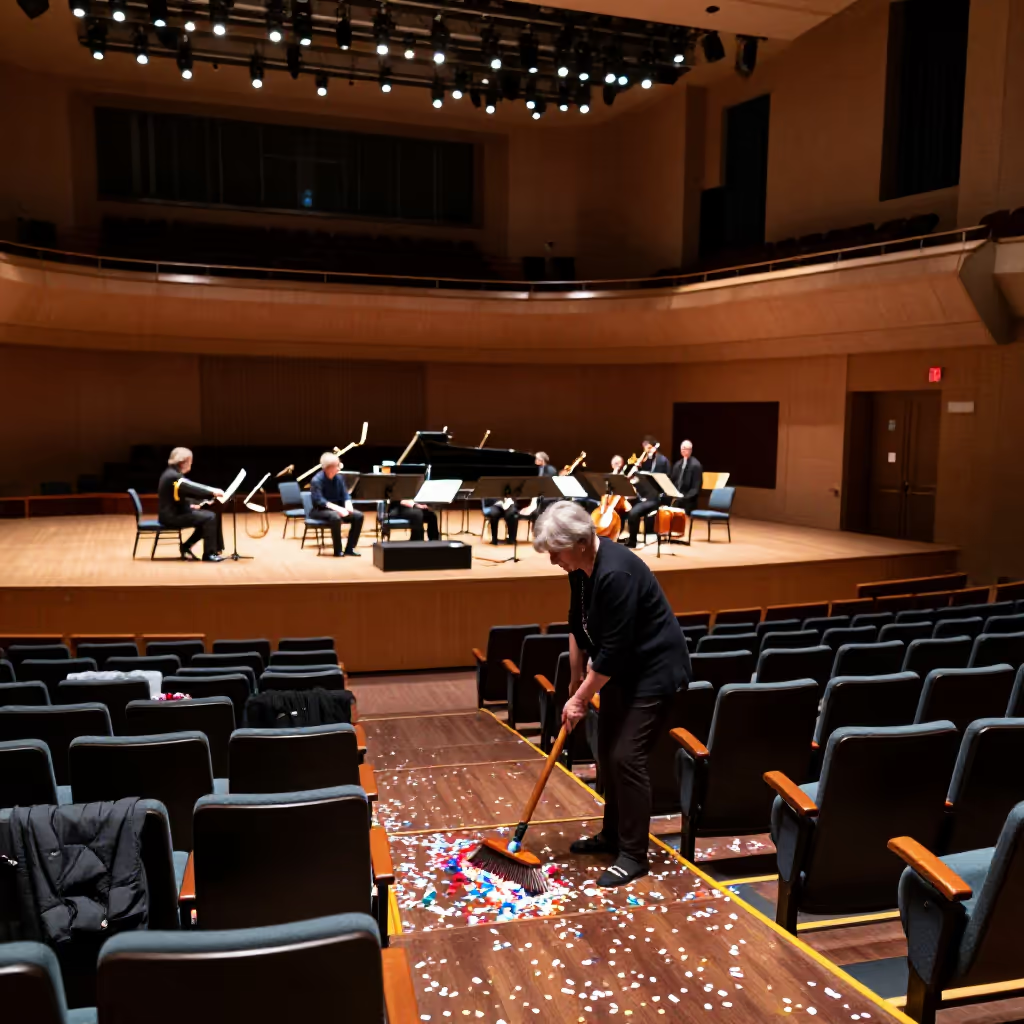
to be over
To be finished; to be over.
Der Film ist gleich zu Ende.
The film is about to be over.

endless
A great deal; in large quantities or nonstop.
Auf der Party gab es Essen und Trinken ohne Ende.
There was endless food and drink at the party.

end
A euphemistic or formal term for death.
Er spürte, dass sein Ende nahe war.
He sensed that his end was near.
'Ende' (end) is a common component of compound nouns. When you see '-ende' at the end of a word, it often refers to the final point of something, for example in 'Wochenende' (weekend) or 'Jahresende' (end of the year).
Ich freue mich schon auf das Wochenende.
I'm already looking forward to the weekend.
The context tells you whether a temporal or spatial end is meant. Words like 'Film' (film), 'Buch' (book), or 'Tag' (day) point to time, while 'Straße' (street), 'Flur' (hallway), or 'Garten' (garden) point to a place.
Am Ende der Straße steht eine alte Eiche.
At the end of the street stands an old oak tree.
The prepositions used with 'Ende' (end) are important. 'Am Ende' (at the end / in the end) describes the final point, 'zum Ende' (toward the end) describes movement toward it, and 'bis zum Ende' (until the end) emphasizes duration.
Am Ende des Monats ist mein Geld immer alle.
At the end of the month, my money is always gone.
The expression 'am Ende' (in the end) can mean 'ultimately' or 'finally' and often stands at the beginning of the sentence. It evaluates a situation in retrospect.
Wir haben lange diskutiert, aber am Ende haben wir uns geeinigt.
We discussed it for a long time, but in the end we reached an agreement.
The phrase 'zu Ende sein' (to be over) or 'zu Ende gehen' (to come to an end) is a fixed unit and means 'to be over' or 'to end'. The subject is the thing that is ending.
Der Urlaub ist leider schon zu Ende.
Unfortunately, the vacation is already over.
The expression 'ohne Ende' (endless / without end) is used like an adverb and means 'a great deal' or 'nonstop'. It usually comes after the noun it refers to.
Auf der Feier gab es Pizza ohne Ende.
There was endless pizza at the celebration.
When 'das Ende' (the end) is used for death, this is a formal and indirect (euphemistic) way of speaking. It is rarely used in everyday language.
Nach langer Krankheit kam sein Ende friedlich im Schlaf.
After a long illness, his end came peacefully in his sleep.
goal / destination / target
Ende and Ziel can both refer to the last point of a route. The Ende is simply the point where the route stops; the Ziel is the intended arrival point of a journey or race. The key question is therefore whether an arrival is planned.

Am Ende des Wanderwegs versperrt ein Zaun den weiteren Weg.
At the end of the hiking trail, a fence blocks the way forward.
Das Ziel unserer Wanderung ist die Hütte am See.
The destination of our hike is the hut by the lake.