

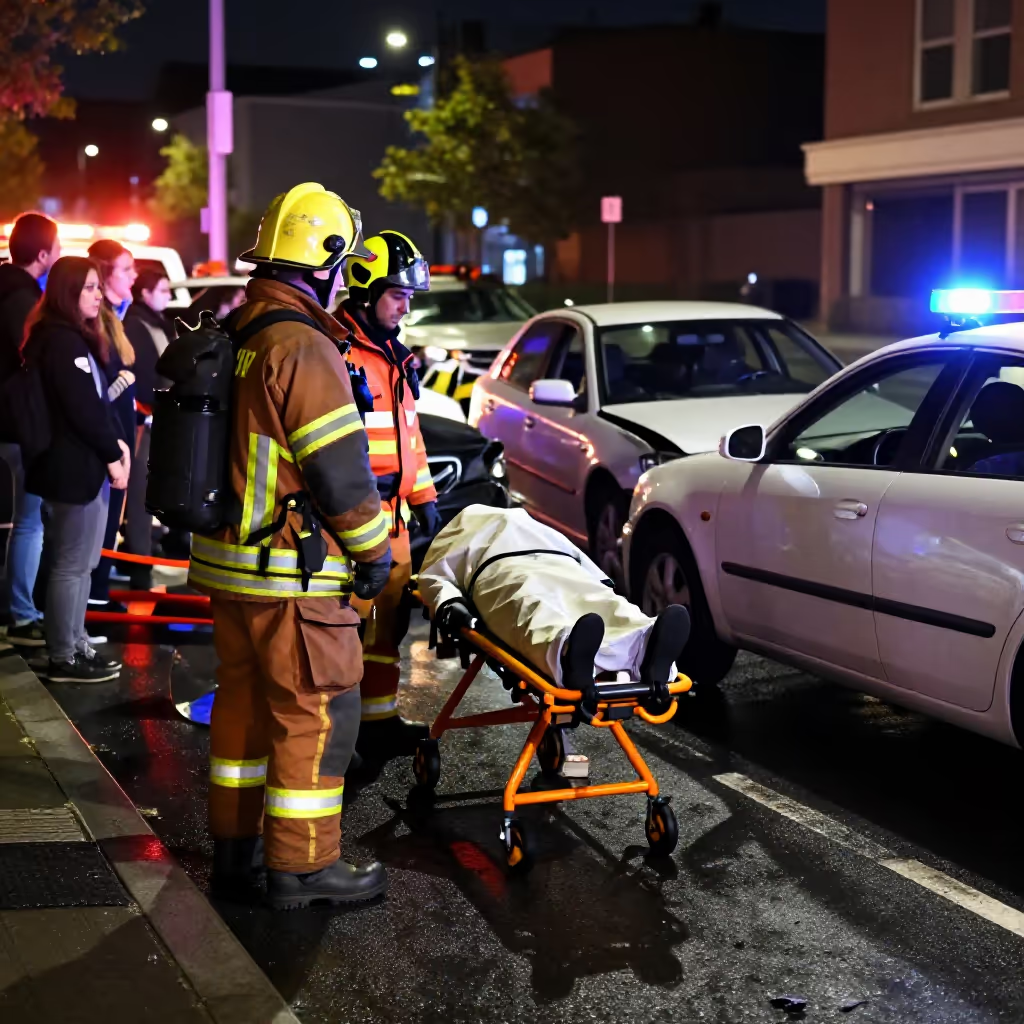
das Todesopfer
fatality
A person who has died in an accident, disaster, crime, or war.
EXAMPLE
Der schwere Verkehrsunfall forderte drei Todesopfer.
The serious traffic accident resulted in three fatalities.
fatality
Loading your saved state.
fatality
A person who has died in an accident, disaster, crime, or war.
Der schwere Verkehrsunfall forderte drei Todesopfer.
The serious traffic accident resulted in three fatalities.
The word is made up of 'der Tod' (death), the linking '-es', and 'das Opfer' (victim). So it literally means a person who has become a 'victim of death'.
Die Bergsteiger wurden zu Todesopfern eines plötzlichen Wetterumschwungs.
The mountain climbers became fatalities of a sudden change in the weather.
'Todesopfer' (fatality) is very often used with the verb 'fordern' (to claim). A disaster or an accident 'claims' a certain number of fatalities. Other typical verbs are 'beklagen' (to mourn/report) or 'geben' (to be/have).
Das Erdbeben hat leider Hunderte von Todesopfern gefordert.
Unfortunately, the earthquake claimed hundreds of lives.
'Todesopfer' (fatality) is a formal word used mainly in the news, in newspaper articles, and in official reports about accidents, wars, or disasters.
Die Polizei hat die genaue Zahl der Todesopfer noch nicht bestätigt.
The police have not yet confirmed the exact number of fatalities.
victim / sacrifice
In the context of a crime or misfortune, “Opfer” can refer to a person who was injured, harmed, or killed. “Todesopfer” is used only when the person died as a result. Every “Todesopfer” is therefore also an “Opfer,” but not every “Opfer” is a “Todesopfer.”
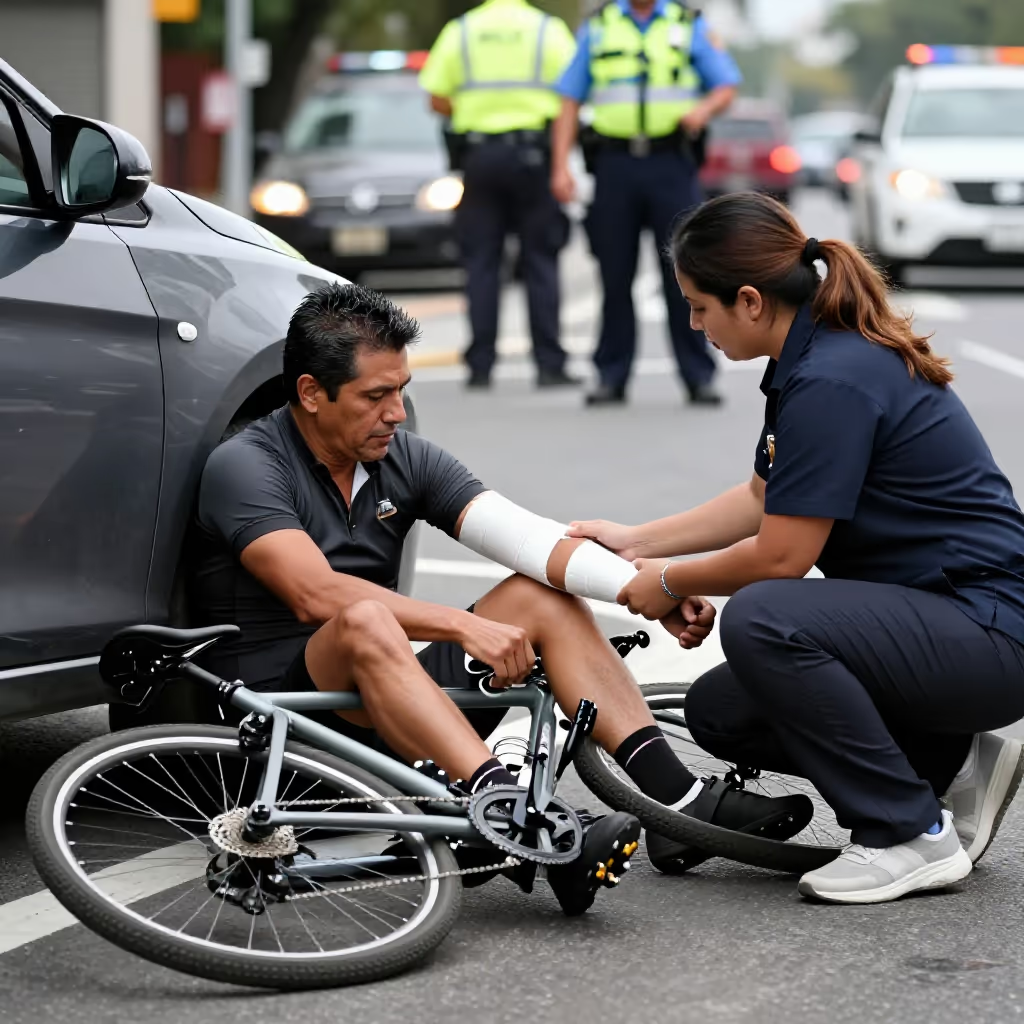
Das Todesopfer des Unfalls starb noch an der Unfallstelle.
The fatality of the accident died at the scene.
Das Opfer des Unfalls wurde verletzt ins Krankenhaus gebracht.
The victim of the accident was taken to the hospital with injuries.