

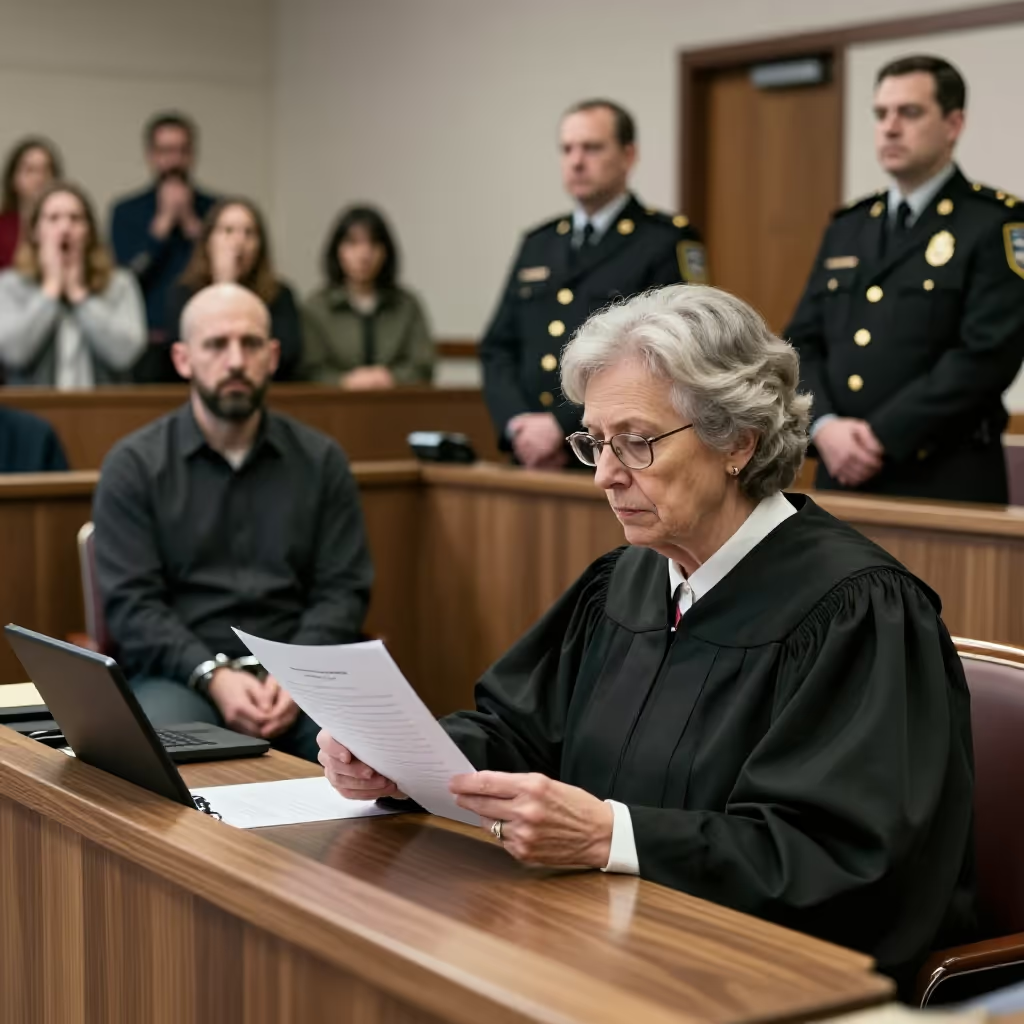
das Todesurteil
death sentence
A court judgment that sentences a person to execution for a crime; capital punishment.
In vielen Ländern wurde das Todesurteil inzwischen abgeschafft.
In many countries, the death sentence has since been abolished.

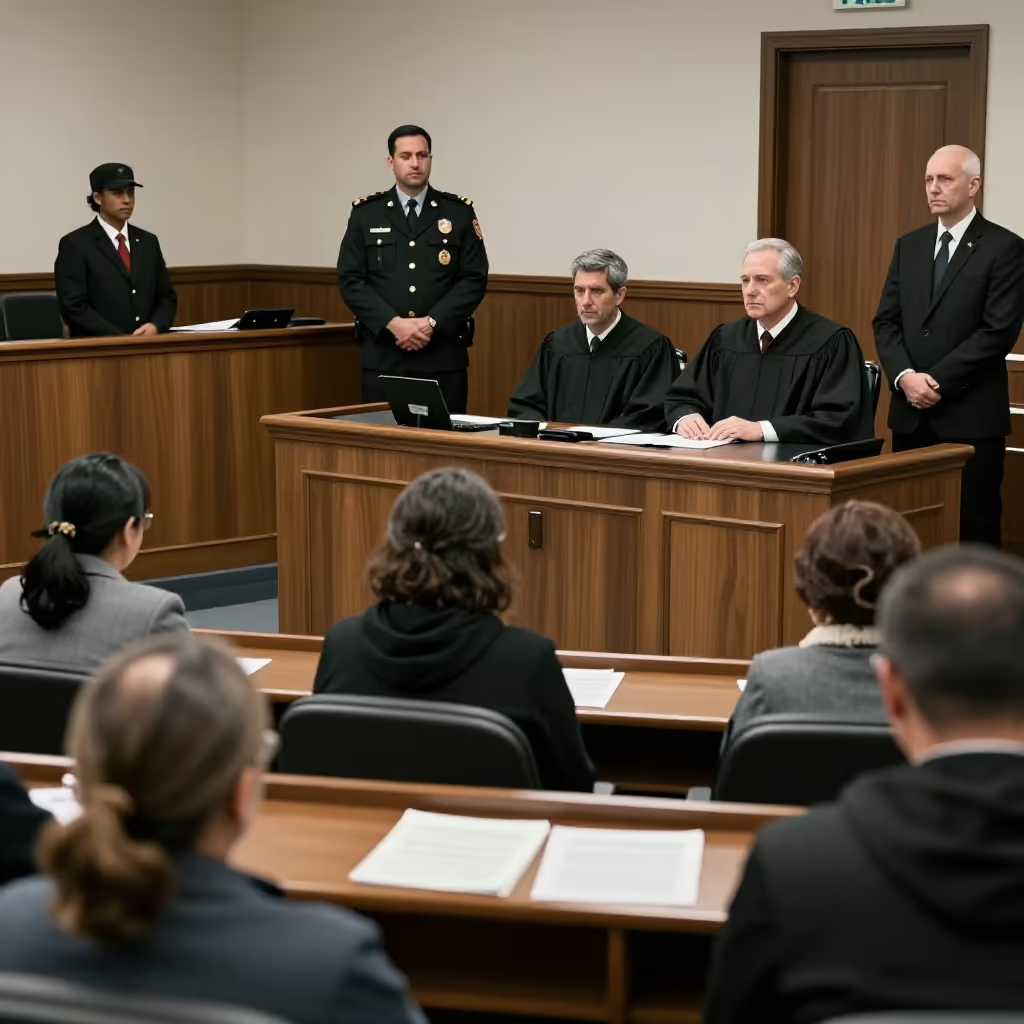
death sentence
Loading your saved state.
death sentence
A court judgment that sentences a person to execution for a crime; capital punishment.
In vielen Ländern wurde das Todesurteil inzwischen abgeschafft.
In many countries, the death sentence has since been abolished.

The word is made up of 'Tod' (death; genitive: 'des Todes') and 'Urteil' (court judgment). So it literally means a 'Urteil des Todes' (judgment of death).
Der Richter verkündete das Todesurteil.
The judge announced the death sentence.
In a legal context, a 'Todesurteil' (death sentence) is 'gefällt' (passed), 'verkündet' (announced), or 'vollstreckt' (carried out). A convicted person 'bekommt' (receives) a death sentence.
Das Gericht fällte gegen den Angeklagten das Todesurteil.
The court passed the death sentence against the defendant.
The preposition helps you recognize the meaning. The literal meaning (court) is often used with 'gegen eine Person' (against a person). The figurative meaning (the end of something) usually appears with 'für eine Sache' (for something).
Das Todesurteil gegen den Mörder wurde bestätigt.
The death sentence against the murderer was upheld.
In the figurative sense, 'Todesurteil' (death sentence) is a very strong, dramatic word. It is used to emphasize that a decision or event definitively ends something.
Die Absage des Investors war das Todesurteil für unser Start-up.
The investor's rejection was the death sentence for our start-up.
end
'das Ende' and 'das Todesurteil' can both have to do with a final conclusion. 'das Ende' is neutral and very general: something is over or comes to a stop. 'das Todesurteil' is much stronger. Literally, it means a court judgment that leads to an execution. Figuratively, it means a decision or event that makes something certain to fail. In normal situations, you say 'Ende'. 'Todesurteil' only fits when you want to say very clearly: after that, there is practically no chance left.

Der Verlust des größten Kunden war für die kleine Firma fast ein Todesurteil.
Losing its biggest customer was almost a death sentence for the small company.
Das Ende des Projekts war für das Team enttäuschend.
The end of the project was disappointing for the team.