

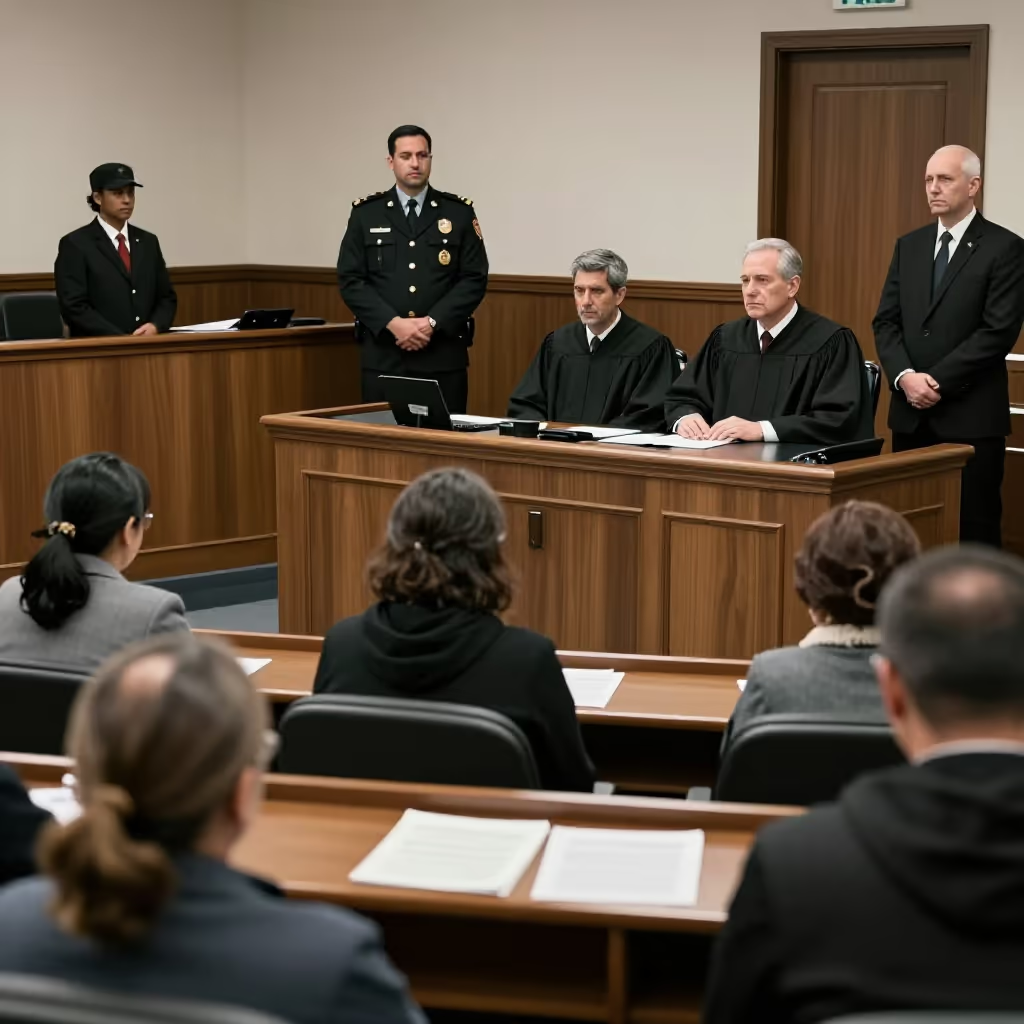
die Todesstrafe
death penalty
The legally prescribed killing of a person as punishment for a very serious crime.
EXAMPLE
In vielen Ländern wurde die Todesstrafe inzwischen abgeschafft.
In many countries, the death penalty has now been abolished.
death penalty
Loading your saved state.
death penalty
The legally prescribed killing of a person as punishment for a very serious crime.
In vielen Ländern wurde die Todesstrafe inzwischen abgeschafft.
In many countries, the death penalty has now been abolished.
This word is a clear compound made up of 'der Tod' (death) and 'die Strafe' (punishment/penalty). So it literally describes a punishment that leads to death.
Der Angeklagte wurde zur Todesstrafe verurteilt.
The defendant was sentenced to the death penalty.
In legal and political contexts, the death penalty is often used with specific verbs: one can 'fordern' (demand) it, 'verhängen' (impose it officially), 'vollstrecken' (carry it out), or 'abschaffen' (abolish it).
Mehrere Organisationen kämpfen dafür, die Todesstrafe weltweit abzuschaffen.
Several organizations are fighting to abolish the death penalty worldwide.
The construction 'unter Todesstrafe stehen' means that a particular crime can be punished by death. The subject here is the crime.
In diesem Land steht auf Drogenhandel die Todesstrafe.
In this country, drug trafficking carries the death penalty.
execution
The Todesstrafe is the legally prescribed killing of a person as punishment. Hinrichtung, by contrast, refers to the specific act of carrying out a death sentence. Todesstrafe is used for the type of punishment, while Hinrichtung is used for its actual enforcement.

Das Gericht verhängte gegen den Verurteilten die Todesstrafe.
The court sentenced the convicted person to the death penalty.
Die Hinrichtung des Verurteilten wurde am folgenden Morgen vollzogen.
The execution of the convicted person was carried out the following morning.