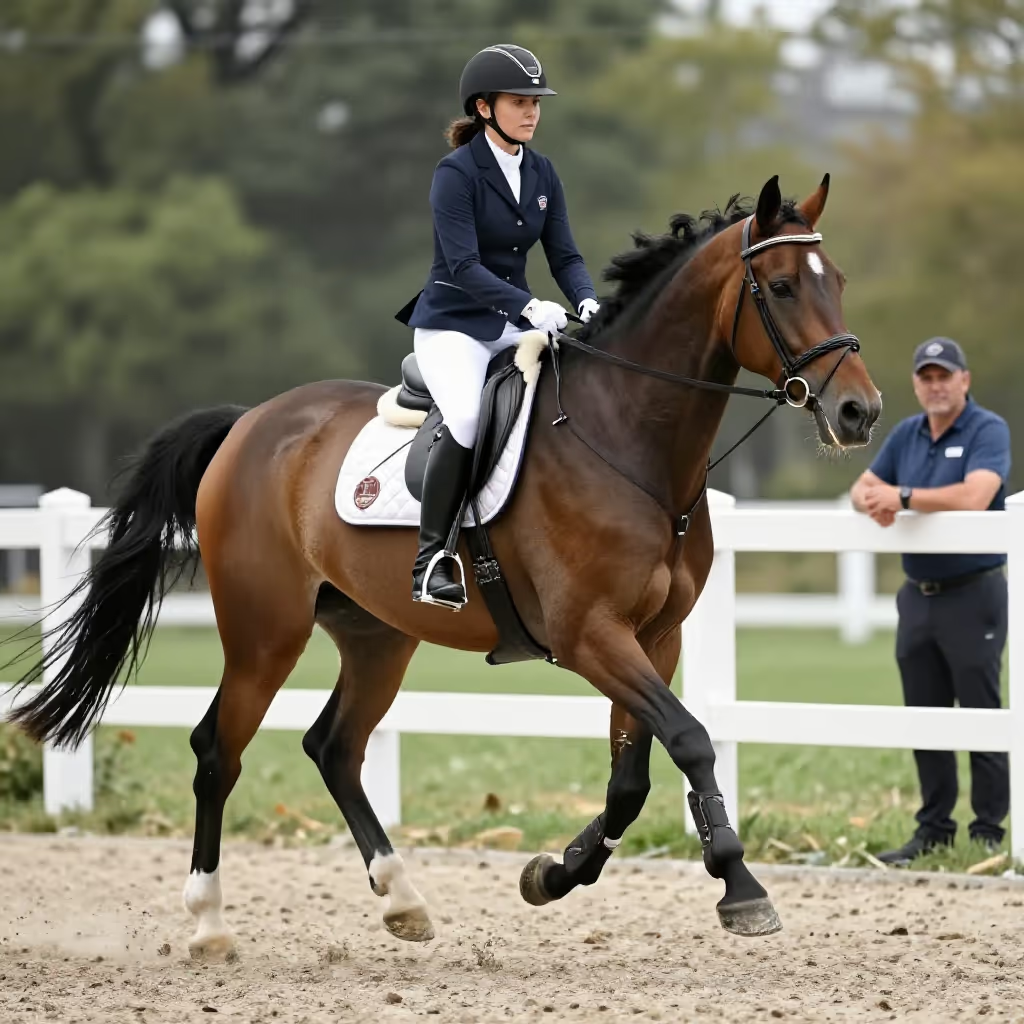
A gait of horses and other four-legged animals that is faster than a walk and slower than a gallop, in which the diagonal pairs of legs move at the same time.
example
Das Pferd wechselte vom Schritt in einen leichten Trab.
The horse changed from a walk into a light trot.

Usage tips
Use with horses
When referring to the gait of horses, 'Trab' (trot) is often used with the prepositions 'in' and 'im'. 'In den Trab fallen' (to break into a trot) describes the beginning, while 'im Trab reiten' (to ride at a trot) describes the ongoing movement.
EXAMPLE
Das Pferd fiel in einen leichten Trab.
The horse broke into a light trot.
Fixed expression
The idiom 'jemanden auf Trab halten' means that a person or situation keeps someone very busy. The person being kept busy is in the accusative.
EXAMPLE
Meine drei Kinder halten mich den ganzen Tag auf Trab.
My three children keep me busy all day.
Colloquial expression
The expression 'im Trab' (at a trot) is used colloquially to describe someone walking or running quickly or being in a hurry. It is a figurative transfer from the horse gait.
EXAMPLE
Ich musste im Trab zur Haltestelle laufen, um den Bus nicht zu verpassen.
I had to run to the stop at a trot so I wouldn't miss the bus.
Compare with
near_synonym · confusable
Trab vs laufen
to run
'laufen' and 'der Trab' both have to do with fast movement. 'laufen' is used for people when they move faster than walking. 'der Trab' is mainly a gait of horses and other four-legged animals, between a walk and a gallop. With people, you sometimes say 'im Trab' when someone is moving quickly and in a hurry; however, this sounds more figurative or colloquial. Learners may confuse the words because both describe fast movement. As a practical rule: people 'laufen' (run), horses go 'im Trab' (at a trot).
Trab
Das Pferd fiel nach der Kurve in einen ruhigen Trab.
After the turn, the horse settled into a calm trot.
laufen
Vor dem Wochenende bin ich beim Training fünf Kilometer gelaufen.
Before the weekend, I ran five kilometers during training.