

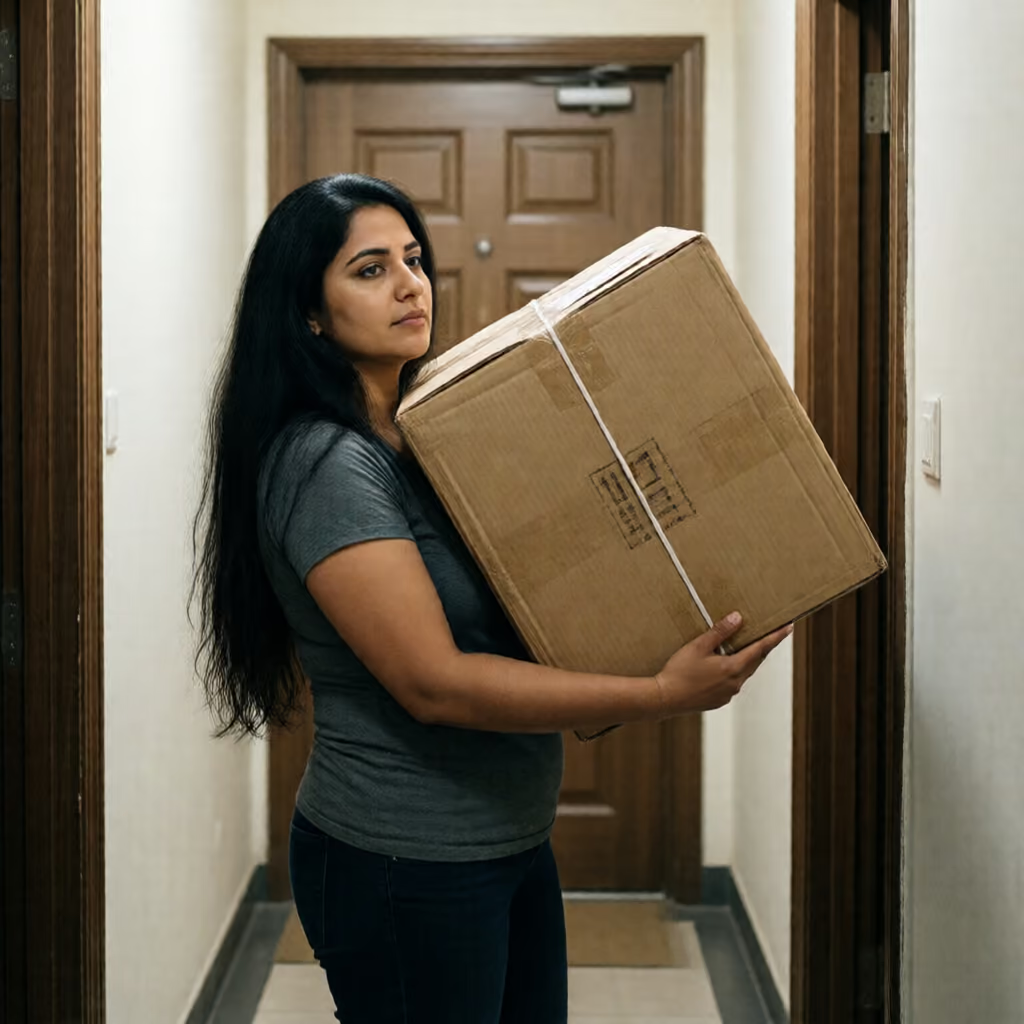
die Trägerin
bearer
A woman or girl who carries something or brings it from one place to another.
EXAMPLE
Die Trägerin brachte das schwere Paket bis zur Wohnungstür.
The bearer carried the heavy package to the apartment door.
bearer / wearer / carrier
die Trägerin, die Trägerinnen
Loading your saved state.
bearer
A woman or girl who carries something or brings it from one place to another.
Die Trägerin brachte das schwere Paket bis zur Wohnungstür.
The bearer carried the heavy package to the apartment door.

wearer
A woman or girl who wears a garment, jewelry, or a particular distinguishing feature, or has it on her person.
Die Trägerin des roten Kleides gewann den Schönheitswettbewerb.
The wearer of the red dress won the beauty contest.

titleholder / recipient
A woman who holds and represents a title, award, name, or particular function.
Die Trägerin des Literaturpreises bedankte sich in ihrer Rede.
The recipient of the literary award thanked everyone in her speech.

carrier
A woman who carries a pathogen or a particular genetic trait and may be able to pass it on without being ill herself.
Die Trägerin des Gens zeigte selbst keine Symptome.
The carrier of the gene showed no symptoms herself.
| gender | feminine die |
|---|---|
| plural | die Trägerinnen |
| genitive | der Trägerin |
| singular | plural | |
|---|---|---|
| nominative | die Trägerin | die Trägerinnen |
| accusative | die Trägerin | die Trägerinnen |
| dative | der Trägerin | den Trägerinnen |
| genitive | der Trägerin | der Trägerinnen |
The article changes with the case; it is shown in colour.
What a Trägerin (bearer/wearer/carrier) carries or possesses is often specified by a genitive complement. With a complement introduced by 'von' (of), the dative is used.
Die Trägerin des schweren Rucksacks blieb kurz stehen.
The bearer of the heavy backpack stopped briefly.
Der Helm bietet auch Trägerinnen von Brillen genügend Platz.
The helmet also offers enough room for wearers of glasses.
'Als Trägerin arbeiten' (to work as a bearer) or 'als Trägerin eingesetzt werden' (to be employed as a bearer) describes an occupational activity or an assigned task. You may encounter this usage in reports about expeditions and the transport of equipment.
Während der Expedition arbeitete sie als Trägerin und transportierte Ausrüstung zum nächsten Lager.
During the expedition, she worked as a bearer and transported equipment to the next camp.
In descriptions of clothing, jewelry, or glasses, Trägerin (wearer) often refers to the intended female user of a product. Typical collocations are 'der Trägerin passen' (to fit the wearer) and 'sich der Trägerin anpassen' (to adjust to the wearer).
Das Armband lässt sich verstellen und passt sich dem Handgelenk der Trägerin an.
The bracelet can be adjusted and adapts to the wearer's wrist.
For titles and awards, Trägerin (titleholder/recipient) is particularly common in official announcements, résumés, and public tributes. The full name of the award is often given.
In ihrem Lebenslauf wird sie als Trägerin des Deutschen Buchpreises vorgestellt.
In her résumé, she is described as the recipient of the German Book Prize.
In medical texts, 'symptomlose Trägerin' (asymptomatic carrier) and 'Trägerin einer Genmutation' (carrier of a genetic mutation) are common. The phrase 'als Trägerin identifiziert werden' (to be identified as a carrier) describes the result of an examination.
Bei der Untersuchung wurde sie als symptomlose Trägerin des Erregers identifiziert.
During the examination, she was identified as an asymptomatic carrier of the pathogen.