

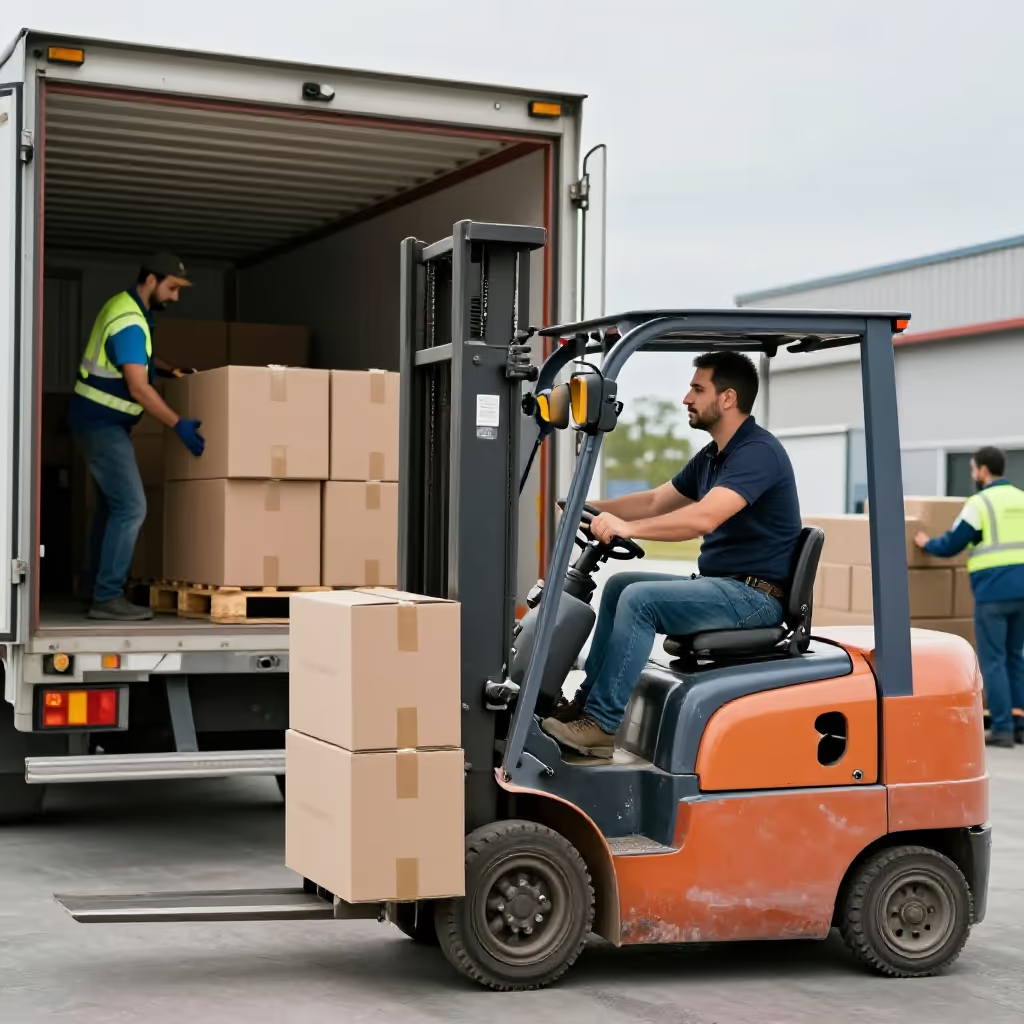
der Transport
transport
The process of transporting people, merchandise, or goods from one place to another.
Der Transport der Möbel in den fünften Stock war sehr anstrengend.
Transporting the furniture to the fifth floor was very exhausting.
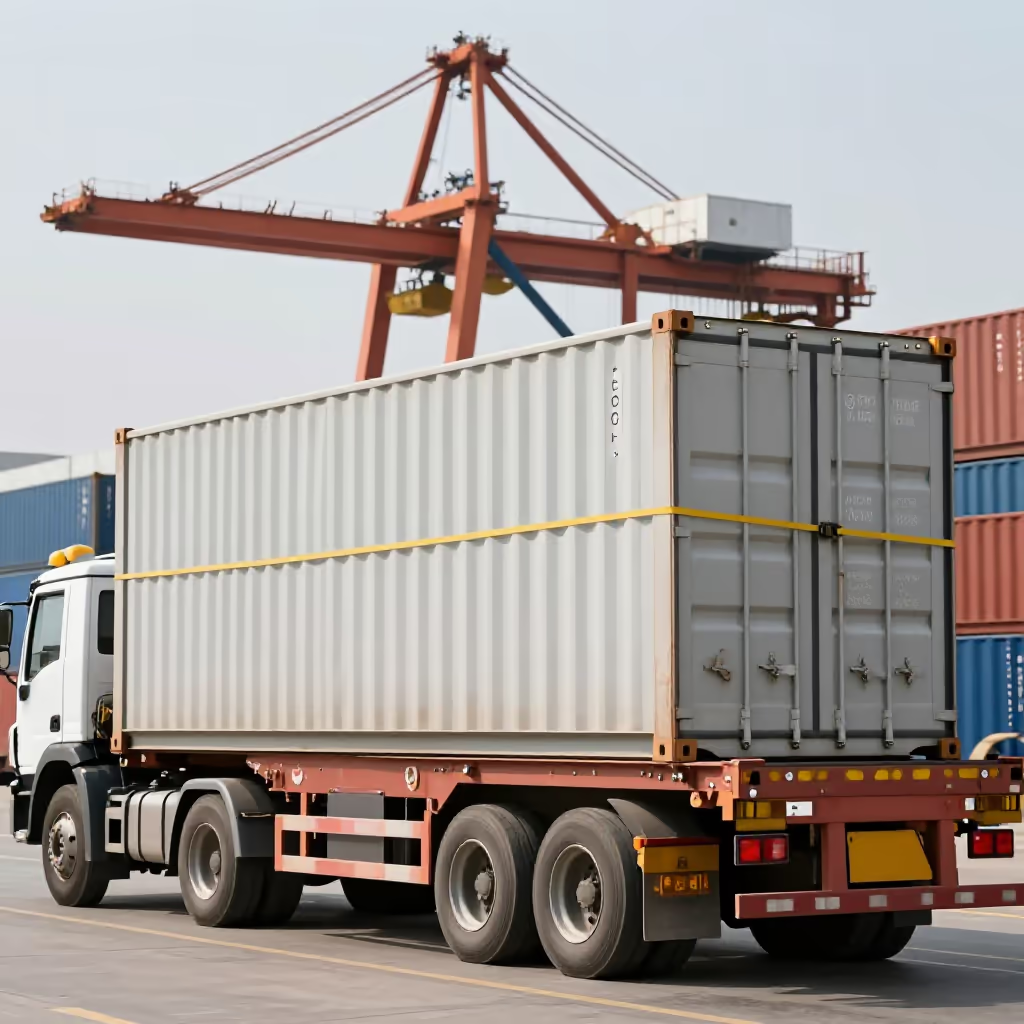
transport
Loading your saved state.
transport
The process of transporting people, merchandise, or goods from one place to another.
Der Transport der Möbel in den fünften Stock war sehr anstrengend.
Transporting the furniture to the fifth floor was very exhausting.

'Der Transport' (transport/shipment) refers to the transporting of goods or a single delivery. It is not used for public transportation systems in the way the English word 'transport' can be. For that, German uses 'der Verkehr' (traffic/transportation) or 'die Verkehrsmittel' (means of transportation).
Der öffentliche Verkehr in dieser Stadt ist sehr gut ausgebaut.
Public transportation in this city is very well developed.
'Der Transport' (transport) is the noun corresponding to the verb 'transportieren' (to transport). If you know the verb, you can easily derive the meaning of the noun.
Die Firma transportiert Waren in die ganze Welt.
The company transports goods all over the world.
'Transport' (transport/shipment) can be countable or uncountable. Used uncountably, it describes the process ('der Transport von A nach B' — transport from A to B). Used countably, it means a single delivery ('ein Transport ist angekommen' — a shipment has arrived).
Der Transport der Maschine dauert drei Tage.
Transporting the machine takes three days.
When referring to the process, 'Transport' (transport) is often combined with 'von' (of/from) or 'für' (for) to describe what or for whom something is transported. Typical phrases are 'der Transport von Gütern' (the transport of goods) or 'der Transport für Kranke' (transport for sick people).
Die Versicherung deckt Schäden beim Transport von zerbrechlicher Ware.
The insurance covers damage during the transport of fragile goods.
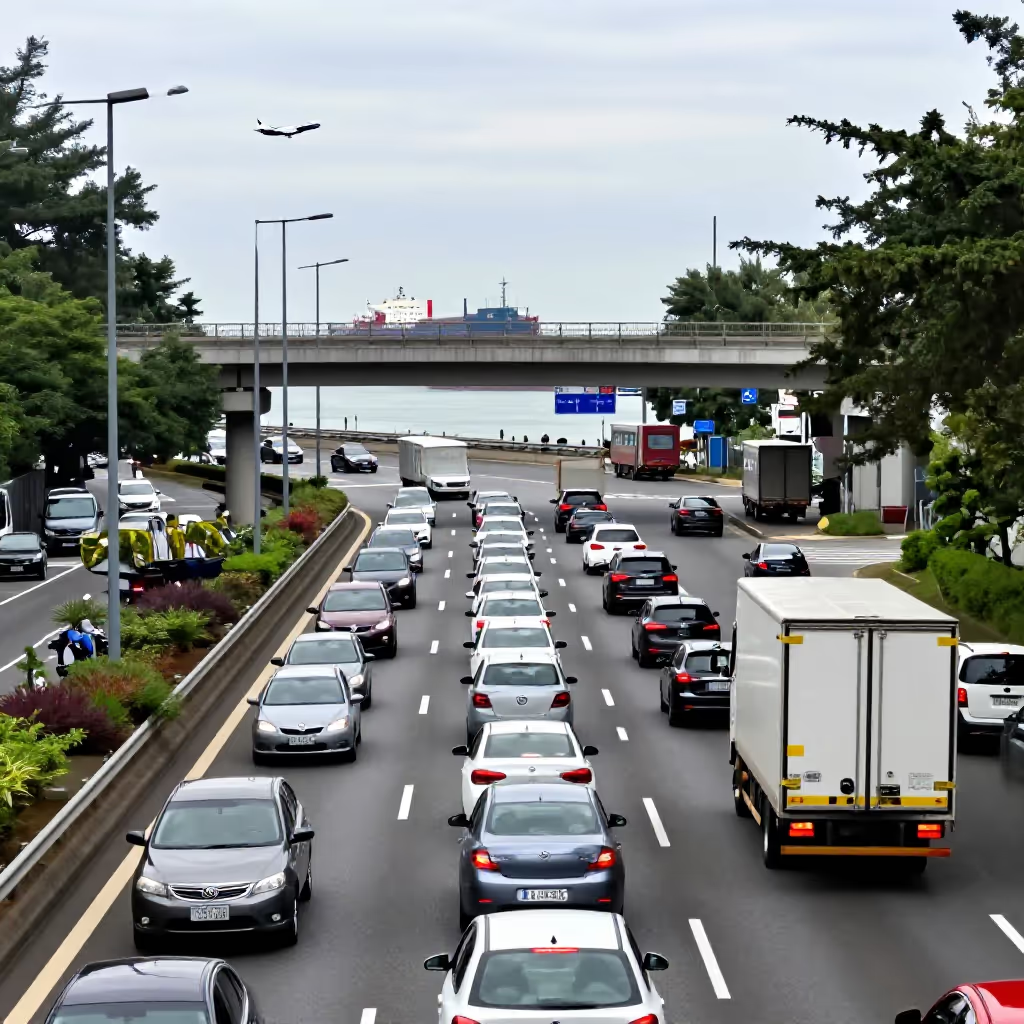
traffic / contact
'Verkehr' and 'Transport' both have to do with the movement of people or things from one place to another. 'Verkehr' refers more to the whole activity on roads, rails, in the air, or on the water: many vehicles, routes, traffic jams, rules, and movement. 'Transport' more precisely means transporting people or goods, often as a task or a single shipment. Learners may confuse the words because in both cases something is on the move. As a practical rule: for traffic jams, roads, and many vehicles, 'Verkehr' fits better; for goods or a load from A to B, 'Transport' fits better.

Der Transport der Möbel dauert wegen der engen Treppe länger.
Transporting the furniture is taking longer because of the narrow staircase.
Am Montag ist der Verkehr in der Innenstadt besonders dicht.
On Mondays, traffic in the city center is especially heavy.