


sich trennen
to separate
To end a romantic relationship or a marriage.
EXAMPLE
Nach vielen gemeinsamen Jahren haben sie sich überraschend getrennt.
After many years together, they separated unexpectedly.
to separate
Loading your saved state.
to separate
To end a romantic relationship or a marriage.
Nach vielen gemeinsamen Jahren haben sie sich überraschend getrennt.
After many years together, they separated unexpectedly.
to separate
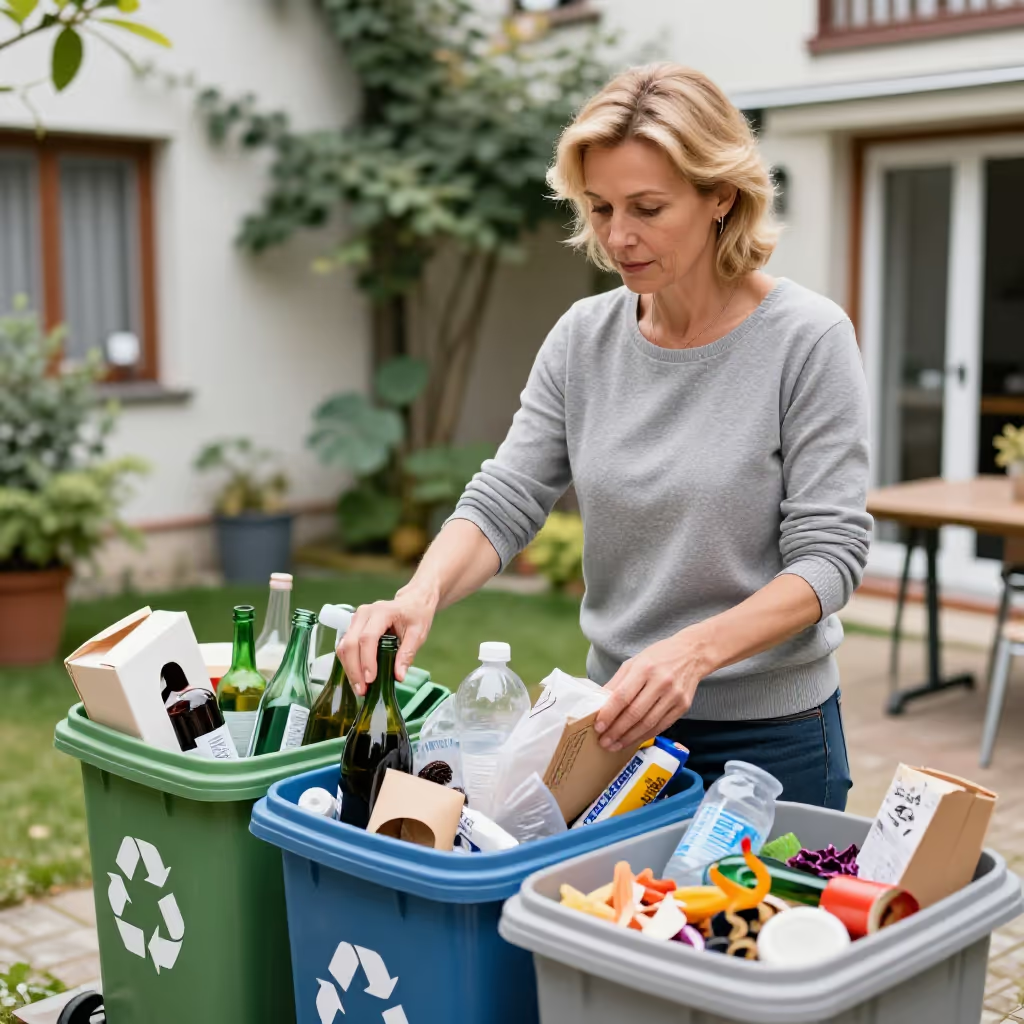
To separate or sort different things from one another, especially waste for recycling.
In unserer Küche trennen wir sorgfältig Papier, Glas und Plastik.
In our kitchen, we carefully separate paper, glass, and plastic.

to separate
To physically divide something into two or more parts, for example by cutting or tearing.
Für das Rezept musst du das Eigelb vom Eiweiß trennen.
For the recipe, you have to separate the egg yolk from the egg white.
to disconnect
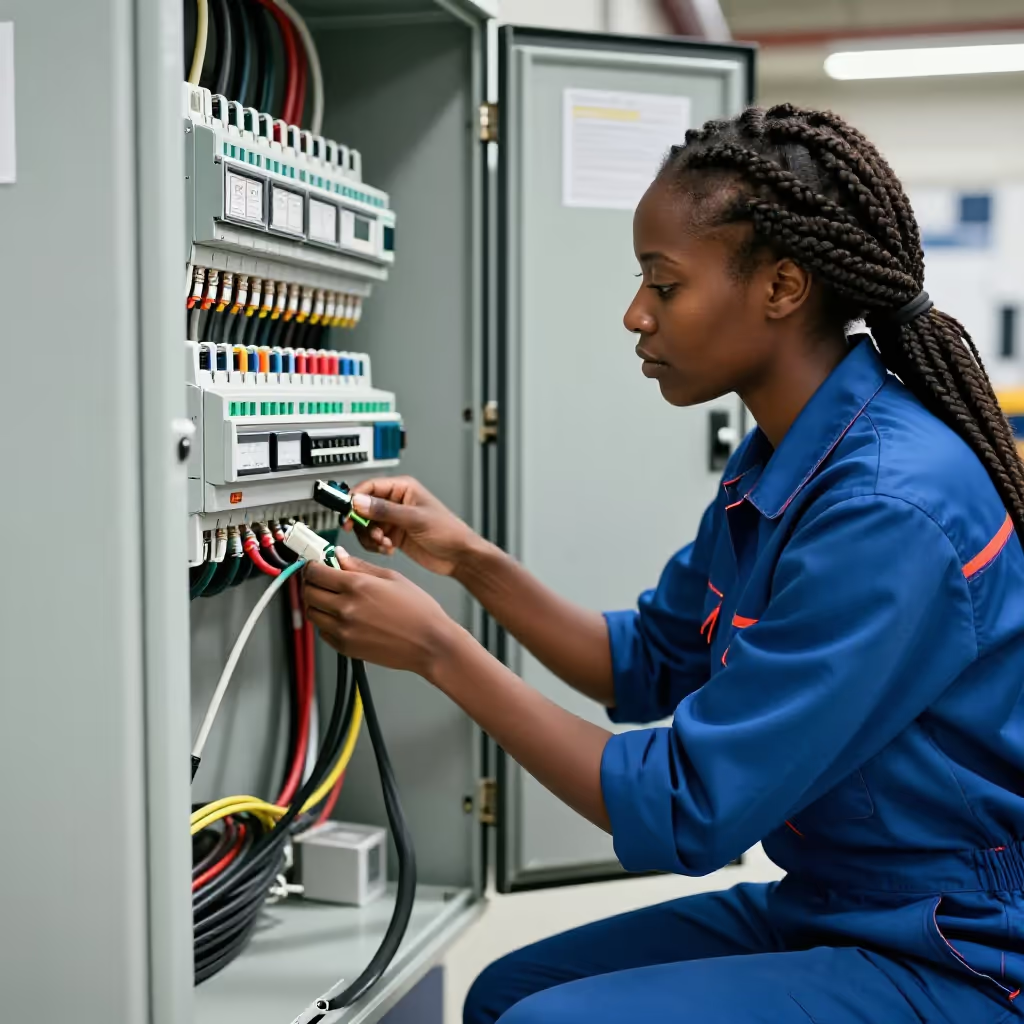
To interrupt a connection, for example an electrical connection or a telephone connection.
Bei einem Gewitter sollte man empfindliche Geräte vom Stromnetz trennen.
During a thunderstorm, you should disconnect sensitive devices from the power supply.
to separate
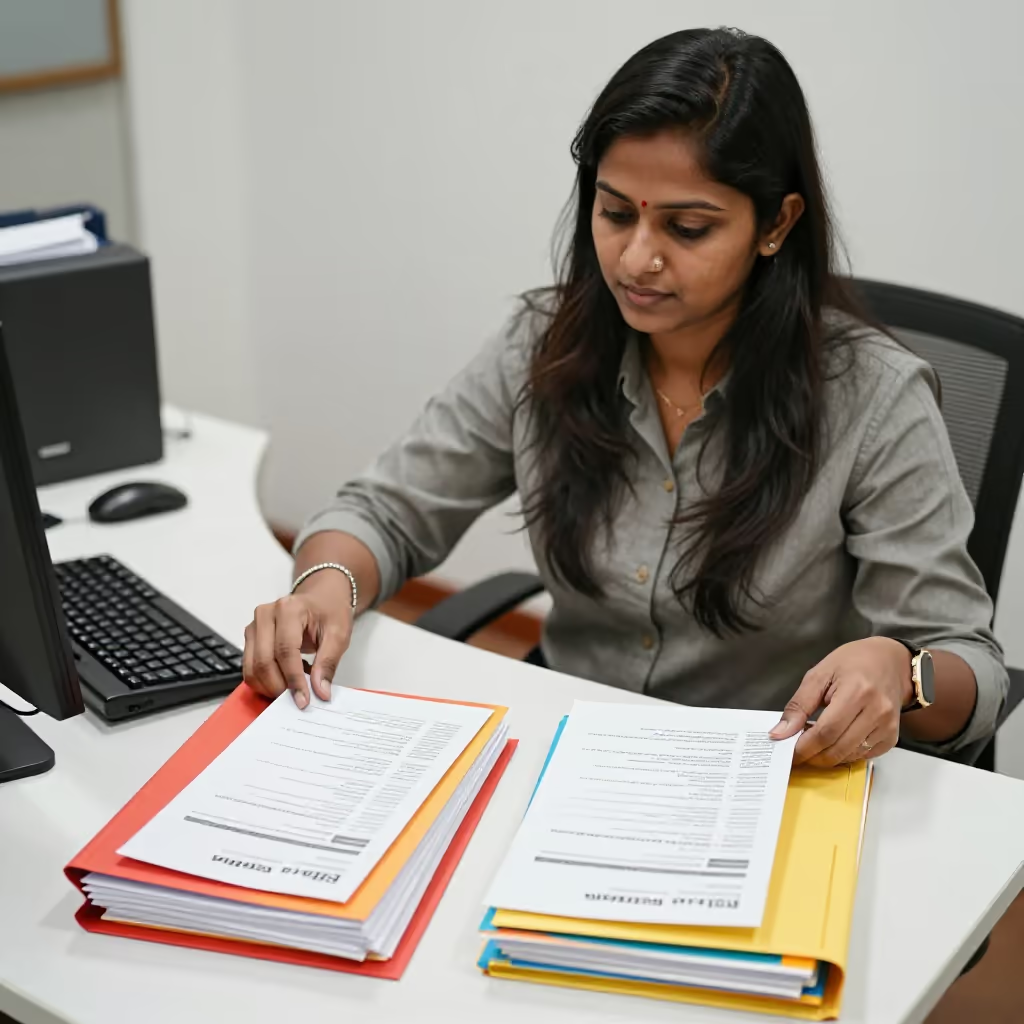
To distinguish mentally or organizationally between different areas or aspects.
Es fällt ihm schwer, Berufliches und Privates klar zu trennen.
He finds it hard to clearly separate work and private life.
The verb 'trennen' (to separate) is often used with the preposition 'von' and the dative to express what is being separated from what. It can also be reflexive ('sich trennen') or simply take an accusative object ('Müll trennen' — to separate waste).
Sie hat sich von ihrem Freund getrennt.
She separated from her boyfriend.
When talking about the end of a relationship, the verb must be used reflexively: 'sich trennen' (to separate / to break up). The person you separate from is introduced with 'von + dative'.
Er hat sich letzte Woche von seiner Frau getrennt.
He separated from his wife last week.
In everyday life, the most common use is waste separation. The phrase 'den Müll trennen' (to separate the waste) means sorting waste by materials such as paper, glass, and plastic.
In Deutschland ist es üblich, den Müll zu trennen.
In Germany, it is common to separate waste.
A classic example of physical separation is 'Eier trennen' (to separate eggs). This means separating the egg yolk and the egg white from each other for a recipe.
Für dieses Dessert musst du zuerst drei Eier trennen.
For this dessert, you first have to separate three eggs.
In technical contexts, 'trennen' (to disconnect) often means to interrupt a connection. Typical phrases are 'vom Strom trennen' (to disconnect from the power), 'vom Netz trennen' (to disconnect from the network/power grid), or 'die WLAN-Verbindung trennen' (to disconnect the Wi-Fi connection).
Bevor du das Gerät reparierst, musst du es vom Strom trennen.
Before you repair the device, you have to disconnect it from the power.
This meaning refers to mentally distinguishing between concepts or areas of life. A very common phrase is 'Beruf und Privatleben trennen' (to separate work and private life).
Es ist wichtig, Fakten von persönlichen Meinungen zu trennen.
It is important to separate facts from personal opinions.
to share / divide
Teilen and trennen can both refer to creating separate parts. Teilen emphasizes dividing a whole into specific pieces or portions. Trennen places more emphasis on separating connected parts from one another.

Nora trennt die beiden Hälften vorsichtig an der vorgestanzten Linie.
Nora carefully separates the two halves along the perforated line.
Nora teilt das Blatt mit einem Schnitt in zwei Hälften.
Nora cuts the sheet into two halves with a single cut.