

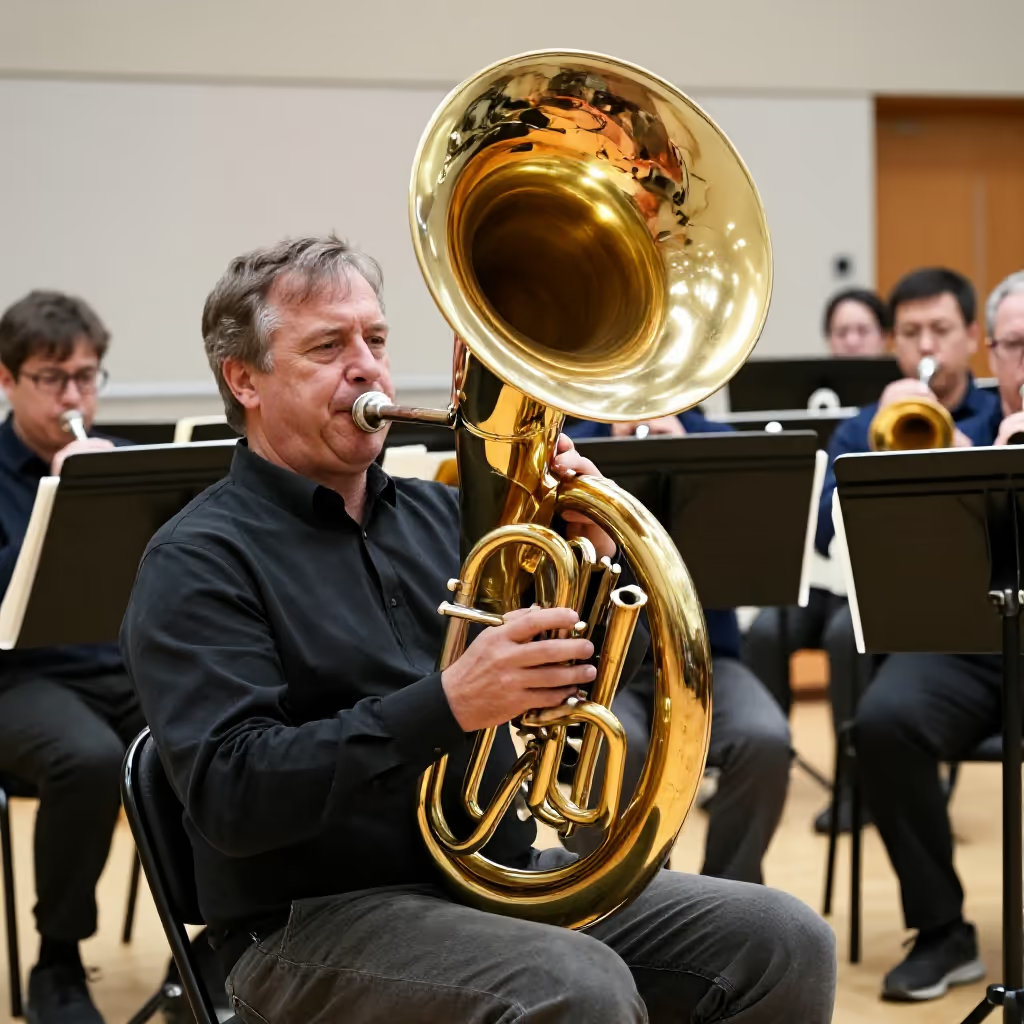
A large brass instrument with a very low sound that plays the bass part in orchestras and brass bands.
example
In der letzten Reihe des Orchesters saß der Musiker mit seiner riesigen Tuba.
In the last row of the orchestra sat the musician with his enormous tuba.
Usage tips
Typical verbs
As with most musical instruments, the verb 'spielen' (to play) is mainly used with 'Tuba' (tuba). You can also say that you are learning or practicing tuba.
EXAMPLE
Er spielt seit zehn Jahren Tuba in einem großen Orchester.
He has been playing tuba in a large orchestra for ten years.
Musical role
The tuba is known for its very low register. In sentences, it is therefore often mentioned in connection with the bass part or the sonic foundation of a piece of music.
EXAMPLE
Mit ihrem tiefen Klang bildet die Tuba das Fundament des Orchesters.
With its deep sound, the tuba forms the foundation of the orchestra.
Typical context
The word 'Tuba' (tuba) is used almost exclusively in a musical context. You often find it in sentences about orchestras, brass bands, or music lessons.
EXAMPLE
Für die Blaskapelle suchen wir noch jemanden, der die Tuba spielt.
We are still looking for someone who plays the tuba for the brass band.
Compare with
confusable
Tuba vs Tube
tube
'die Tube' and 'die Tuba' look very similar, but they usually do not mean the same thing. 'Tube' is usually a soft container, for example for toothpaste or cream. Colloquially, 'Tube' can also mean a brass instrument, but that is not the exact standard term. 'Tuba', on the other hand, is a large, low-sounding brass instrument. The risk of confusion lies mainly in the similar spelling and pronunciation. Pay attention to the last letter: You usually squeeze a 'Tube', but you play a 'Tuba'.
Tuba
Bei der Blaskapelle spielt die Tuba die tiefen Töne.
In the brass band, the tuba plays the low notes.
Tube
Die Tube Zahnpasta ist fast leer, deshalb kaufe ich heute eine neue.
The tube of toothpaste is almost empty, so I’m buying a new one today.