

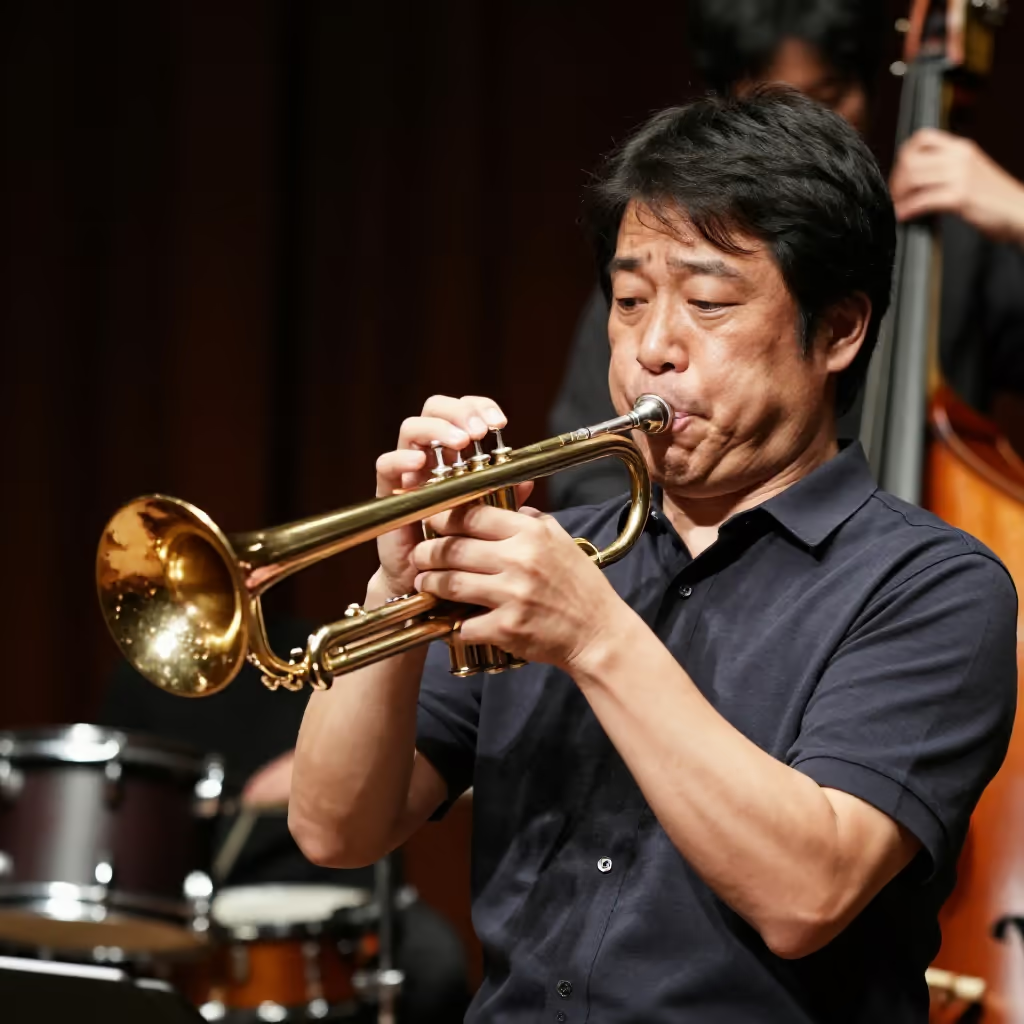
der Trompeter
trumpeter
A person who plays the musical instrument the trumpet.
EXAMPLE
Der Trompeter spielte ein beeindruckendes Solo während des Jazzkonzerts.
The trumpeter played an impressive solo during the jazz concert.
trumpeter
Loading your saved state.
trumpeter
A person who plays the musical instrument the trumpet.
Der Trompeter spielte ein beeindruckendes Solo während des Jazzkonzerts.
The trumpeter played an impressive solo during the jazz concert.
'Trompeter' is derived from the instrument 'die Trompete' (the trumpet). The ending '-er' here forms the masculine person who performs this activity. This pattern is very common in German, e.g. 'backen' (to bake) -> 'der Bäcker' (the baker).
Wer beruflich Trompete spielt, ist ein Trompeter.
Someone who plays the trumpet professionally is a trumpeter.
A trumpeter often plays 'in einem Orchester' (in an orchestra), 'in einer Bigband' (in a big band), or 'in einem Blasorchester' (in a wind orchestra). A typical action is 'ein Solo spielen' (to play a solo).
Wir haben für unsere Hochzeit einen Trompeter engagiert.
We hired a trumpeter for our wedding.
To say that someone plays the trumpet, you can use the simple structure 'Er/Sie ist Trompeter/in' (He/She is a trumpeter). This works for many professions and activities ending in -er.
Mein Bruder ist Trompeter und reist mit seiner Band durch die ganze Welt.
My brother is a trumpeter and travels all over the world with his band.
trumpet
In an orchestra, Trompete and Trompeter can both refer to the person or to their part. Trompeter directly denotes the person, while Trompete refers to that person or their orchestral part only metonymically in a musical context. Trompeter is suitable for the person in general; Trompete can also be used for the part within the ensemble.
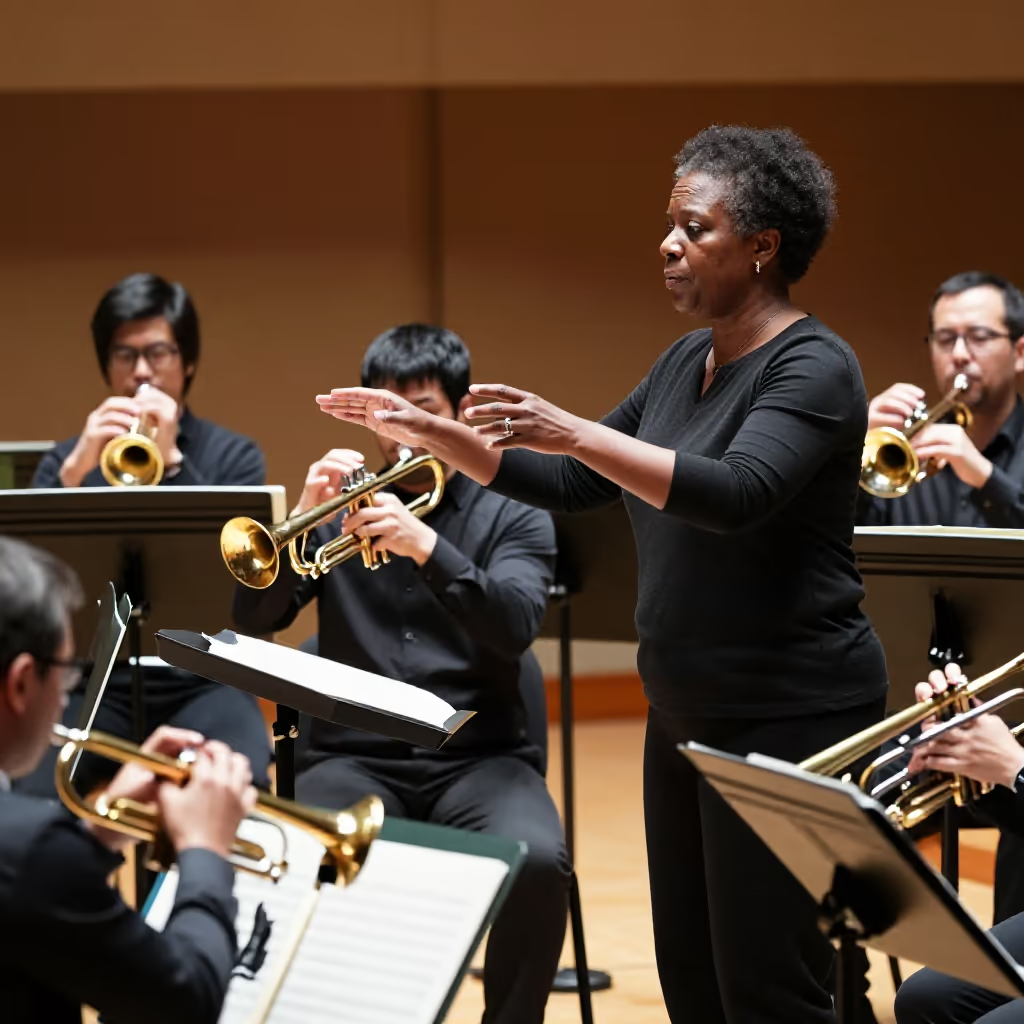
Der Trompeter übernimmt heute den schwierigen Solopart im Orchester.
The trumpeter is playing the difficult solo part in the orchestra today.
Im Orchester übernimmt heute die Trompete den schwierigen Solopart.
In the orchestra, the trumpet is playing the difficult solo part today.