


die Tür
door
A movable structural element that closes an opening in a wall, piece of furniture, or vehicle and allows passage through it.
EXAMPLE
Könntest du bitte die Tür hinter dir schließen?
Could you please close the door behind you?
door
Loading your saved state.
door
A movable structural element that closes an opening in a wall, piece of furniture, or vehicle and allows passage through it.
Könntest du bitte die Tür hinter dir schließen?
Could you please close the door behind you?

to be just around the corner
An idiom meaning that an event is imminent or will happen very soon.
Weihnachten steht schon wieder fast vor der Tür.
Christmas is almost just around the corner again.

door / opportunity
In a figurative sense, access, a possibility, or an opportunity.
Ein guter Universitätsabschluss öffnet einem viele Türen.
A good university degree opens many doors for you.
The prepositions used with 'Tür' (door) depend on the situation. A position is expressed with the dative case, e.g. 'an der Tür' (at the door), while movement in a direction is expressed with the accusative case, e.g. 'an die Tür' (onto/to the door).
Der Postbote steht an der Tür.
The mail carrier is standing at the door.
Certain verbs are often used in connection with a physical door. The most common are 'die Tür öffnen/aufmachen' (to open the door) and 'die Tür schließen/zumachen' (to close the door), as well as 'an die Tür klopfen' (to knock on the door).
Es zieht, könntest du bitte die Tür zumachen?
There's a draft; could you please close the door?
The expression 'vor der Tür stehen' (to be just around the corner) is used for events that will happen very soon. The subject of the sentence is always the upcoming event itself.
Die Sommerferien stehen schon bald vor der Tür.
Summer vacation will soon be just around the corner.
In the figurative sense of 'Chance' (opportunity) or 'Möglichkeit' (possibility), 'Tür' (door) is often combined with the verb 'öffnen' (to open). The phrase 'jemandem Türen öffnen' means to open up new opportunities for someone.
Diese Ausbildung kann dir beruflich viele Türen öffnen.
This training can open many professional doors for you.
gate / goal
Tür and Tor both close off an opening and allow passage through it. A Tür is usually for people and of a more ordinary size, whereas a Tor typically closes a large opening in a building, fence, or wall. However, the distinction is not always clear-cut.
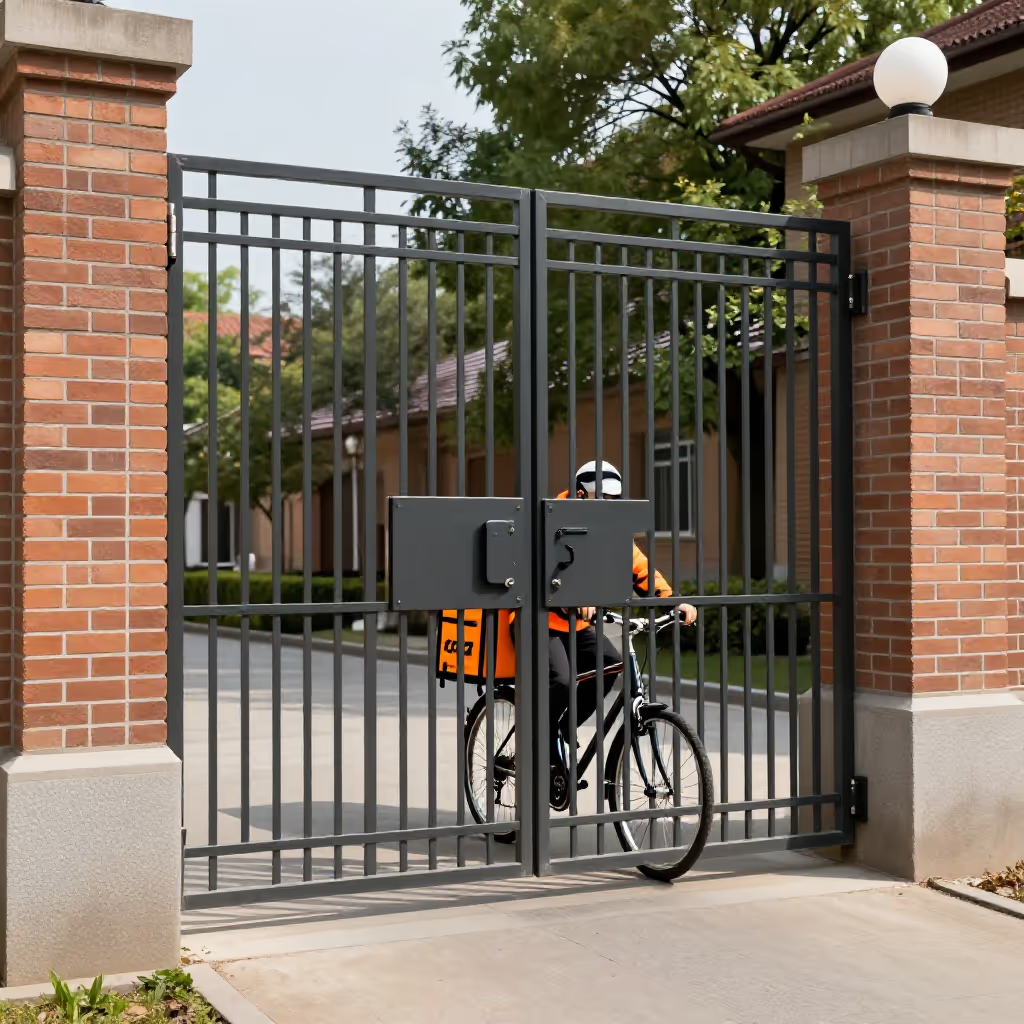
Sie öffnete die kleine Tür der Garage und ging hinein.
She opened the small garage door and went inside.
Sie öffnete das große Tor der Garage und fuhr mit dem Auto hinein.
She opened the large garage gate and drove in.