


der Start
start
The beginning of a competition, a journey, or a ride/trip.
EXAMPLE
Die Läufer versammelten sich an der Linie für den Start des Marathons.
The runners gathered at the line for the start of the marathon.
start
Loading your saved state.
start
The beginning of a competition, a journey, or a ride/trip.
Die Läufer versammelten sich an der Linie für den Start des Marathons.
The runners gathered at the line for the start of the marathon.

start
The beginning of an activity, project, or process.
Der Start des neuen Semesters ist nächste Woche.
The start of the new semester is next week.
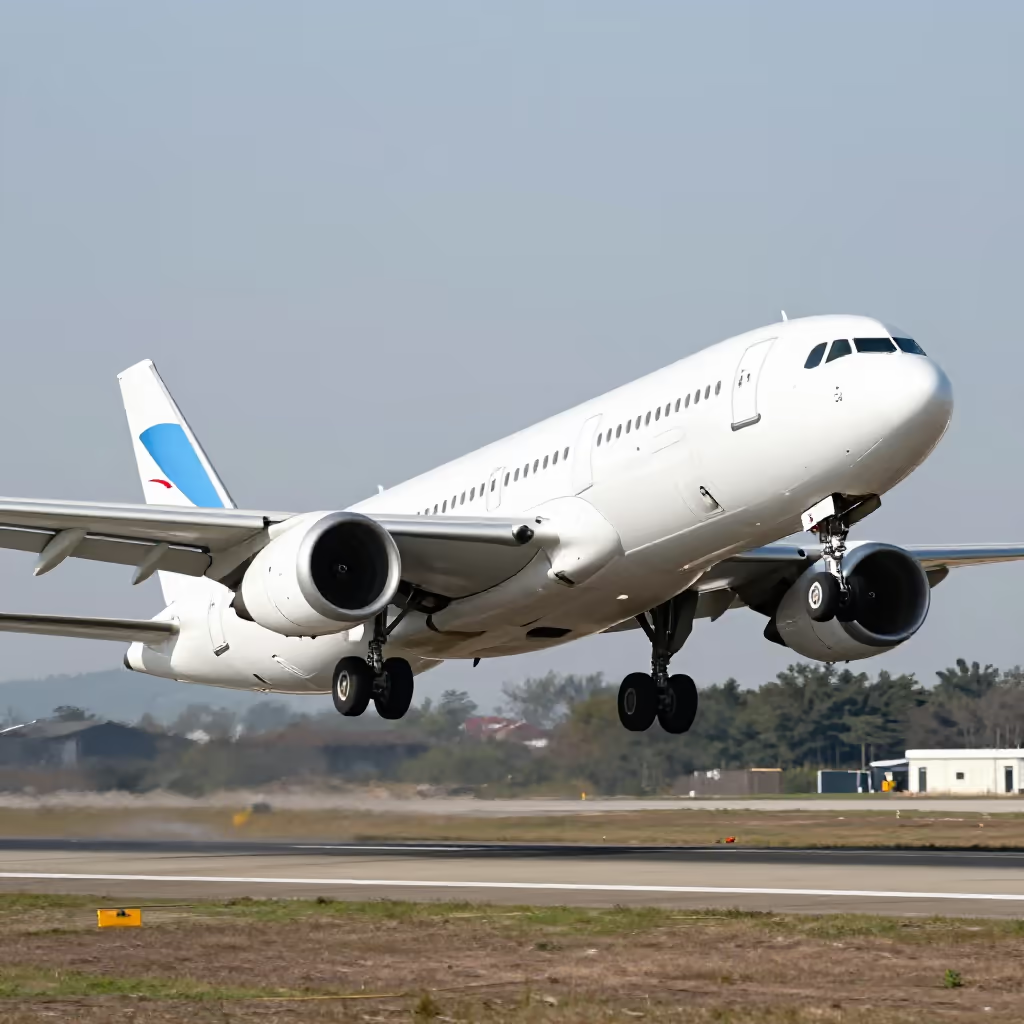
takeoff
The takeoff of an airplane, rocket, or other flying object.
Wegen Nebels wurde der Start unserer Maschine um eine Stunde verschoben.
Because of fog, the takeoff of our plane was delayed by an hour.

start
In a figurative sense, the beginning of a new phase of life, a career, or a business.
Nach dem Studium hatte sie einen erfolgreichen Start ins Berufsleben.
After university, she had a successful start to her professional life.
'Der Start' (start) is a loanword from English. The related verb in German is 'starten' (to start). Both words are used very frequently.
Das Rennen startet in fünf Minuten.
The race starts in five minutes.
The idiom 'den Startschuss geben' (to give the starting signal) means to give a signal for something to begin. It is used not only for competitions, but also for projects or events.
Die Bürgermeisterin gab den Startschuss für den Bau der neuen Bibliothek.
The mayor gave the starting signal for the construction of the new library.
The expression 'an den Start gehen' (to get started / to enter the race) means to take part in a competition or to begin a major undertaking. It is often used in sports, but also in business.
Nächstes Jahr will das Unternehmen mit einem neuen Produkt an den Start gehen.
Next year the company wants to get started with a new product.
In the figurative sense, 'Start' (start) is often combined with 'in' + accusative to describe the beginning of a new phase of life. Typical phrases are 'der Start ins Berufsleben' (the start of one's professional life) or 'ein Start in ein neues Leben' (a start into a new life).
Nach dem Umzug war der Start in der neuen Stadt nicht einfach.
After the move, the start in the new city was not easy.
The colloquial phrase 'am Start sein' means to be present, ready, or available. It is especially common in youth language.
Wir treffen uns um acht Uhr. Bist du auch am Start?
We're meeting at eight. Are you going to be there too?
beginning
Anfang and Start can refer to the beginning of a project or activity. Anfang can also include the early phase that follows. Start places more emphasis on the specific, often dynamic opening or on setting something in motion, and sounds particularly fitting for modern projects.

Zum Start des Projekts stellte die Leitung den Zeitplan vor.
At the start of the project, the management presented the schedule.
Am Anfang des Projekts sammelte das Team noch Ideen.
At the beginning of the project, the team was still gathering ideas.