

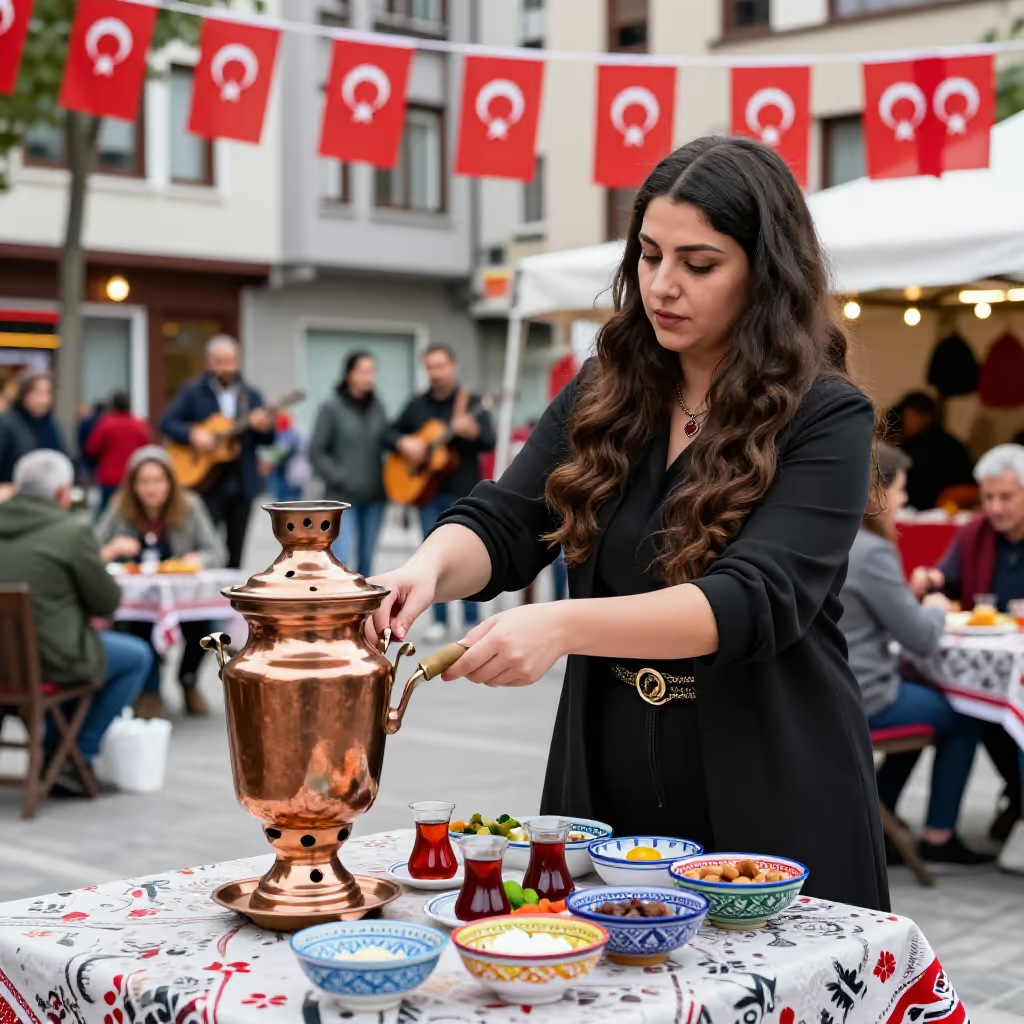
türkisch
Turkish
Relating to Turkey, its culture, its language, or its population.
EXAMPLE
Wir waren gestern in einem sehr guten türkischen Restaurant essen.
Yesterday we went to eat at a very good Turkish restaurant.
Turkish
Loading your saved state.
Turkish
Relating to Turkey, its culture, its language, or its population.
Wir waren gestern in einem sehr guten türkischen Restaurant essen.
Yesterday we went to eat at a very good Turkish restaurant.
The ending '-isch' is often used in German to form an adjective from a noun, often a country or region. This is how 'die Türkei' (Turkey) becomes the adjective 'türkisch' (Turkish).
Die italienische Küche ist weltweit bekannt.
Italian cuisine is known worldwide.
Pay attention to capitalization. The adjective 'türkisch' (Turkish) is written in lowercase. But if you mean the language as a noun, you capitalize it: 'das Türkisch' (Turkish).
Mein Nachbar hat mir ein türkisches Rezept erklärt.
My neighbor explained a Turkish recipe to me.
When 'türkisch' (Turkish) comes before a noun, it is declined. When it stands alone after a verb like 'sein' (to be) or 'sprechen' (to speak), it remains unchanged in its basic form.
Ich trinke gerne starken türkischen Mokka.
I like drinking strong Turkish mocha.
The adjective 'türkisch' (Turkish) is often used in connection with culture and cuisine. Well-known examples are 'die türkische Küche' (Turkish cuisine), 'türkischer Honig' (Turkish delight), or 'türkischer Kaffee' (Turkish coffee).
Zum Nachtisch gab es türkischen Honig mit Nüssen.
For dessert, there was Turkish delight with nuts.
Ottoman
Türkisch and osmanisch can refer to culture, architecture, or administration in the territory of present-day Turkey. However, osmanisch refers specifically to the Ottoman Empire and its period, while türkisch refers more generally to Turkey and its culture. Use osmanisch when there is a clear reference to the empire.
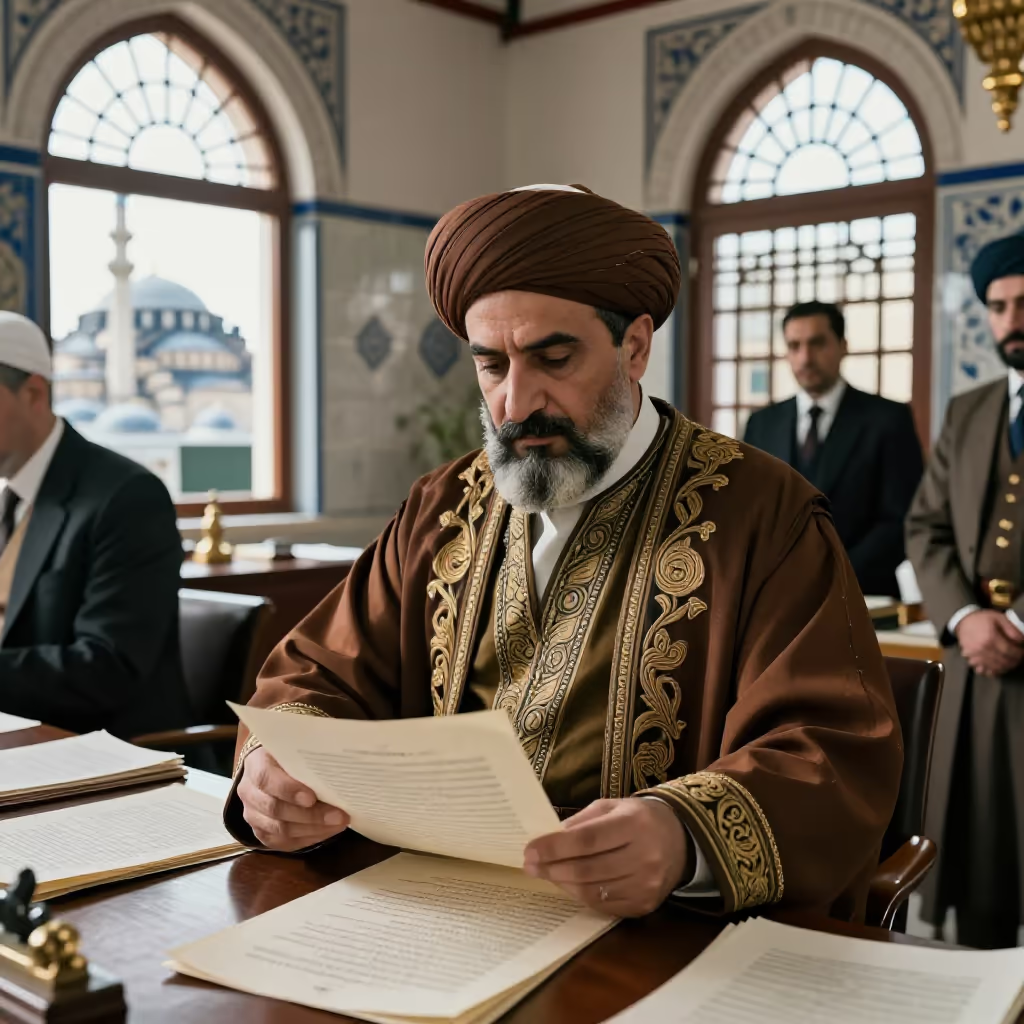
Das Museum zeigt türkische Architektur aus verschiedenen Epochen der Geschichte.
The museum displays Turkish architecture from various periods of history.
Das Museum zeigt osmanische Architektur aus der Zeit des Osmanischen Reiches.
The museum displays Ottoman architecture from the period of the Ottoman Empire.