

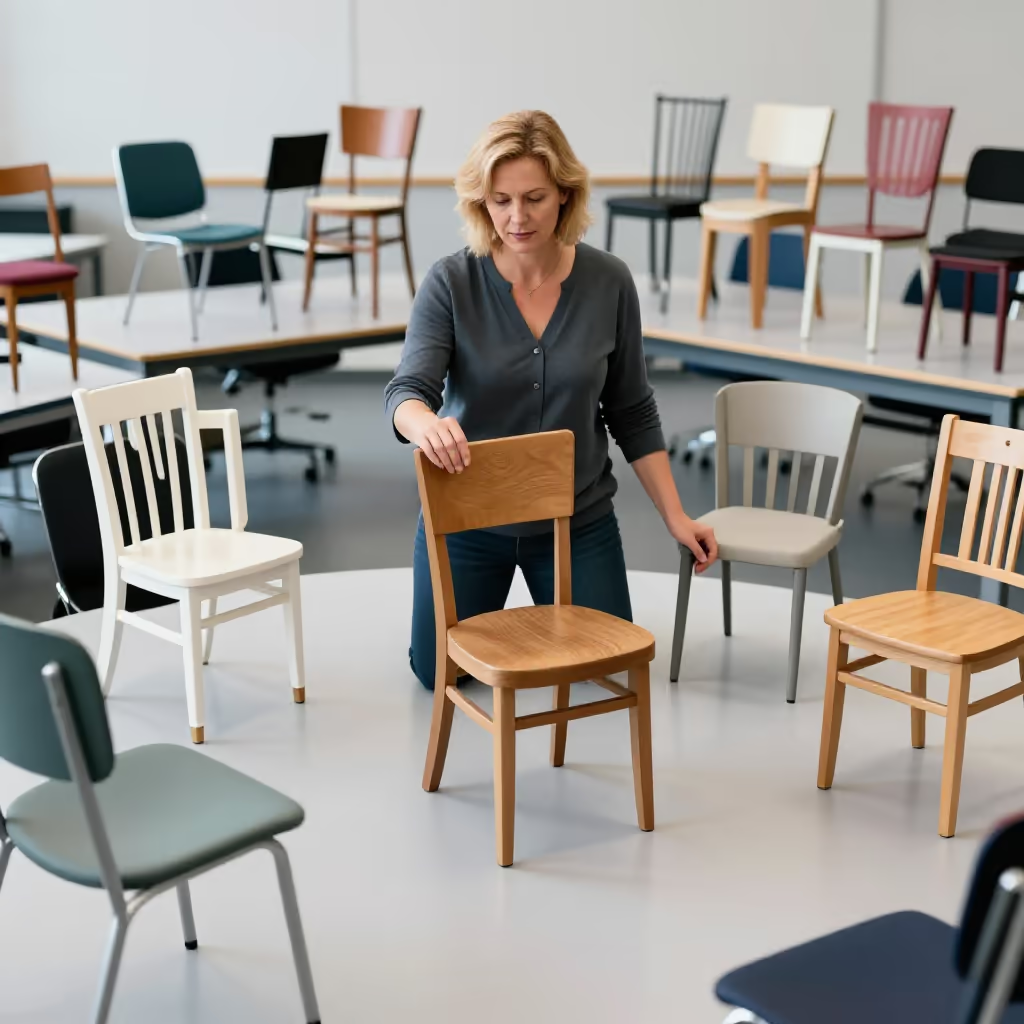
der Typus
type
A pattern, category, or characteristic form that represents a group of people or things.
EXAMPLE
Er verkörpert den Typus des klassischen Gelehrten.
He embodies the type of the classical scholar.
type
Loading your saved state.
type
A pattern, category, or characteristic form that represents a group of people or things.
Er verkörpert den Typus des klassischen Gelehrten.
He embodies the type of the classical scholar.

type specimen
In biology, an individual specimen that serves as the basis for the scientific description and naming of a new species or genus.
Dieses Fossil wurde als Typus für eine bisher unbekannte Dinosaurierart bestimmt.
This fossil was designated as the type specimen for a previously unknown dinosaur species.
'Typus' (type) is a word used in elevated written language and in science. In normal everyday language, it is rarely used and sounds very formal.
Dieser Roman etablierte einen neuen Typus des Antihelden in der Literatur.
This novel established a new type of antihero in literature.
'Typus' (type) is the scientific and original form of 'Typ' (type). The ending '-us' comes from Latin and indicates a formal or technical context.
Er entspricht genau dem Typus des modernen, flexiblen Arbeitnehmers.
He corresponds exactly to the type of the modern, flexible employee.
In its general meaning, 'Typus' (type) is often used with a genitive to describe what something is a pattern of. The structure is: 'der Typus des/der [noun in the genitive]' (the type of the ...).
Sie verkörpert den Typus der erfolgreichen und unabhängigen Frau.
She embodies the type of the successful and independent woman.
The meaning as a reference specimen is a purely technical term from biology and other natural sciences. Outside this context, you will hardly ever find this meaning.
Der Schmetterling in der Sammlung dient als Typus für die gesamte Art.
The butterfly in the collection serves as the type specimen for the entire species.
guy / type
Typ and Typus can refer to a characteristic kind or form. Typ is common in everyday language and can also describe an individual person by their characteristics. Typus sounds more abstract or technical and refers more to a representative pattern for an entire group.

Er verkörpert den Typus des ruhigen Menschen, der in Diskussionen zuerst lange zuhört.
He embodies the type of quiet person who listens for a long time before speaking in discussions.
Er ist der ruhige Typ, der in Diskussionen zuerst lange zuhört.
He is the quiet type who listens for a long time before speaking in discussions.