


der Tyrann
tyrant
A ruler who exercises power arbitrarily, cruelly, and oppressively; a despot.
In der Antike gab es viele Stadtstaaten, die von einem Tyrannen regiert wurden.
In antiquity, there were many city-states that were ruled by a tyrant.

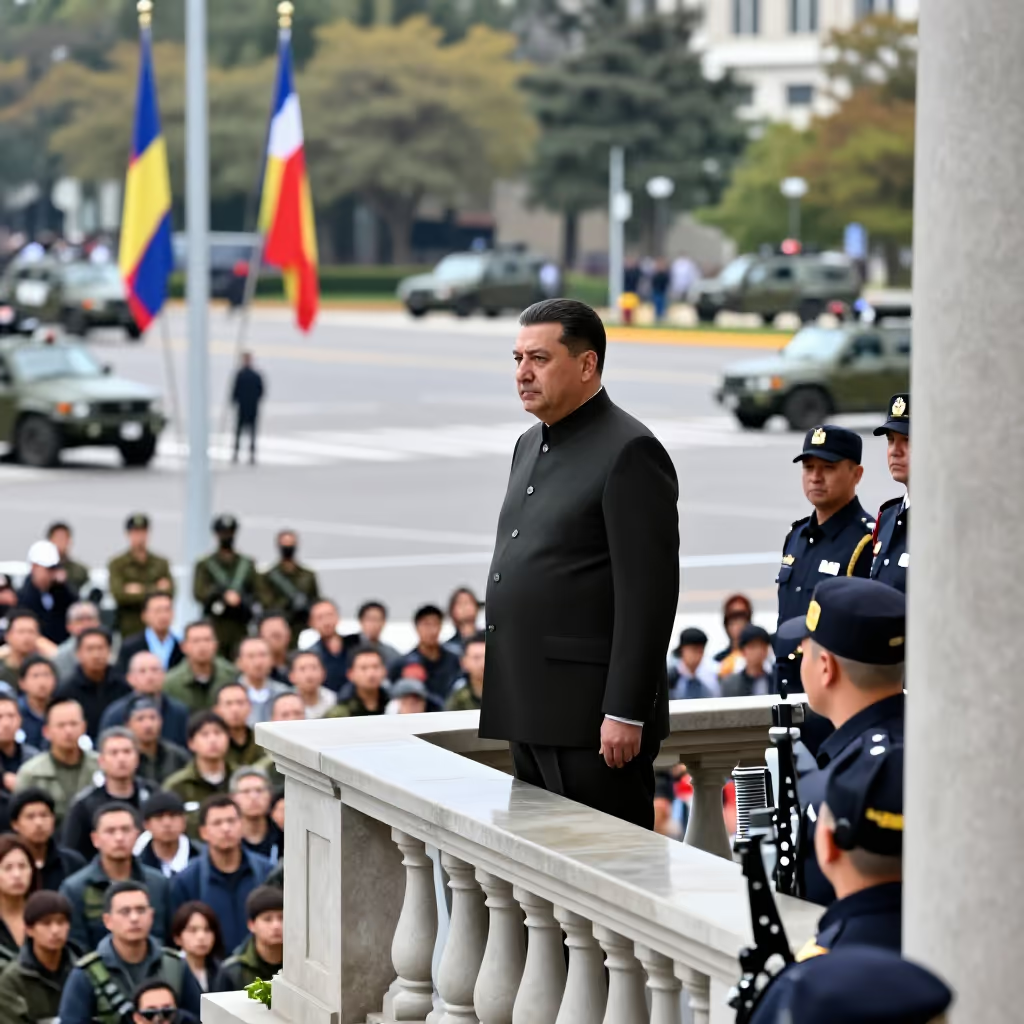
tyrant
Loading your saved state.
tyrant
A ruler who exercises power arbitrarily, cruelly, and oppressively; a despot.
In der Antike gab es viele Stadtstaaten, die von einem Tyrannen regiert wurden.
In antiquity, there were many city-states that were ruled by a tyrant.

'Der Tyrann' (the tyrant) belongs to the N-declension. This means it takes the ending '-en' in the genitive, dative, and accusative singular. Learners often make mistakes with this.
Das Volk rebellierte gegen den Tyrannen.
The people rebelled against the tyrant.
The noun 'der Tyrann' (the tyrant) is part of a word family. This also includes the noun 'die Tyrannei' (tyranny, the form of rule) and the adjective 'tyrannisch' (tyrannical, like a tyrant).
Sein Verhalten war absolut tyrannisch.
His behavior was absolutely tyrannical.
In everyday language, 'Tyrann' (tyrant) is often used as an exaggerated description for a person who abuses their position of power, for example a strict boss, teacher, or dominant family member.
Die Kinder nannten ihren Mathelehrer heimlich einen Tyrannen.
The children secretly called their math teacher a tyrant.
ruler
'der Herrscher' and 'der Tyrann' can both refer to a person who has power over others. 'Herrscher' first of all only says that someone rules or exercises very strong control. This can be meant neutrally, historically, or also critically. 'Tyrann' is much more negative: it refers to someone who exercises power cruelly, arbitrarily, and ruthlessly. This can be a political ruler, but also a person in everyday life who treats others in an authoritarian way. Learners may confuse the words because both have to do with power. If you want to emphasize cruelty or oppression, 'Tyrann' is the more fitting word.

Der Chef behandelt sein Team wie ein Tyrann und hört auf keine Meinung.
The boss treats his team like a tyrant and does not listen to anyone's opinion.
Im alten Reich war der Herrscher zugleich Richter und oberster Soldat.
In the old empire, the ruler was both judge and highest-ranking soldier.