

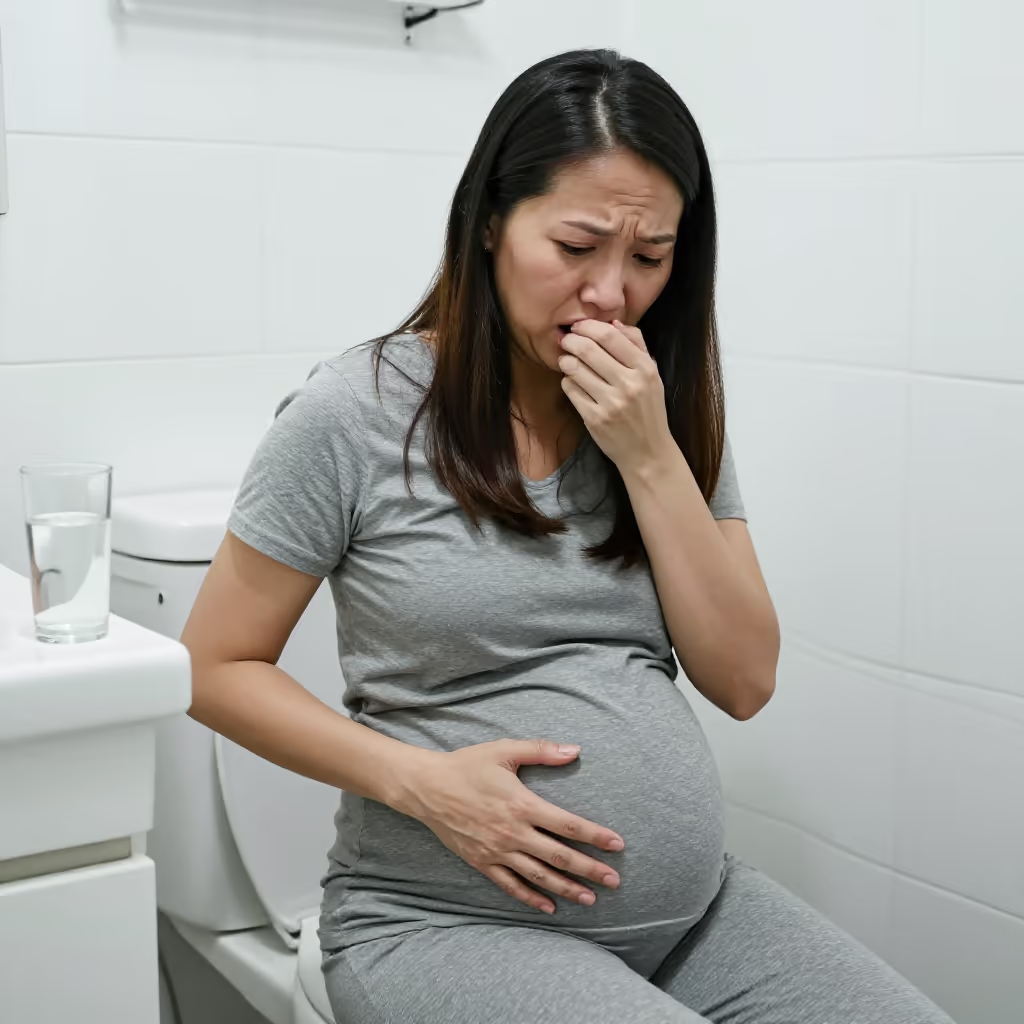
die Übelkeit
nausea
The unpleasant feeling in the stomach that often comes before vomiting; also referred to as nausea.
EXAMPLE
Die kurvige Fahrt verursachte bei ihr starke Übelkeit.
The winding drive caused her severe nausea.
nausea
Loading your saved state.
nausea
The unpleasant feeling in the stomach that often comes before vomiting; also referred to as nausea.
Die kurvige Fahrt verursachte bei ihr starke Übelkeit.
The winding drive caused her severe nausea.
'Übelkeit' (nausea) is the noun related to the adjective 'übel' (sick/nauseous). If a person 'übel ist' (feels sick), then they have 'Übelkeit' (nausea). The suffix '-keit' forms nouns from adjectives that describe a state or quality.
Mir ist übel, ich glaube, ich habe Übelkeit.
I feel sick; I think I have nausea.
To express that you have this feeling, you often use the phrases 'Übelkeit haben' (to have nausea), 'Übelkeit verspüren' (to feel nausea), or 'an Übelkeit leiden' (to suffer from nausea). The latter is used more for longer-lasting or serious complaints.
Seit heute Morgen verspüre ich eine leichte Übelkeit.
Since this morning, I have been feeling slight nausea.
'Übelkeit' often occurs together with other symptoms. Common combinations are 'Übelkeit und Erbrechen' (nausea and vomiting) or 'Übelkeit und Schwindel' (nausea and dizziness). You can also say 'Übelkeit bekämpfen' (to combat nausea) or 'etwas gegen Übelkeit tun' (to do something for nausea).
Reisetabletten helfen gegen Übelkeit und Erbrechen.
Travel sickness tablets help with nausea and vomiting.
malaise
Übelkeit refers to a specific unpleasant feeling in the stomach, often shortly before vomiting. Unwohlsein is more general and can refer to various physical or emotional complaints. Übelkeit is appropriate when there is a clear urge to vomit; Unwohlsein is appropriate for an unspecified feeling of being unwell.

Nach dem Essen bekam Lea starke Übelkeit und musste beinahe erbrechen.
After eating, Lea became severely nauseated and nearly vomited.
Nach dem Essen verspürte Lea ein leichtes Unwohlsein, konnte aber keine bestimmte Beschwerde nennen.
After eating, Lea felt slightly unwell but could not name any specific complaint.