

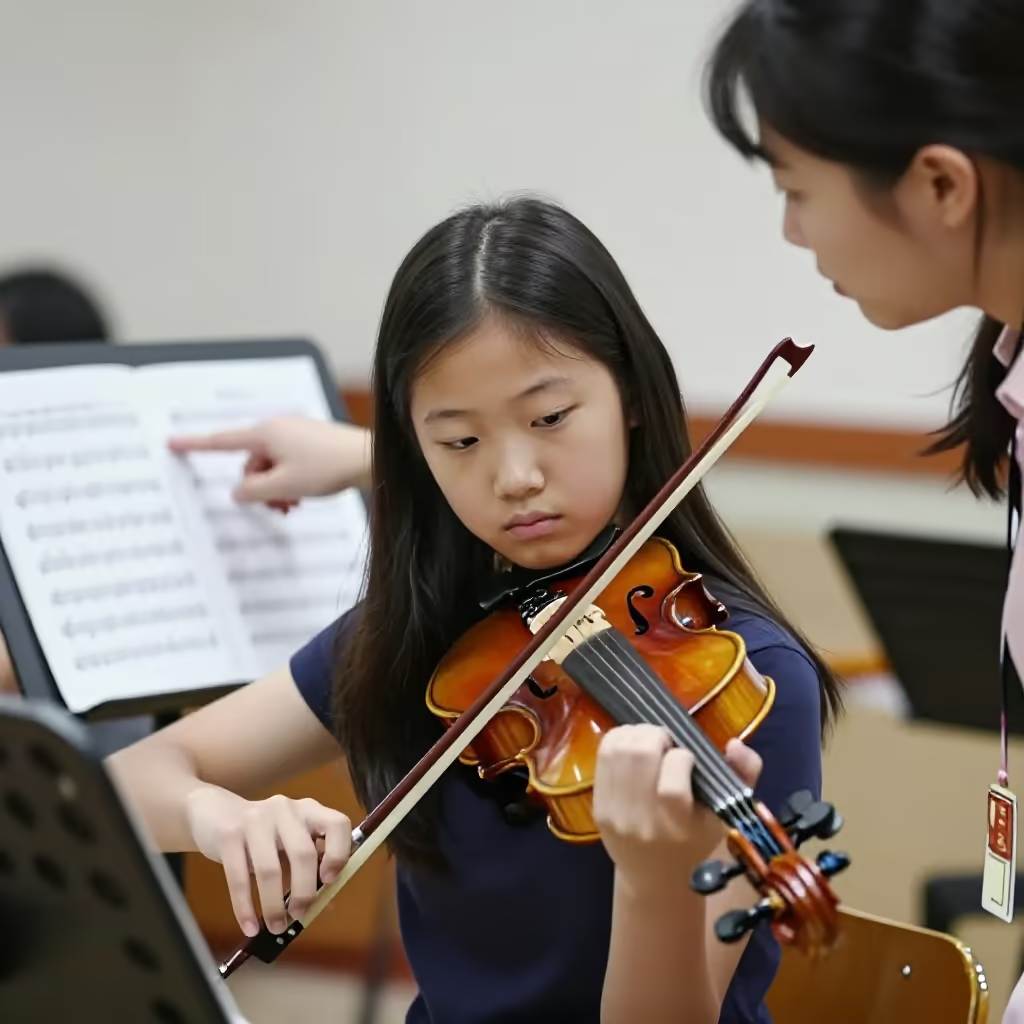
üben
to practice
To perform an activity or skill repeatedly in order to learn or improve it.
EXAMPLE
Um ein Instrument zu meistern, muss man jeden Tag üben.
To master an instrument, you have to practice every day.
to practice
Loading your saved state.
to practice
To perform an activity or skill repeatedly in order to learn or improve it.
Um ein Instrument zu meistern, muss man jeden Tag üben.
To master an instrument, you have to practice every day.

to exercise / exert
To carry out or apply something abstract, such as criticism, pressure, or revenge.
Die Opposition übte scharfe Kritik an der Regierung.
The opposition leveled sharp criticism at the government.

to practice
To make an effort to develop a certain quality or behavior, often in the sense of self-control.
Angesichts der langen Wartezeit musste er sich in Geduld üben.
In view of the long wait, he had to practice patience.
The verb 'üben' (to practice) can either be used with an accusative object that describes what you are learning, or it can be used without an object.
Ich übe jeden Tag Gitarre.
I practice guitar every day.
In this meaning, 'üben' (to exercise/exert) is used with abstract nouns in fixed expressions. Typical phrases are 'Kritik üben' (to criticize / level criticism), 'Druck üben' (to exert pressure), or 'Rache üben' (to take revenge).
Die Journalisten übten scharfe Kritik an den neuen Gesetzen.
The journalists leveled sharp criticism at the new laws.
To express that you are making an effort to develop a quality, you use the reflexive construction 'sich üben in' (to practice / cultivate) followed by a noun in the dative.
Er ist sehr impulsiv und muss sich in Selbstbeherrschung üben.
He is very impulsive and has to practice self-control.
The use of 'üben' (to exercise/exert) with abstract nouns like 'Kritik' (criticism) or 'Druck' (pressure) is typical of formal written language and is used less often in everyday speech.
Der Verband übte erheblichen Druck auf die Politik aus.
The association exerted considerable pressure on policymakers.
to learn
Lernen focuses on acquiring a new skill. Üben refers to the repeated activity through which one acquires or improves that skill. Someone who wants to master something learns it; someone who repeatedly performs it for that purpose practices it.

Paul übt das neue Lied jeden Abend auf dem Klavier.
Paul practices the new song on the piano every evening.
Paul lernt gerade, ein neues Lied auf dem Klavier zu spielen.
Paul is currently learning to play a new song on the piano.