

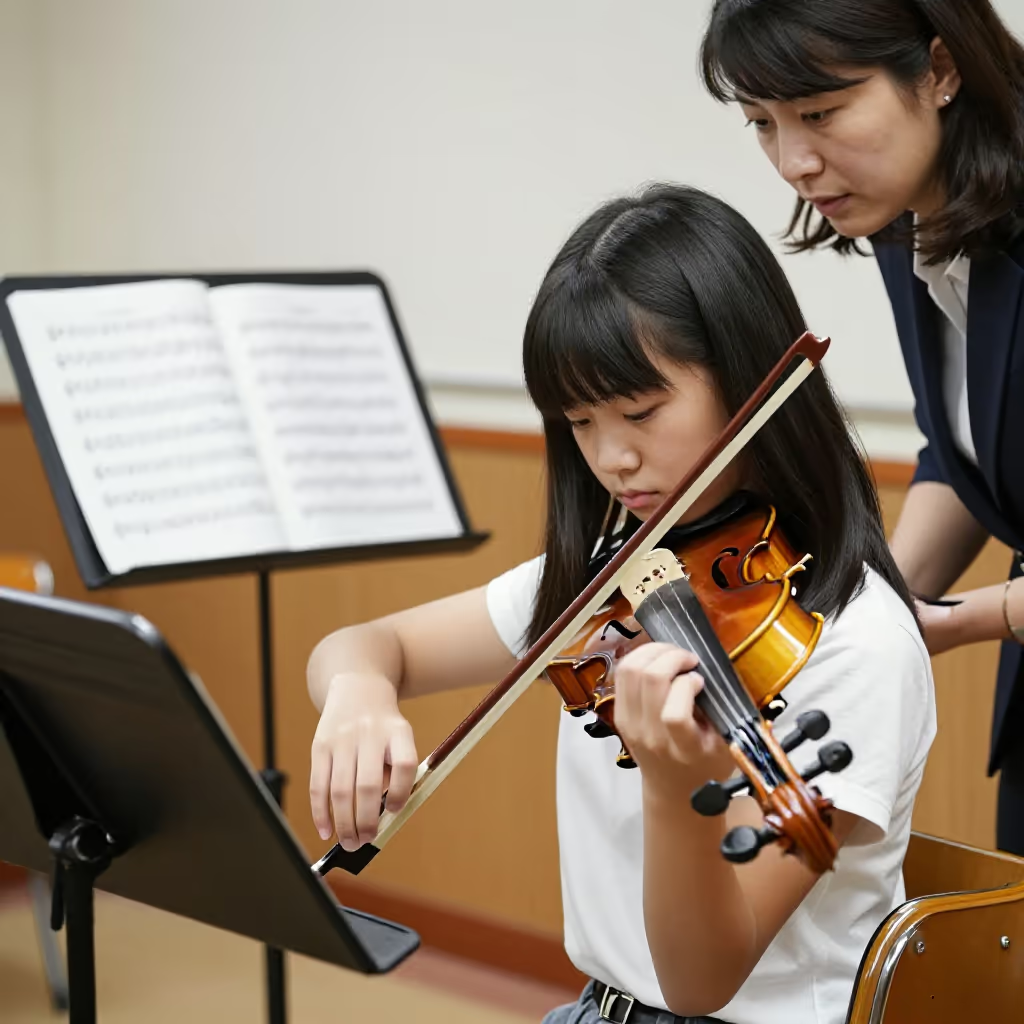
die Übung
practice
The repeated performance of an activity in order to learn, improve, or maintain a skill.
EXAMPLE
Durch tägliche Übung hat er sein Klavierspiel stark verbessert.
Through daily practice, he greatly improved his piano playing.
practice / exercise
Loading your saved state.
practice
The repeated performance of an activity in order to learn, improve, or maintain a skill.
Durch tägliche Übung hat er sein Klavierspiel stark verbessert.
Through daily practice, he greatly improved his piano playing.
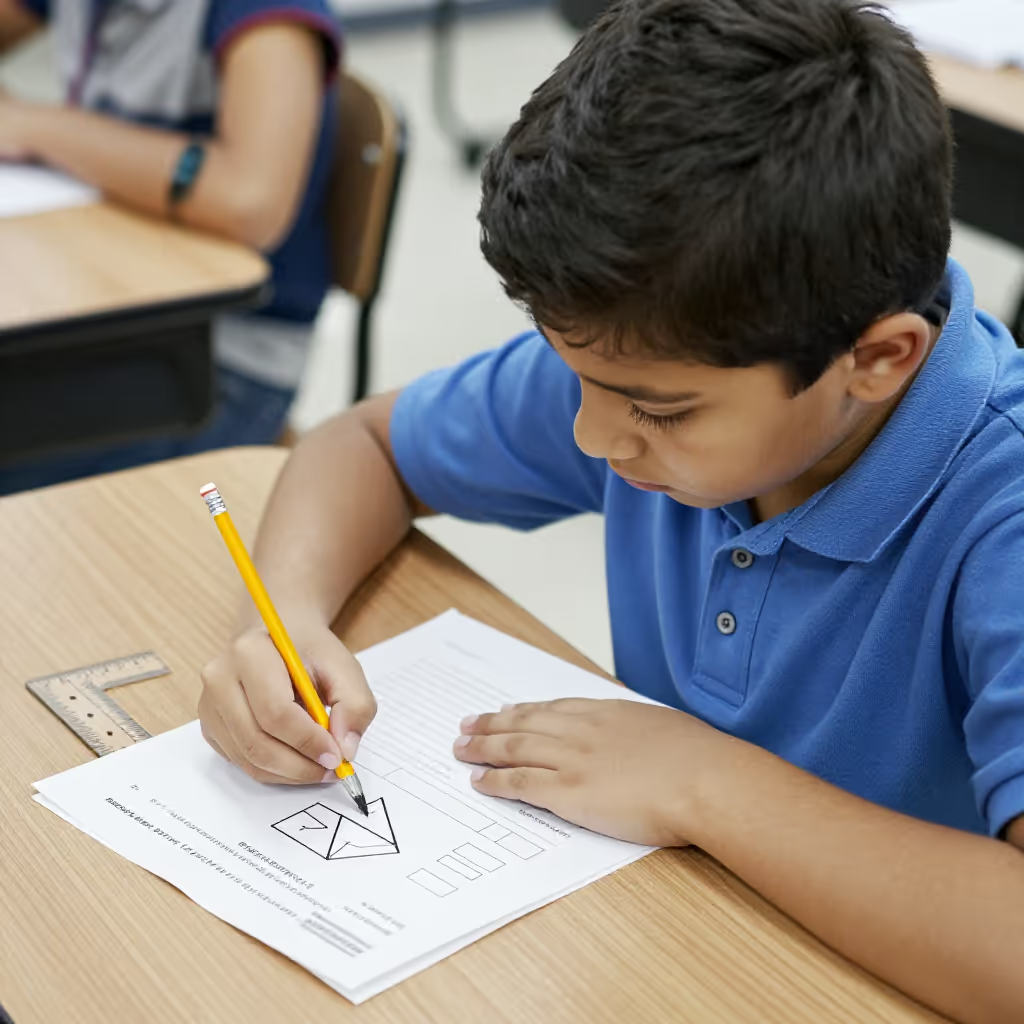
exercise
A single task or set of tasks used to train a specific skill.
Als Hausaufgabe müssen wir die Übungen auf Seite 45 machen.
For homework, we have to do the exercises on page 45.
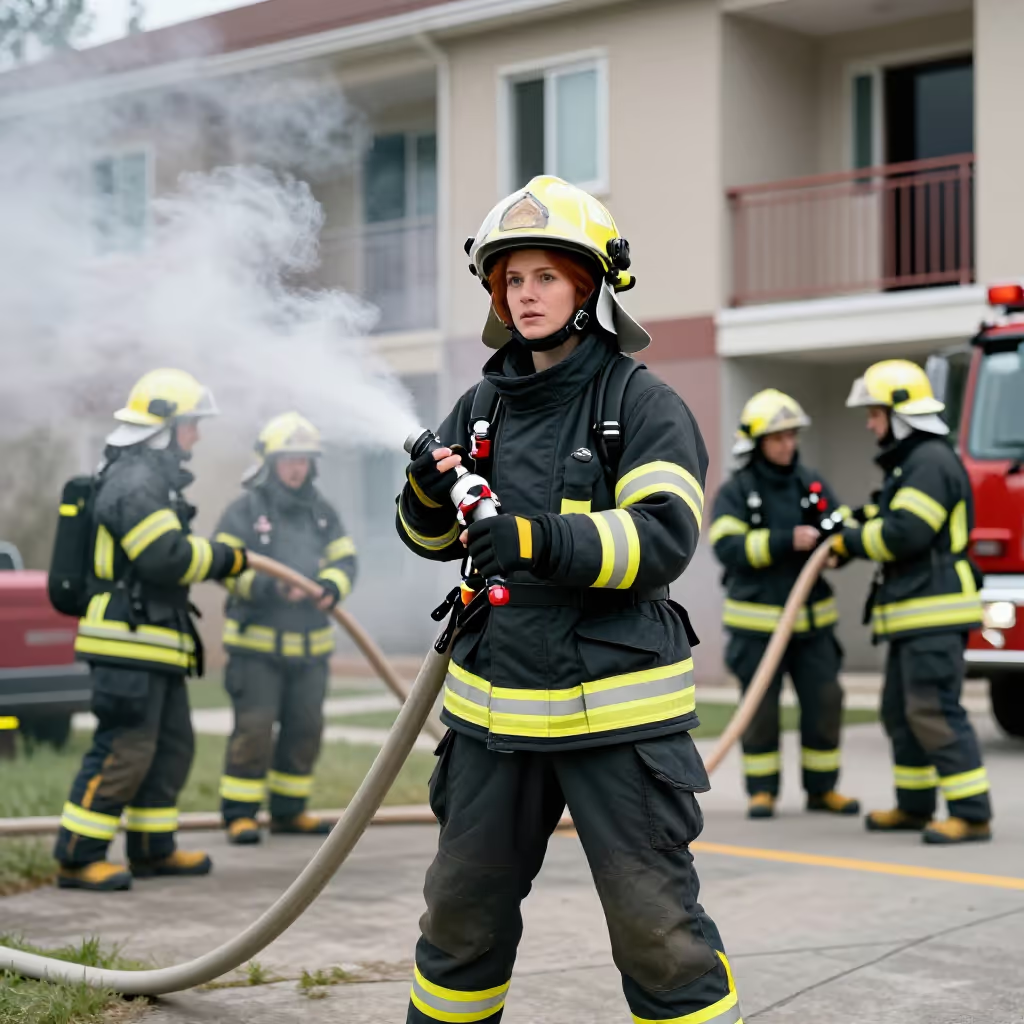
drill
A planned maneuver by the military, police, or fire department to train for a real emergency.
Bei der internationalen Übung wurde die Zusammenarbeit der Armeen getestet.
During the international drill, the cooperation between the armies was tested.
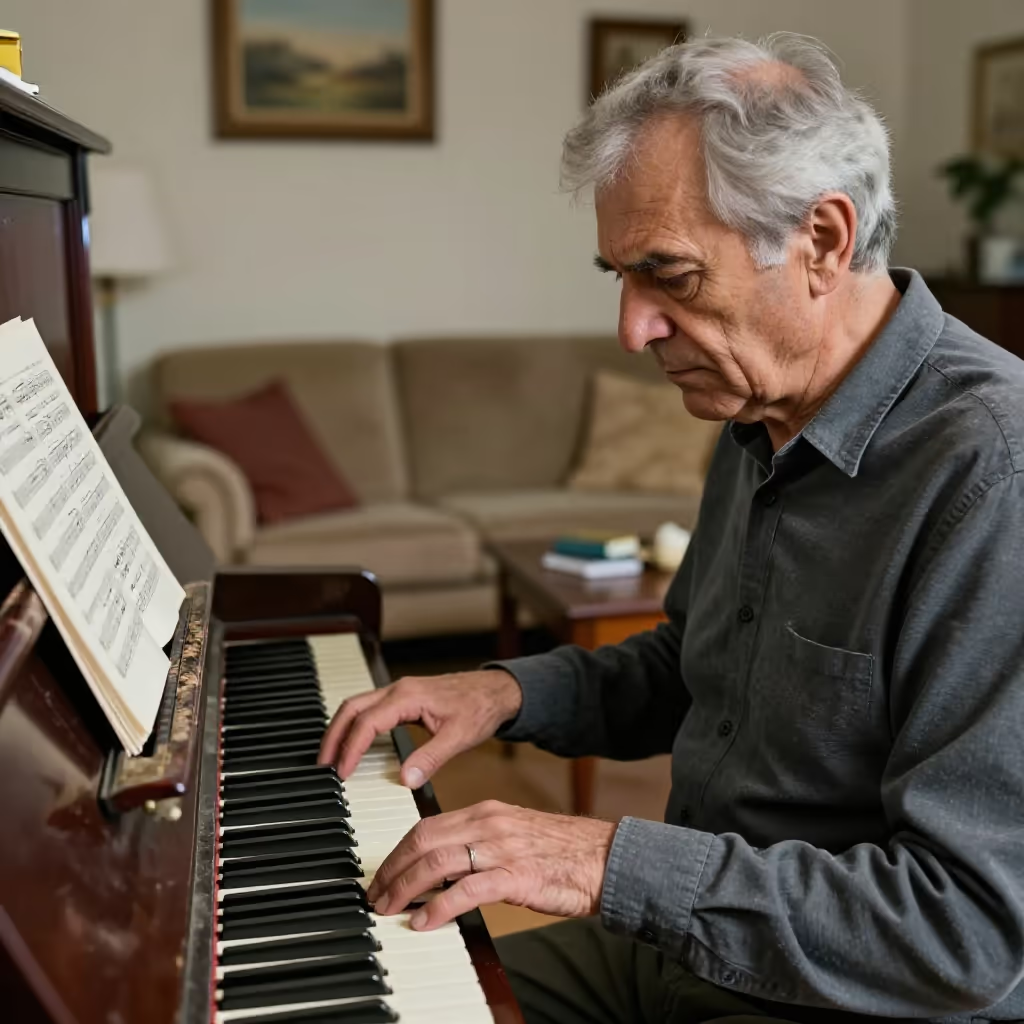
to be out of practice
To have partly lost a skill one used to master because of a lack of practice.
Ich habe lange kein Französisch mehr gesprochen und bin total aus der Übung.
I haven't spoken French in a long time and am totally out of practice.
The noun 'die Übung' is derived directly from the verb 'üben' (to practice). 'Üben' is the action of practicing, while 'die Übung' can refer both to the process and to a single task.
Ich muss für die Prüfung noch viel üben.
I still have to practice a lot for the exam.
You can recognize the exact meaning of 'Übung' from the context. 'Tägliche Übung' (daily practice) means regular training (m01). 'Eine Übung auf Seite 20' (an exercise on page 20) is a concrete task (m02). A 'militärische Übung' (military drill) is a maneuver (m03).
Mit etwas Übung wird es dir gelingen.
With a little practice, you will succeed.
In the meaning 'practice', 'Übung' is often used in fixed expressions. The proverb 'Übung macht den Meister' (practice makes perfect) is very well known.
Das Einparken braucht am Anfang etwas Übung.
Parking takes a bit of practice at first.
When 'Übung' means a task, it is often combined with verbs such as 'machen' (to do), 'lösen' (to solve), or 'bearbeiten' (to work on). Here, the plural 'die Übungen' is usually used.
Können Sie mir bei dieser Übung helfen?
Can you help me with this exercise?
The idiom 'aus der Übung sein' (to be out of practice) is a fixed construction. It is always formed with the verb 'sein' (to be) and describes that someone no longer masters a skill as well because of a lack of practice.
Ich habe seit Jahren kein Klavier mehr gespielt, ich bin völlig aus der Übung.
I haven't played the piano in years; I'm completely out of practice.
task / function / surrender
An Aufgabe is something learners are supposed to work on or solve; it can also test their knowledge. An Übung is an Aufgabe whose main purpose is to train a skill. Aufgabe therefore fits assessment, while Übung is more suitable for targeted practice.

Diese Übung im Unterricht trainiert das Rechnen mit Brüchen.
This exercise in class practices working with fractions.
Diese Aufgabe in der Klassenarbeit prüft, ob die Schüler Brüche verstanden haben.
This task on the test checks whether the students have understood fractions.