

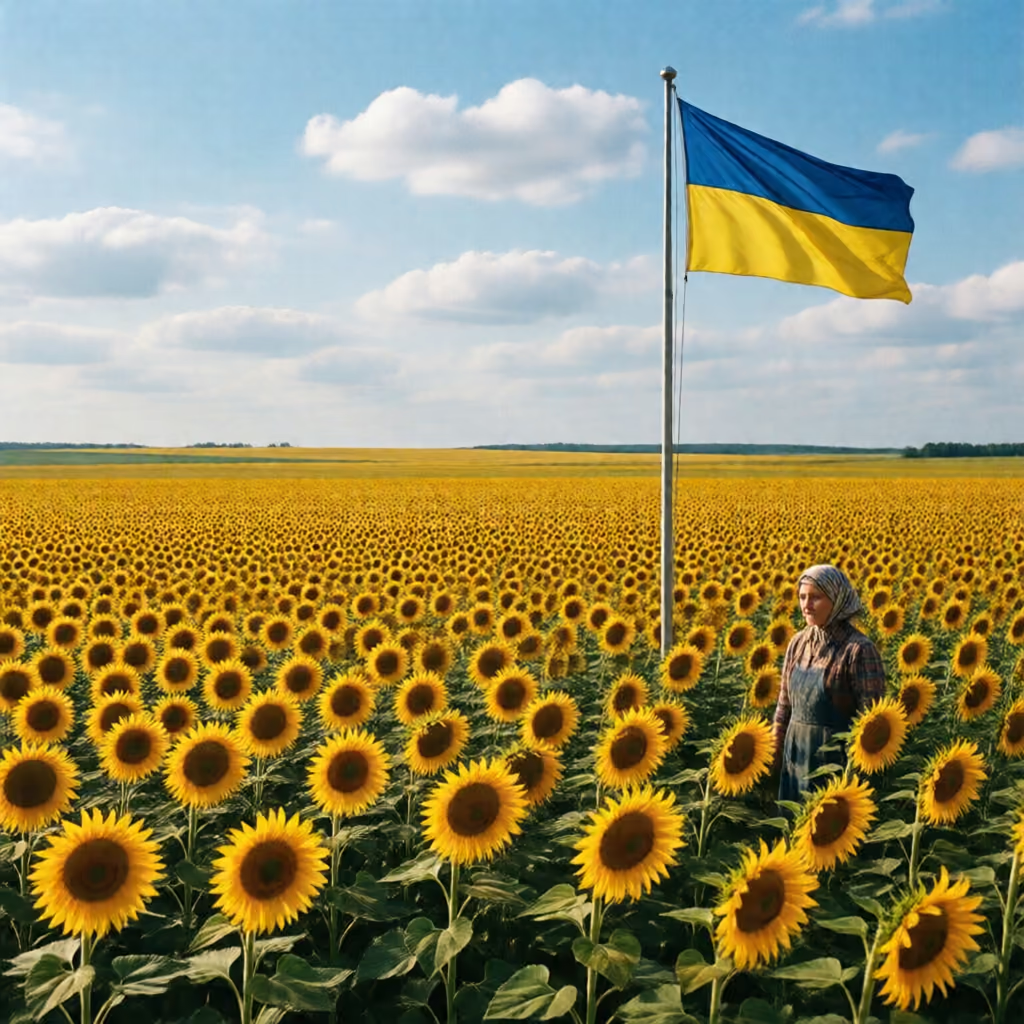
die Ukraine
Ukraine
A country in Eastern Europe that borders Poland, Slovakia, Hungary, Romania, Moldova, Belarus, and Russia.
Die Ukraine ist flächenmäßig eines der größten Länder Europas.
Ukraine is one of the largest countries in Europe by area.
Ukraine
die Ukraine
Loading your saved state.

Ukraine
A country in Eastern Europe that borders Poland, Slovakia, Hungary, Romania, Moldova, Belarus, and Russia.
Die Ukraine ist flächenmäßig eines der größten Länder Europas.
Ukraine is one of the largest countries in Europe by area.
| gender | feminine die |
|---|---|
| genitive | der Ukraine |
| singular | plural | |
|---|---|---|
| nominative | die Ukraine | – |
| accusative | die Ukraine | – |
| dative | der Ukraine | – |
| genitive | der Ukraine | – |
The article changes with the case; it is shown in colour.
In German, the country name 'Ukraine' (Ukraine) is normally used with the definite article. The article is also retained after prepositions and is contracted with the preposition or inflected.
Die Hauptstadt der Ukraine ist Kyjiw.
The capital of Ukraine is Kyiv.
Viele Menschen interessieren sich für die Ukraine.
Many people are interested in Ukraine.
Fixed forms express key relationships of place: 'in die Ukraine' (to Ukraine) indicates movement there, 'in der Ukraine' (in Ukraine) indicates being there, and 'aus der Ukraine' (from Ukraine) indicates origin.
Unsere Freunde fahren im Sommer in die Ukraine.
Our friends are traveling to Ukraine in the summer.
Sie arbeitet seit zwei Jahren in der Ukraine.
She has been working in Ukraine for two years.
Die Familie stammt aus der Ukraine.
The family comes from Ukraine.
'Die Ukraine' (Ukraine) refers to a single country, so the verb is singular. This also applies when the sentence mentions several regions or cities in Ukraine.
Die Ukraine liegt am Schwarzen Meer.
Ukraine lies on the Black Sea.
Die Ukraine entwickelt ihre Städte und Regionen weiter.
Ukraine continues to develop its cities and regions.