

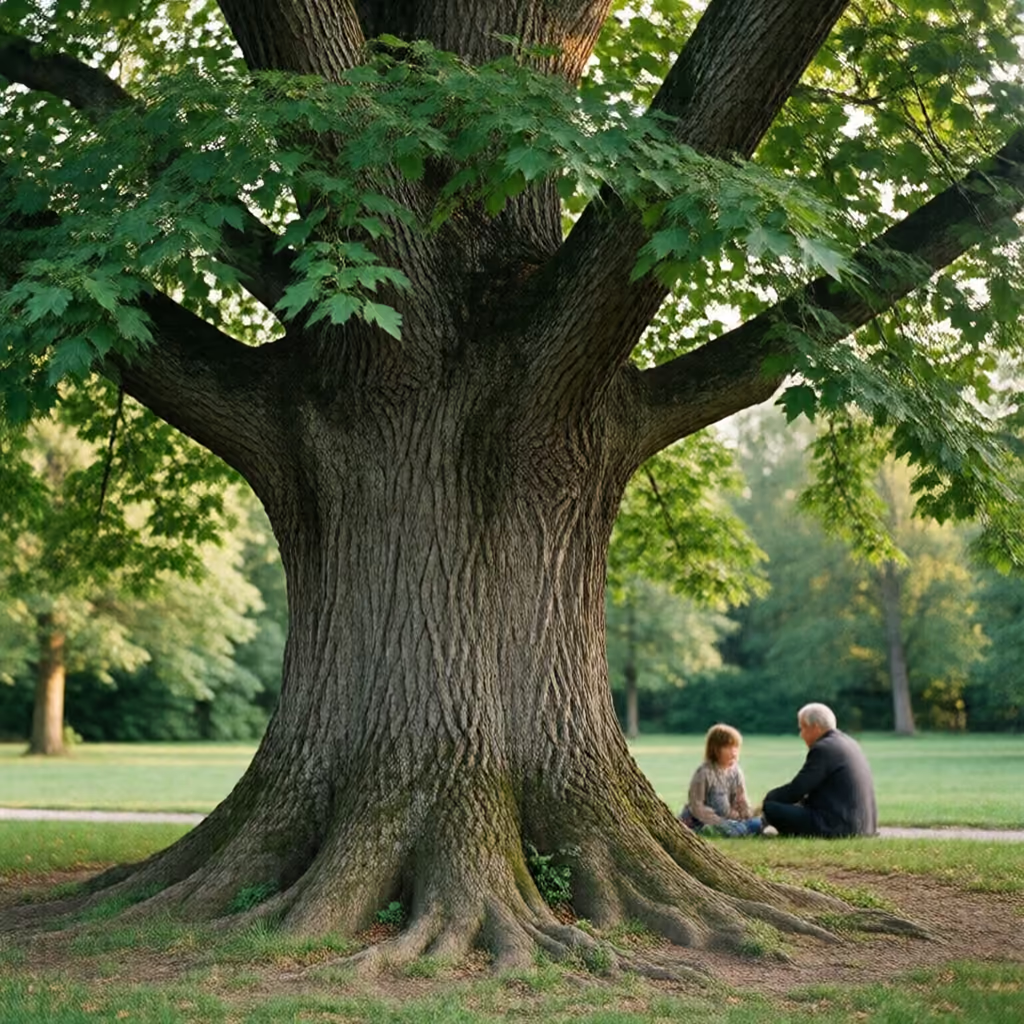
die Ulme
elm
A deciduous tree with serrated leaves and usually rough bark that belongs to the genus Ulmus.
EXAMPLE
Im Park steht eine alte Ulme.
There is an old elm in the park.
elm
die Ulme, die Ulmen
Loading your saved state.
elm
A deciduous tree with serrated leaves and usually rough bark that belongs to the genus Ulmus.
Im Park steht eine alte Ulme.
There is an old elm in the park.
| gender | feminine die |
|---|---|
| plural | die Ulmen |
| genitive | der Ulme |
| singular | plural | |
|---|---|---|
| nominative | die Ulme | die Ulmen |
| accusative | die Ulme | die Ulmen |
| dative | der Ulme | den Ulmen |
| genitive | der Ulme | der Ulmen |
The article changes with the case; it is shown in colour.
'Ulme' (elm) forms many compounds, especially for species, wood, or typical problems affecting this tree. Common examples include 'Ulmenholz' (elm wood), 'Ulmenallee' (avenue of elm trees), and 'Ulmensterben' (Dutch elm disease); in these words, 'Ulmen-' is the first component.
Die alte Ulme steht am Anfang einer langen Ulmenallee.
The old elm stands at the beginning of a long avenue of elm trees.
Verbs such as 'pflanzen' (to plant), 'fällen' (to fell), and 'schützen' (to protect) are often used with 'Ulme'. The phrase 'unter einer Ulme sitzen' (to sit under an elm) is also common when the tree is described as a shady place to sit.
Die Stadt will mehrere Ulmen pflanzen und die alten Bäume schützen.
The city wants to plant several elm trees and protect the old ones.
When referring to a single elm, places are often described using 'unter' (under), 'neben' (next to), or 'an' (by). Depending on the meaning, these prepositions are followed by the dative when describing a position.
Im Sommer lesen wir oft unter einer Ulme im Garten.
In summer, we often read under an elm in the garden.