

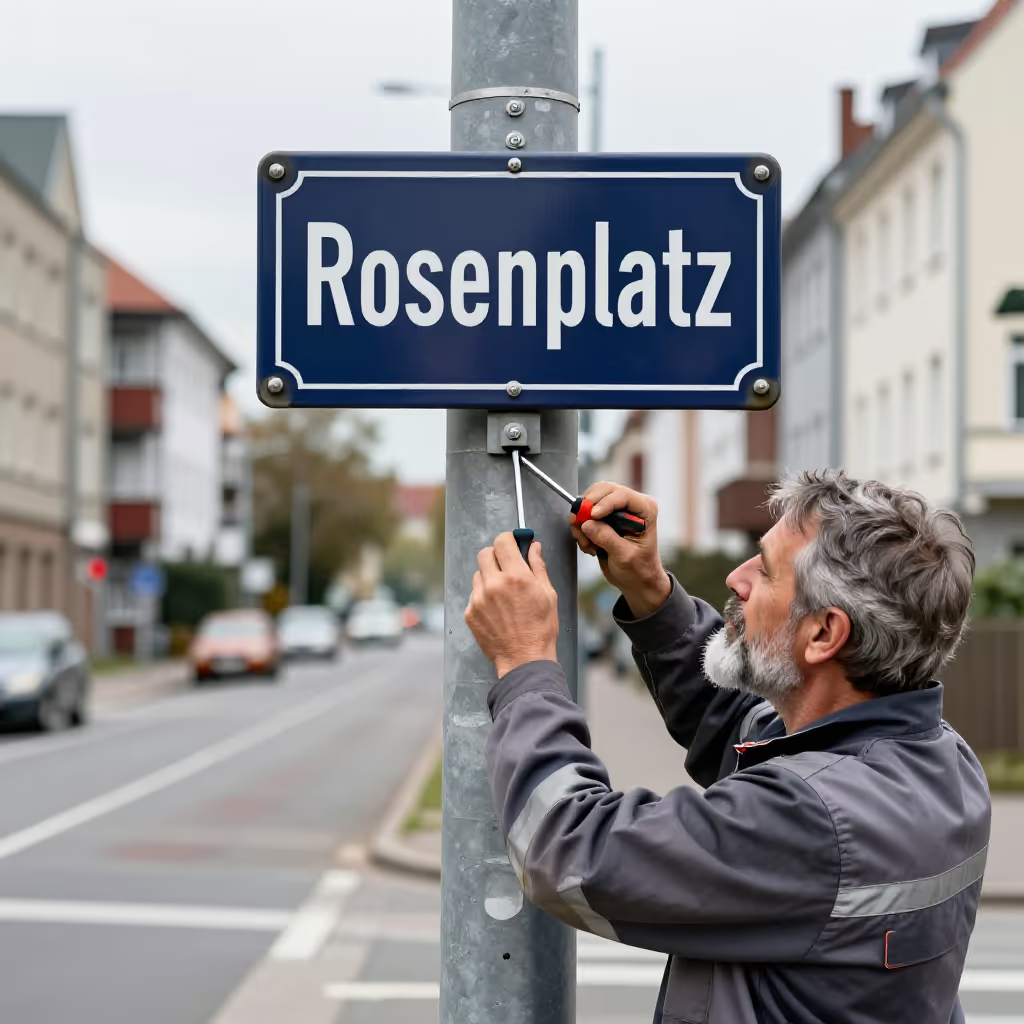
umbenennen
to rename
To give a person, place, thing, or file a new name.
EXAMPLE
Die Stadt hat beschlossen, den Platz nach einer berühmten Künstlerin umzubenennen.
The city decided to rename the square after a famous artist.
to rename
Loading your saved state.
to rename
To give a person, place, thing, or file a new name.
Die Stadt hat beschlossen, den Platz nach einer berühmten Künstlerin umzubenennen.
The city decided to rename the square after a famous artist.
'Umbenennen' (to rename) is a separable verb. The prefix 'um-' goes at the end in a main clause. In subordinate clauses and in the infinitive with 'zu', the verb stays together.
Ich benenne die Datei jetzt um.
I am renaming the file now.
The verb consists of the prefix 'um-', which here indicates a change, and the verb 'benennen' (to name). So the meaning is literally to 'name something anew'.
Nach der Renovierung wurde das Hotel umbenannt.
After the renovation, the hotel was renamed.
When you state the new name, use the structure 'etwas (Akkusativ) in etwas (Akkusativ) umbenennen' (to rename something as/to something). Both objects are in the accusative.
Die Firma benennt ihr Produkt in „NovaPro“ um.
The company is renaming its product 'NovaPro'.
Places such as a street or square are often renamed. In a digital context, a file or folder is often renamed.
Können Sie mir zeigen, wie man einen Ordner auf dem Computer umbenennt?
Can you show me how to rename a folder on the computer?
to name / specify
Benennen generally means giving someone or something a name; this can also be the first naming. Umbenennen, by contrast, presupposes that a name already exists and replaces it with a new one. Umbenennen is appropriate when an explicit name change is involved.

Die Stadt benennt den bisherigen Rathausplatz nach einer bekannten Musikerin um.
The city renames the former town hall square after a well-known musician.
Die Stadt benennt den neuen Platz nach einer bekannten Musikerin.
The city names the new square after a well-known musician.