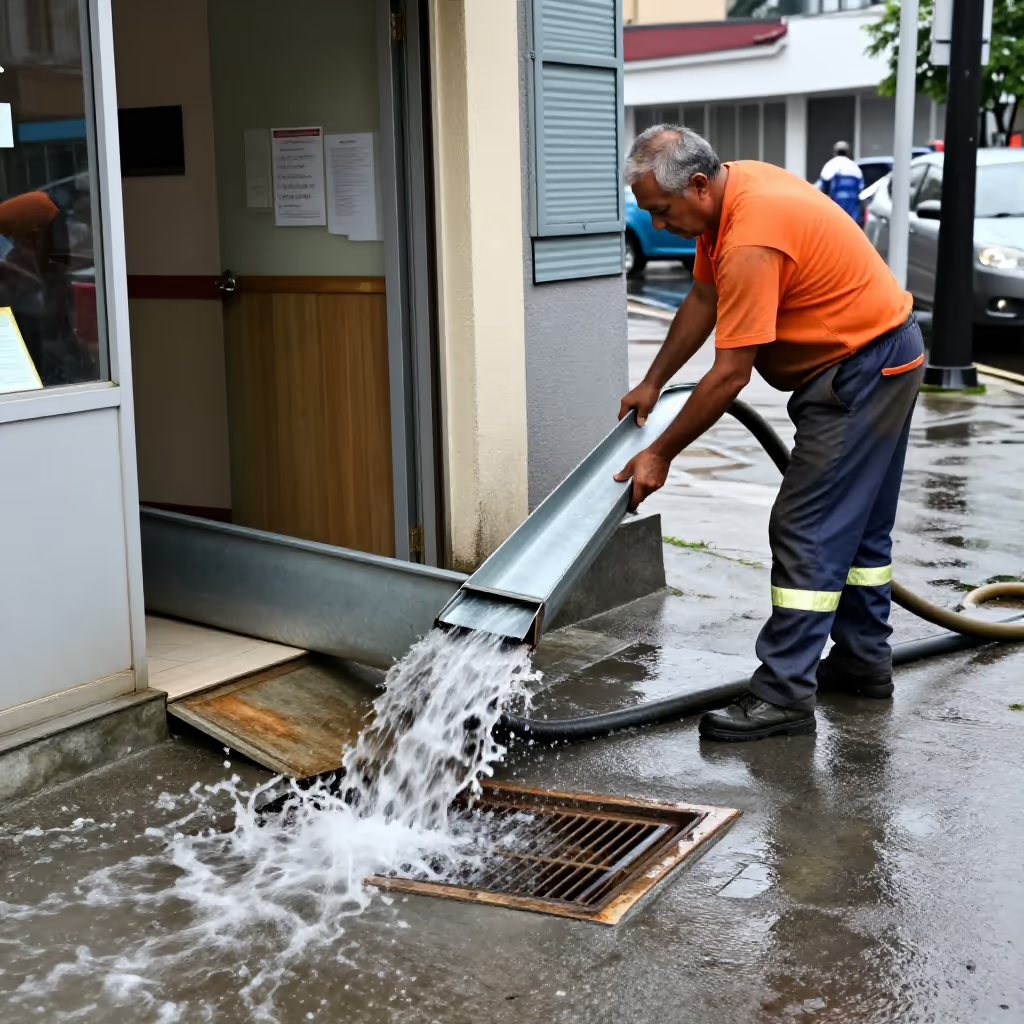
To direct the route or flow of something (e.g., traffic, water, calls, data) onto a different, alternative route. This often happens because of an obstacle or disruption.
example
Wegen der Baustelle wird der Verkehr durch die Innenstadt umgeleitet.
Because of the construction site, traffic is being diverted through the city center.

Usage tips
Separable verb
'Umleiten' (to redirect/divert) is a separable verb. The prefix 'um-' comes at the end in a main clause. In subordinate clauses and in the infinitive with 'zu', the verb stays together.
EXAMPLE
Die Polizei leitet den Verkehr großräumig um.
The police are redirecting traffic over a wide area.
Word structure
The verb consists of the prefix 'um' (around) and the verb 'leiten' (to guide/direct). So the literal meaning is to 'guide something around an obstacle.'
EXAMPLE
Man musste den Fluss umleiten, um die Brücke bauen zu können.
They had to divert the river in order to be able to build the bridge.
Common use in the passive
Especially in the context of traffic or communication, 'umleiten' is very often used in the passive. The focus is on what is being redirected, not on who is doing it.
EXAMPLE
Alle Flüge nach Berlin wurden wegen des Sturms umgeleitet.
All flights to Berlin were redirected because of the storm.
Typical collocations
In the figurative meaning, the verb is used almost exclusively with financial or abstract resources. Typical objects are 'Gelder' (funds), 'Mittel' (means/resources), or 'Ressourcen' (resources).
EXAMPLE
Die Firma musste interne Ressourcen umleiten, um das Projekt zu retten.
The company had to redirect internal resources in order to save the project.
Compare with
confusable
umleiten vs leiten
to lead / conduct
'leiten' and 'umleiten' look similar, and both have to do with direction or passing something on. 'leiten' means to guide something in a direction or to transmit something like electricity, water, or heat. 'umleiten', on the other hand, means that the normal route is changed and something takes a different route. This often happens with traffic, water, calls, or data. So you can 'leiten' water through a pipe, but you 'leitet es um' if it needs to take a different path because of a problem.
umleiten
Wegen der Baustelle leitet die Polizei den Verkehr durch eine Nebenstraße um.
Because of the construction work, the police are diverting traffic through a side street.