Refers, often in the plural, to secret, usually negative activities or schemes aimed at causing unrest or thwarting plans.
example
Die Regierung warnte vor subversiven Umtrieben extremistischer Gruppen.
The government warned of subversive machinations by extremist groups.

Usage tips
Word structure
The word is made up of 'um' and 'Trieb' (from 'treiben', to drive/impel). It describes the idea of movement or activity that either takes place in secret ('umtreiben', to be up to something/to haunt) or represents a large amount of effort.
EXAMPLE
Die geheimen Umtriebe der Spione wurden aufgedeckt.
The secret machinations of the spies were uncovered.
Context clue
The form of the noun gives a clue to the meaning. In the plural ('die Umtriebe'), it almost always refers to secret, negative activities. In the singular ('der Umtrieb'), it usually means a large, annoying amount of effort.
EXAMPLE
Die Polizei beobachtet die politischen Umtriebe der Gruppe.
The police are monitoring the group's political machinations.
Register
In the meaning 'heimliche Machenschaften' (secret machinations), the word belongs to elevated written language. It is often found in journalistic or political texts.
EXAMPLE
Der Verfassungsschutz warnte vor den Umtrieben der extremistischen Organisation.
The domestic intelligence agency warned of the machinations of the extremist organization.
Regional usage
The meaning 'großer Aufwand' (great effort/a lot of hassle) is very common especially in southern Germany, Austria, and Switzerland, where it is often used colloquially.
EXAMPLE
Für die Party so einen Umtrieb zu machen, lohnt sich doch gar nicht.
It really isn't worth making such a fuss for the party.
Typical combinations
When it is about effort or hassle, the word is often used in the phrase 'einen Umtrieb machen' (to make a fuss) or 'einen Umtrieb veranstalten' (to make/put on a fuss).
EXAMPLE
Warum veranstaltest du wegen einer kleinen Planänderung so einen Umtrieb?
Why are you making such a fuss over a small change of plan?
Register
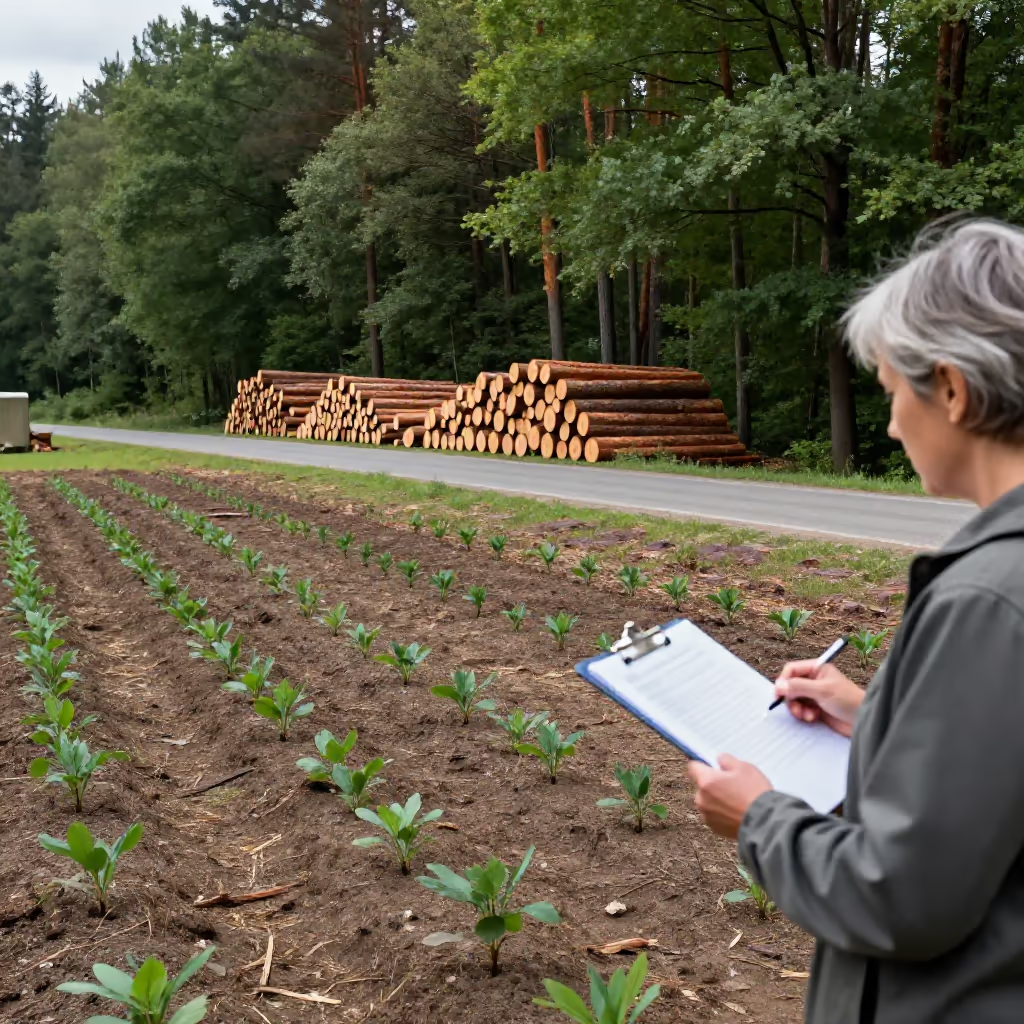
This meaning is a technical term from forestry. Outside this context, the word is practically never used this way.
EXAMPLE
Für schnell wachsende Fichten ist ein kurzer Umtrieb von etwa 80 Jahren üblich.
For fast-growing spruces, a short rotation period of about 80 years is common.
Compare with
near_synonym
Umtrieb vs Mühe
effort / trouble
'die Mühe' and 'der Umtrieb' can both have to do with effort. 'Mühe' is neutral or even positive when someone makes an effort to do something well. 'Umtrieb' more often means a lot of effort or hassle that seems annoying, excessive, or unnecessary. That is why you would tend to use 'Mühe' for a difficult but worthwhile task. If you feel that too much fuss or work is being made over something, 'Umtrieb' fits better.
Umtrieb
Für eine kurze Besprechung ist dieser ganze Umtrieb wirklich nicht nötig.
All this fuss really isn't necessary for a short meeting.
Mühe
Meine Mutter macht sich vor jeder Reise große Mühe mit der Planung.
My mother puts a lot of effort into planning before every trip.