


unbequem
uncomfortable
Physically not comfortable; causing a feeling of discomfort.
EXAMPLE
Dieser Stuhl ist sehr unbequem, ich kann nicht lange darauf sitzen.
This chair is very uncomfortable; I can't sit on it for long.
uncomfortable
Loading your saved state.
uncomfortable
Physically not comfortable; causing a feeling of discomfort.
Dieser Stuhl ist sehr unbequem, ich kann nicht lange darauf sitzen.
This chair is very uncomfortable; I can't sit on it for long.
uncomfortable
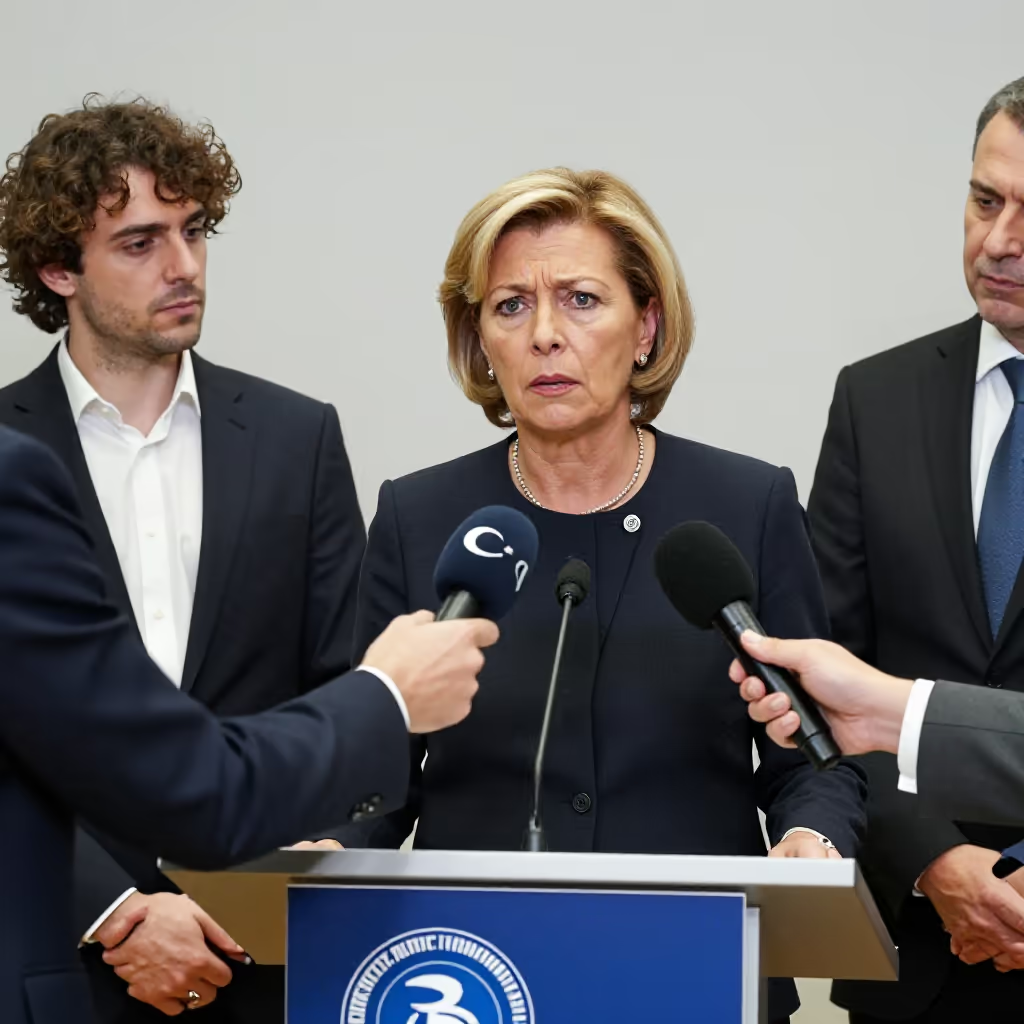
A situation, question, or person that is unpleasant, difficult, or troublesome because it raises problems or leads to confrontations.
Er stellt immer die unbequemen Fragen, die sonst niemand zu stellen wagt.
He always asks the uncomfortable questions that no one else dares to ask.

inconvenient
Unfavorable or unsuitable in terms of time or organization.
Ein Termin um sieben Uhr morgens ist für mich ziemlich unbequem.
An appointment at seven in the morning is pretty inconvenient for me.
'Unbequem' (uncomfortable) is the direct opposite of 'bequem' (comfortable). The prefix 'un-' is often used in German to express a negation or the opposite of an adjective or noun.
Nach der langen Reise fühlte sich jedes Bett unbequem an.
After the long journey, every bed felt uncomfortable.
You can recognize the exact meaning of 'unbequem' (uncomfortable / inconvenient) from the noun it describes. If it refers to an object, it is about comfort. If it refers to a situation or question, it means unpleasant or sensitive.
Die neuen Schuhe sind leider sehr unbequem.
Unfortunately, the new shoes are very uncomfortable.
To express for whom something is 'unbequem' (uncomfortable / inconvenient), the preposition 'für' (for) is used with the accusative. This construction is common in all meanings of the word.
Diese Lösung ist für alle Beteiligten unbequem.
This solution is inconvenient for everyone involved.
In the physical sense, 'unbequem' (uncomfortable) is often connected with furniture, clothing, or a particular posture. Typical examples are: 'ein unbequemer Stuhl' (an uncomfortable chair), 'unbequeme Schuhe' (uncomfortable shoes), or 'eine unbequeme Position' (an uncomfortable position).
Ich habe mir ein neues Kissen gekauft, weil das alte so unbequem war.
I bought a new pillow because the old one was so uncomfortable.
In a figurative sense, 'unbequem' (uncomfortable) often describes abstract things. Common combinations are: 'eine unbequeme Wahrheit' (an uncomfortable truth), 'eine unbequeme Frage' (an uncomfortable question), or 'eine unbequeme Stille' (an uncomfortable silence).
Als Journalist ist es seine Aufgabe, auch unbequeme Wahrheiten ans Licht zu bringen.
As a journalist, it is his job to bring uncomfortable truths to light as well.
When it comes to time or organization, 'unbequem' (inconvenient) is often combined with appointments or times. Typical examples are: 'ein unbequemer Termin' (an inconvenient appointment) or 'eine unbequeme Uhrzeit' (an inconvenient time).
Können wir uns später treffen? 18 Uhr ist eine unbequeme Zeit für mich.
Can we meet later? 6 p.m. is an inconvenient time for me.
embarrassing / meticulous
Both words can describe a difficult or stressful situation. Peinlich mainly refers to social embarrassment or humiliation, while unbequem points more to problems or a necessary confrontation. Use peinlich for shame and unbequem when a situation creates difficulties.

Es war unbequem, den Gastgeber vor allen Gästen auf seinen Fehler hinzuweisen.
It was uncomfortable to point out the host's mistake in front of all the guests.
Es war peinlich, vor allen Gästen um Hilfe bitten zu müssen.
It was embarrassing to have to ask for help in front of all the guests.