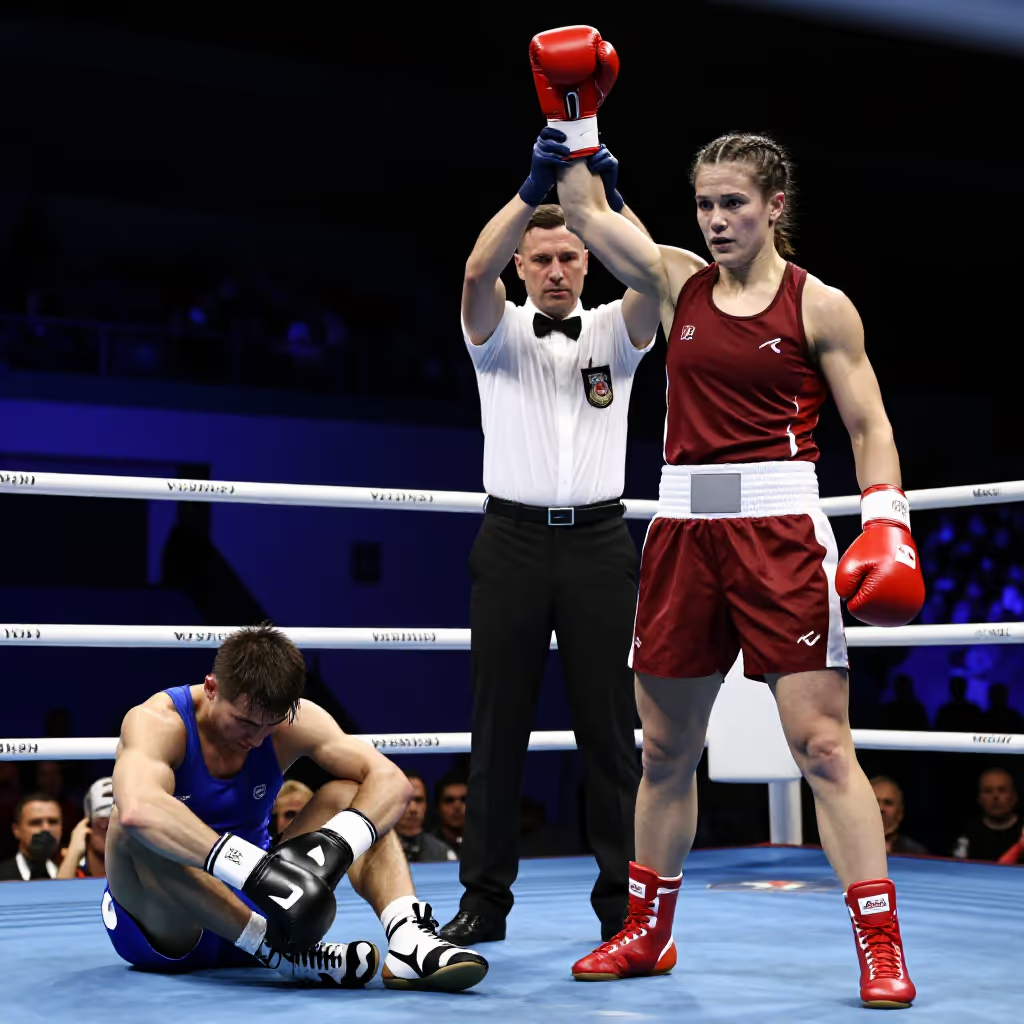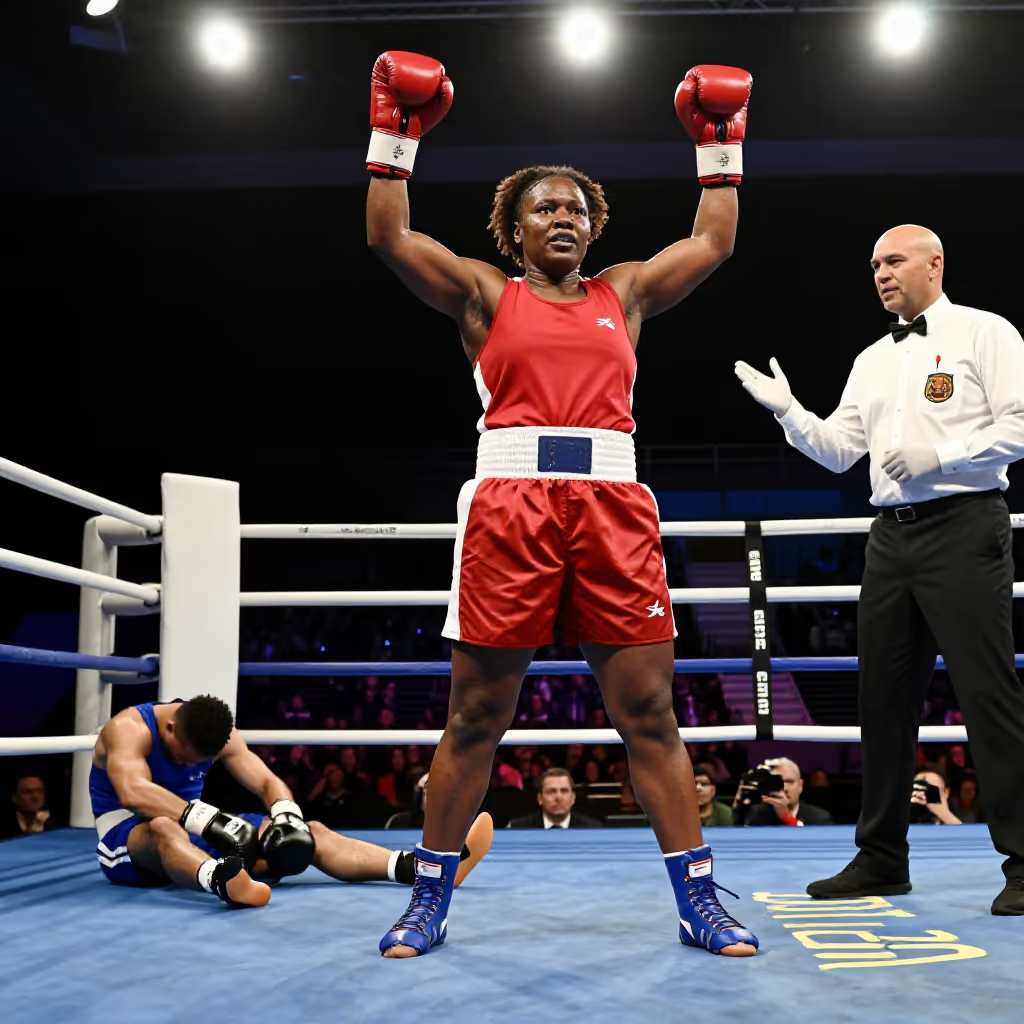
Impossible to defeat; so strong, superior, or good that one cannot win against the person or thing in a fight, competition, or conflict.
example
Nach zehn Siegen in Folge galt die Mannschaft als unbesiegbar.
After ten wins in a row, the team was considered invincible.

Usage tips
Word structure
The word is made up of three parts: the prefix 'un-' (not), the verb stem 'besieg-' (from 'besiegen' (to defeat)), and the ending '-bar' (can be ...). So it literally means: 'cannot be defeated'.
EXAMPLE
Der Held in der Legende galt für seine Feinde als unbesiegbar.
The hero in the legend was considered invincible by his enemies.
Context: fighting & competition
In its literal meaning, 'unbesiegbar' (invincible) is used for people or groups in a direct conflict or competition. Typical nouns are 'Gegner' (opponent), 'Mannschaft' (team), or 'Armee' (army).
EXAMPLE
Nach dem zehnten Sieg in Folge fühlte sich der Boxer unbesiegbar.
After his tenth win in a row, the boxer felt invincible.
Context: abstract forces
In the figurative meaning, the word describes abstract forces that one cannot control. It is often combined with nouns like 'Drang' (urge), 'Wunsch' (desire), 'Gefühl' (feeling), or 'Macht' (power).
EXAMPLE
Manchmal ist die Müdigkeit am Abend ein unbesiegbarer Gegner.
Sometimes the tiredness in the evening is an insurmountable opponent.
Compare with
synonym
unbesiegbar vs unschlagbar
unbeatable
'unschlagbar' and 'unbesiegbar' mean almost the same thing in many situations: someone or something is so strong or good that others cannot win. Both words work well in sports, games, competitions, or fights. 'unbesiegbar' sounds a little more directly related to fighting or victory. 'unschlagbar' can also be used more generally for very good performance. In this meaning, the words can often be used interchangeably.
unbesiegbar
Im Finale wirkte der Boxer ruhig und unbesiegbar.
In the final, the boxer seemed calm and invincible.
unschlagbar
Unsere Mannschaft war in dieser Saison fast unschlagbar.