

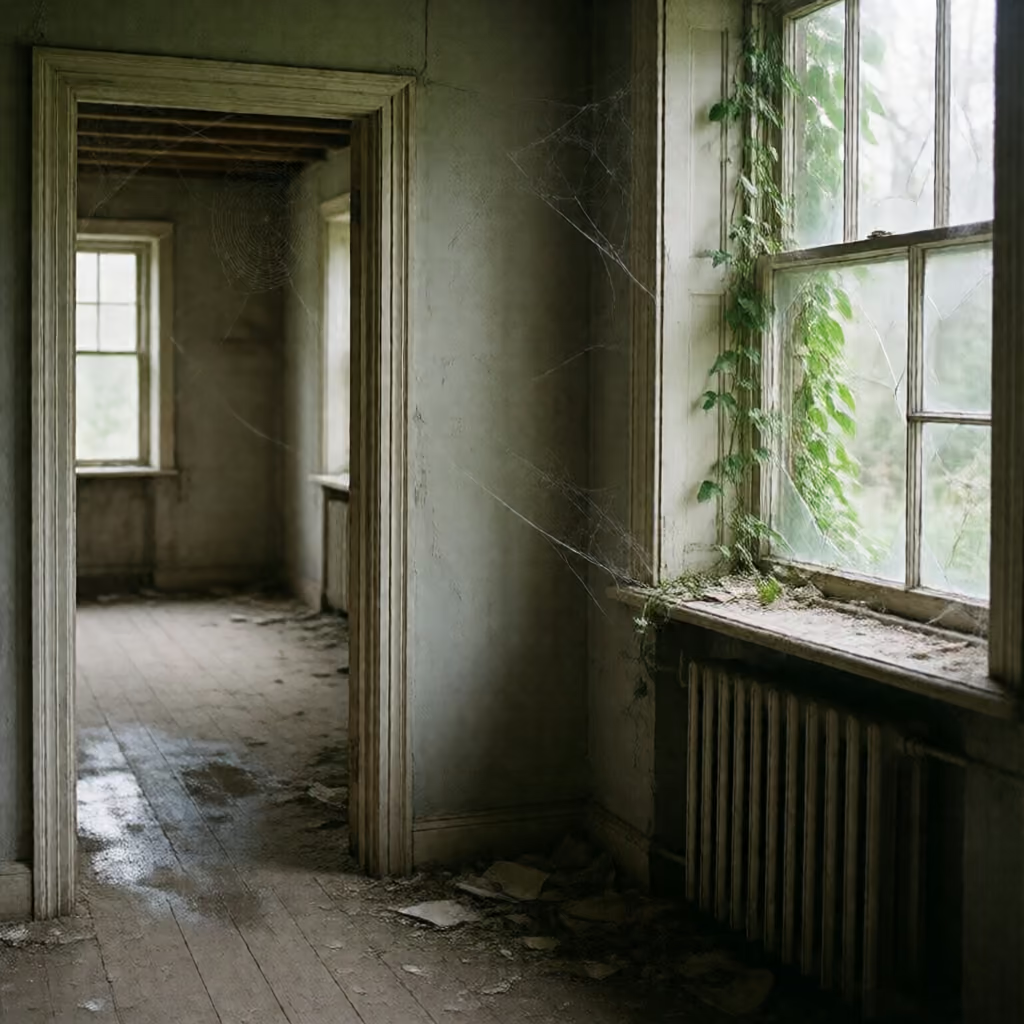
unbewohnt
uninhabited
Not inhabited by people, or not permanently inhabited.
EXAMPLE
Die Insel ist unbewohnt und nur mit dem Boot erreichbar.
The island is uninhabited and can only be reached by boat.
uninhabited
Loading your saved state.
uninhabited
Not inhabited by people, or not permanently inhabited.
Die Insel ist unbewohnt und nur mit dem Boot erreichbar.
The island is uninhabited and can only be reached by boat.
| basic form | unbewohnt |
|---|
| masc. | fem. | neut. | plural | |
|---|---|---|---|---|
| nom. | -e | -e | -e | -en |
| acc. | -en | -e | -e | -en |
| dat. | -en | -en | -en | -en |
| gen. | -en | -en | -en | -en |
Add the ending to unbewohnt.
| masc. | fem. | neut. | plural | |
|---|---|---|---|---|
| nom. | -er | -e | -es | -en |
| acc. | -en | -e | -es | -en |
| dat. | -en | -en | -en | -en |
| gen. | -en | -en | -en | -en |
Add the ending to unbewohnt.
| masc. | fem. | neut. | plural | |
|---|---|---|---|---|
| nom. | -er | -e | -es | -e |
| acc. | -en | -e | -es | -e |
| dat. | -em | -er | -em | -en |
| gen. | -en | -er | -en | -er |
Add the ending to unbewohnt.
'Unbewohnt' (uninhabited) consists of 'un-' and 'bewohnt' (inhabited). Here, the prefix 'un-' negates the meaning of 'bewohnt' (inhabited), creating the opposite quality.
Das abgelegene Tal ist seit vielen Jahren unbewohnt.
The remote valley has been uninhabited for many years.
'Unbewohnt' (uninhabited) is often used with geographical terms or words for structures, such as islands, houses, buildings, and areas.
Die Forscher untersuchten mehrere unbewohnte Inseln im Pazifik.
The researchers studied several uninhabited islands in the Pacific.
The adjective often follows 'sein' (to be) or 'bleiben' (to remain) and can also appear directly before a noun. It can thus describe the state of a place or modify a noun directly.
Die Hütte bleibt im Winter unbewohnt.
The cabin remains uninhabited in winter.
Wir erreichten eine unbewohnte Insel.
We reached an uninhabited island.