


unerlaubt
unauthorized
Not permitted; violating a rule or law.
EXAMPLE
Das Betreten des Geländes ist für Unbefugte unerlaubt.
Entering the premises is unauthorized for persons without permission.
unauthorized
Loading your saved state.
unauthorized
Not permitted; violating a rule or law.
Das Betreten des Geländes ist für Unbefugte unerlaubt.
Entering the premises is unauthorized for persons without permission.
The word is made up of the prefix 'un-' and 'erlaubt' (allowed). 'Erlaubt' is the past participle of 'erlauben' (to allow). So 'unerlaubt' literally means 'not allowed.'
Das Fotografieren in diesem Museum ist streng unerlaubt.
Taking photos in this museum is strictly unauthorized.
This word belongs to a formal, official style of language. It is often found in legal texts, on prohibition signs, or in house rules.
Auf dem Schild stand: „Unerlaubtes Betreten wird bestraft.“
The sign said: 'Unauthorized entry will be punished.'
'Unerlaubt' is very often used as an adverb to describe an action that violates a rule. Typical examples are 'unerlaubt parken' (to park illegally/without permission) or 'sich unerlaubt entfernen' (to leave without permission).
Er hat sein Auto unerlaubt im Halteverbot geparkt.
He parked his car illegally in the no-stopping zone.
illegal
Illegal and unerlaubt can both mean that something is not permitted. Illegal is appropriate only when a law has been violated. Unerlaubt is broader and also applies when something is prohibited merely by a private or institutional rule.
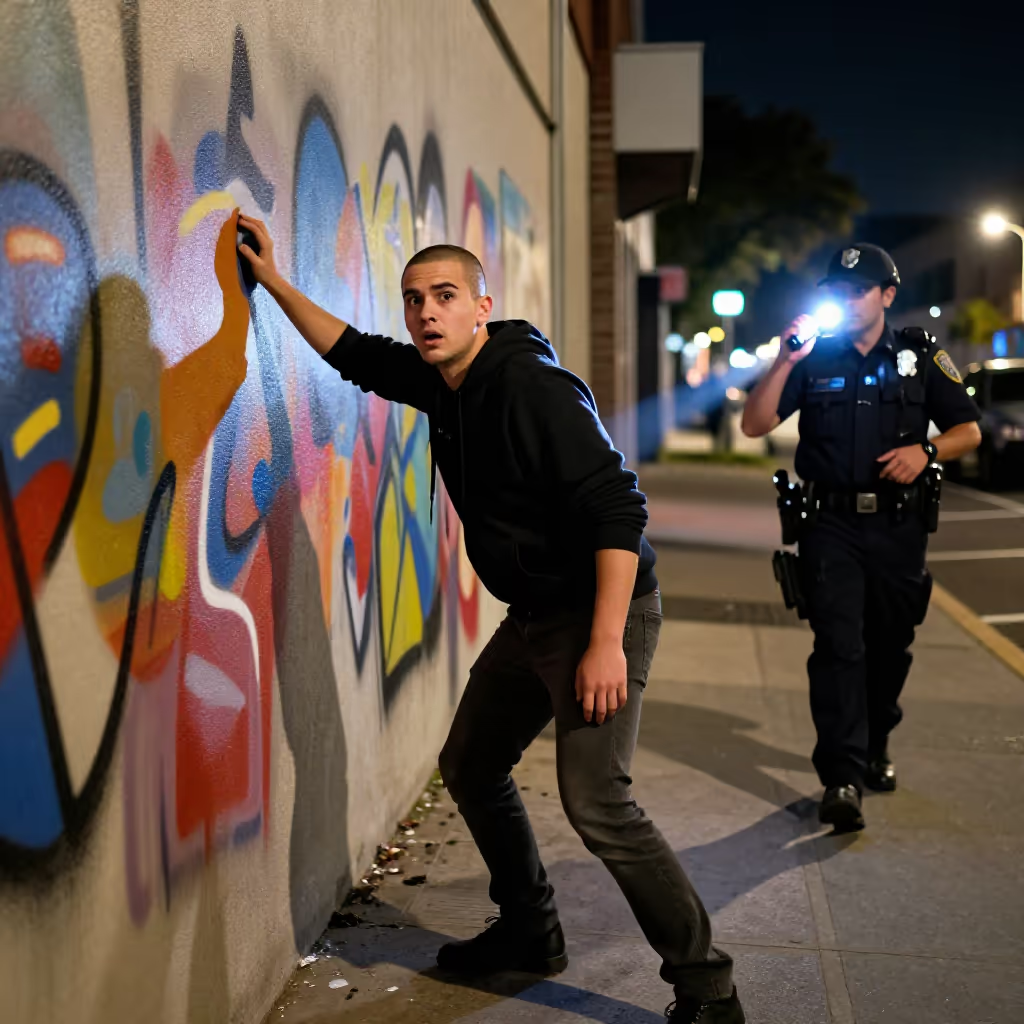
Das Fotografieren hier ist unerlaubt, weil der Hausherr es verboten hat.
Taking photographs here is unauthorized because the owner has prohibited it.
Das Fotografieren hier ist illegal, weil ein Gesetz es verbietet.
Taking photographs here is illegal because a law prohibits it.