


unfehlbar
infallible
Never making a mistake; absolutely certain and reliable. Often also used ironically or as an exaggeration.
Kein Mensch ist unfehlbar, jeder macht mal einen Fehler.
No person is infallible; everyone makes a mistake sometimes.

infallible
Loading your saved state.
infallible
Never making a mistake; absolutely certain and reliable. Often also used ironically or as an exaggeration.
Kein Mensch ist unfehlbar, jeder macht mal einen Fehler.
No person is infallible; everyone makes a mistake sometimes.

The word is logically structured: the prefix 'un-' negates, the stem comes from 'Fehler' (mistake/error), and the ending '-bar' means 'capable of' or 'possible'. 'Unfehlbar' therefore literally means 'not capable of making a mistake'.
Sein Gedächtnis für Zahlen scheint unfehlbar zu sein.
His memory for numbers seems to be infallible.
Besides being used for people, 'unfehlbar' (infallible) is often used for abstract things that are considered very reliable. Typical combinations are 'ein unfehlbarer Instinkt' (an infallible instinct), 'ein unfehlbares Gefühl' (an infallible feeling), or 'eine unfehlbare Methode' (an infallible method).
Sie hat einen unfehlbaren Geschmack für Mode.
She has infallible taste in fashion.
In everyday language, 'unfehlbar' (infallible) is often used in an exaggerated or ironic way to express that someone or something is, after all, not perfect. The emphasis and the context make the irony clear.
Mein Navi ist angeblich unfehlbar, aber heute hat es mich komplett falsch geleitet.
My GPS is supposedly infallible, but today it guided me completely the wrong way.
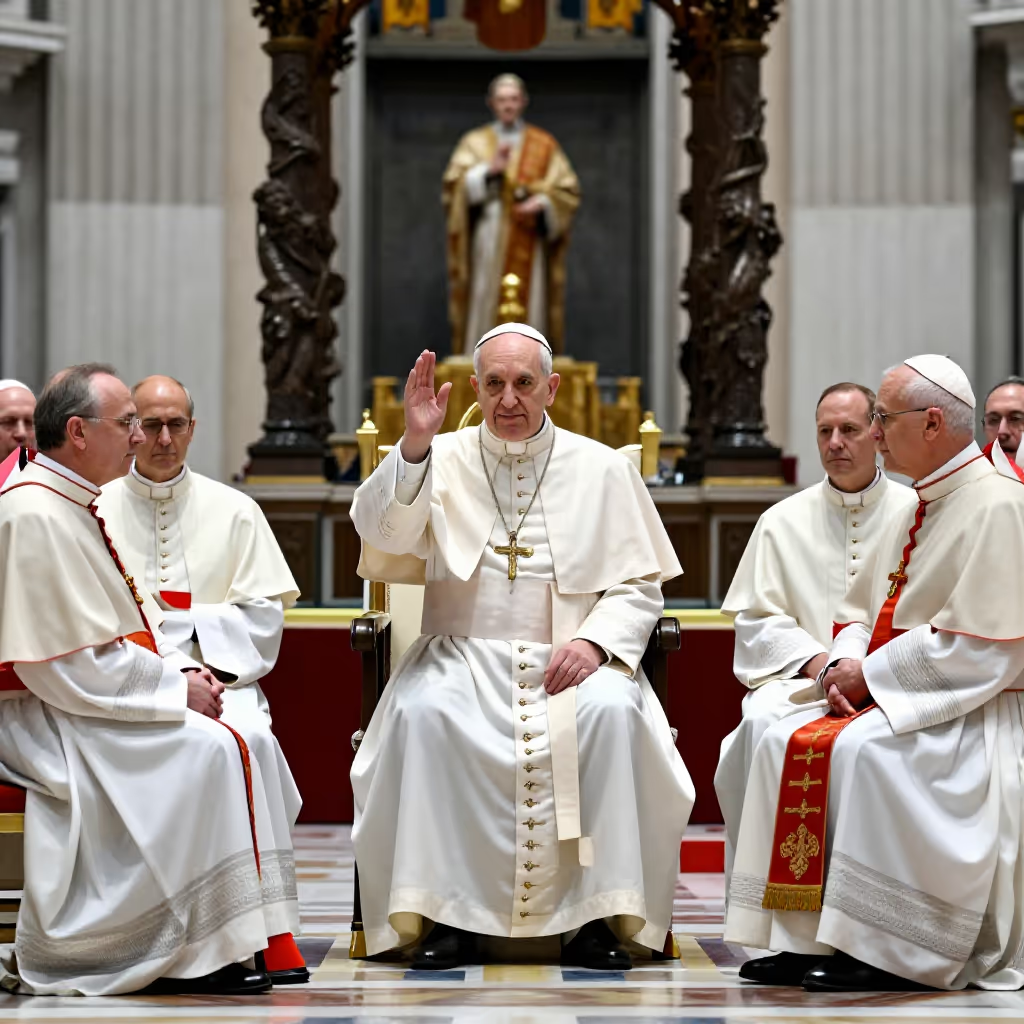
You can recognize the special theological meaning from the context. When 'Papst' (pope), 'Konzil' (council), 'Dogma' (dogma), or 'Glaubensfragen' (questions of faith) are mentioned, this very specific meaning is intended.
In der Theologie wird die Frage diskutiert, wann der Papst als unfehlbar gilt.
In theology, the question of when the pope is considered infallible is discussed.
sure / safe
'sicher' and 'unfehlbar' can both express that something is reliable. 'sicher' is the normal word when something works well or you can rely on it. 'unfehlbar' is much stronger: it means that someone or something makes no mistakes at all. That is why 'unfehlbar' often sounds exaggerated or ironic. Learners may confuse the words because both have to do with reliability. In most everyday situations, 'sicher' is more natural; 'unfehlbar' only fits when absolute freedom from error is meant.

Mein Nachbar spricht, als wäre seine Meinung unfehlbar.
My neighbor talks as if his opinion were infallible.
Die neue Methode ist sicher und spart viel Zeit.
The new method is reliable and saves a lot of time.