

ungarisch
Hungarian
Relates to the country of Hungary, its population, its language, or its culture.
EXAMPLE
Mein Lieblingsgericht ist ungarisches Gulasch mit viel Paprika.
My favorite dish is Hungarian goulash with lots of paprika.
Hungarian
Loading your saved state.
Hungarian
Relates to the country of Hungary, its population, its language, or its culture.
Mein Lieblingsgericht ist ungarisches Gulasch mit viel Paprika.
My favorite dish is Hungarian goulash with lots of paprika.
Adjectives ending in '-isch' that are derived from country names are declined like normal adjectives. The ending adapts to the noun in gender, case, and number.
Ich koche heute eine ungarische Suppe.
I'm making a Hungarian soup today.
Unlike adjectives ending in '-er' derived from place names, 'ungarisch' (Hungarian) is written in lowercase when it is used attributively before a noun.
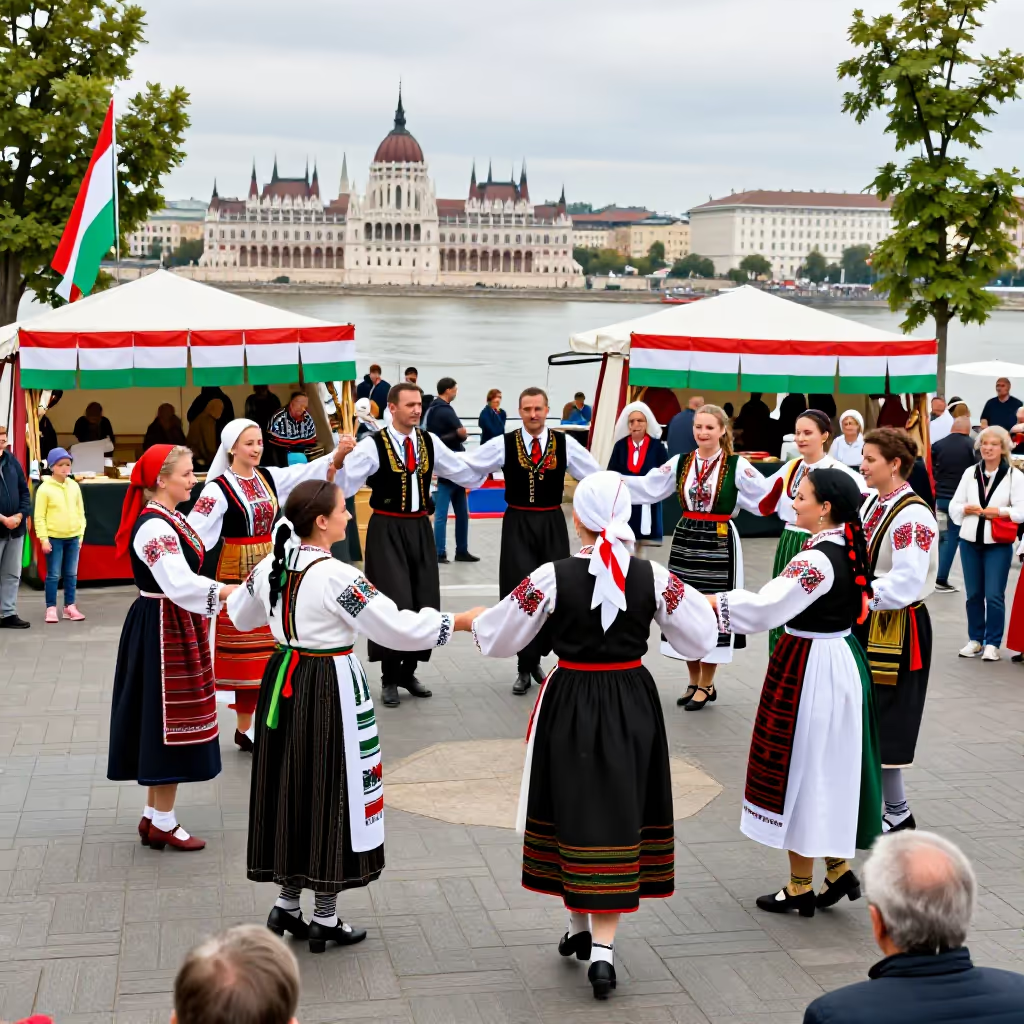
Die ungarische Flagge hat die Farben Rot, Weiß und Grün.
The Hungarian flag has the colors red, white, and green.
When 'ungarisch' (Hungarian) is used as the name of the language, it is capitalized and becomes a noun: 'das Ungarische' (Hungarian). People also often simply say 'Ich lerne Ungarisch' (I'm learning Hungarian).
Sie spricht fließend Ungarisch.
She speaks Hungarian fluently.