

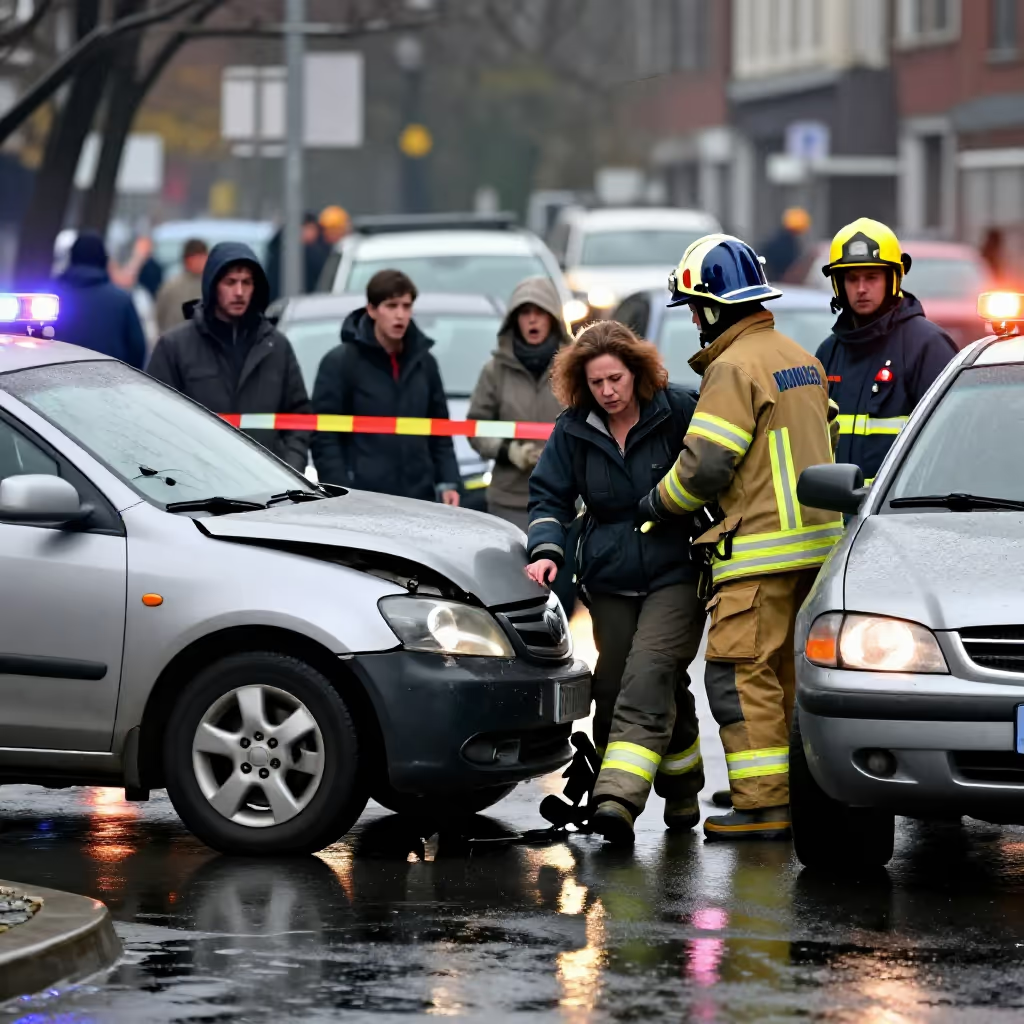
das Unglück
accident / disaster
A sudden, bad event involving great damage or suffering, such as an accident or a disaster.
Bei dem schweren Zugunglück gab es leider mehrere Tote.
Unfortunately, several people died in the serious train accident.

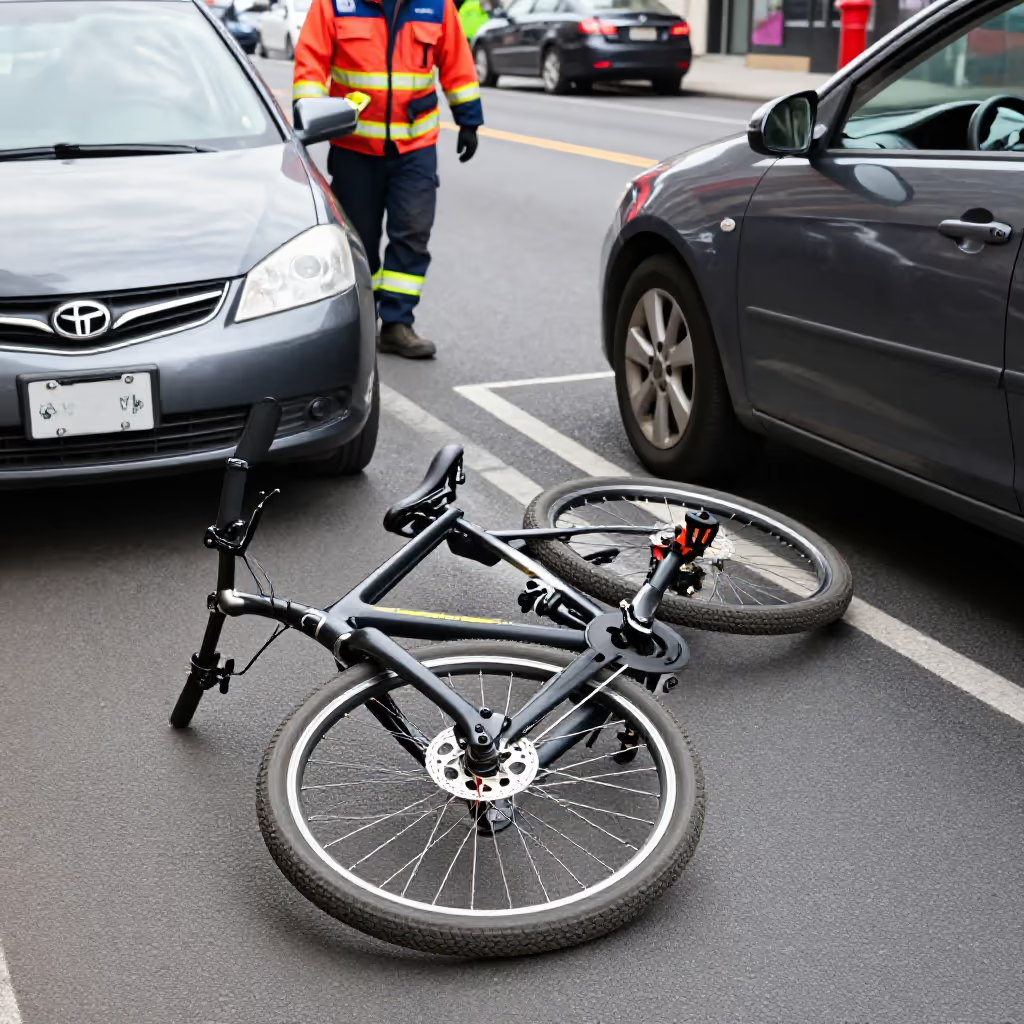
misfortune / accident
Loading your saved state.
accident / disaster
A sudden, bad event involving great damage or suffering, such as an accident or a disaster.
Bei dem schweren Zugunglück gab es leider mehrere Tote.
Unfortunately, several people died in the serious train accident.

The word 'Unglück' is the direct opposite of 'das Glück' (luck/happiness). The prefix 'un-' negates the base word and can refer both to 'Glück haben' (to be lucky) as bad luck and to 'glücklich sein' (to be happy) as sorrow.
Er hatte das Unglück, seinen Zug zu verpassen.
He had the misfortune of missing his train.
When 'Unglück' means a countable event such as an accident, it can appear in the plural and have an article. If it refers to the general state of bad luck or sorrow, it is usually uncountable and used without an article.
In den Nachrichten wurde von einem schweren Unglück berichtet.
The news reported a serious accident.
When 'Unglück' describes an event, it is often used with the verbs 'geschehen' (to happen) or 'passieren' (to happen). People also speak of the 'Unglücksort' (accident site) or say that an accident 'Opfer fordert' (claims victims).
Das Unglück geschah am frühen Morgen auf der Autobahn.
The accident happened early in the morning on the highway.
There are well-known proverbs with 'Unglück'. 'Ein Unglück kommt selten allein' means that several bad things often happen in quick succession.
Zuerst verlor er seinen Job und dann wurde sein Auto gestohlen. Ein Unglück kommt selten allein.
First he lost his job, and then his car was stolen. Misfortunes never come singly.
happiness / luck
'das Glück' and 'das Unglück' can be opposites, but they do not always fit in the same situations. 'Glück' can be a beautiful feeling or a lucky coincidence. 'Unglück' often means a terrible event, such as an accident, or a serious state of suffering. Learners may want to use 'Unglück' as the normal opposite of every use of 'Glück'. In everyday language, however, people usually say 'Pech' for small unlucky coincidences. 'Unglück' sounds more serious and heavier.

Nach dem Unglück auf der Straße kam schnell ein Krankenwagen.
After the accident on the road, an ambulance arrived quickly.
Nach der guten Nachricht war das Glück in der ganzen Familie groß.
After the good news, there was great happiness throughout the whole family.