

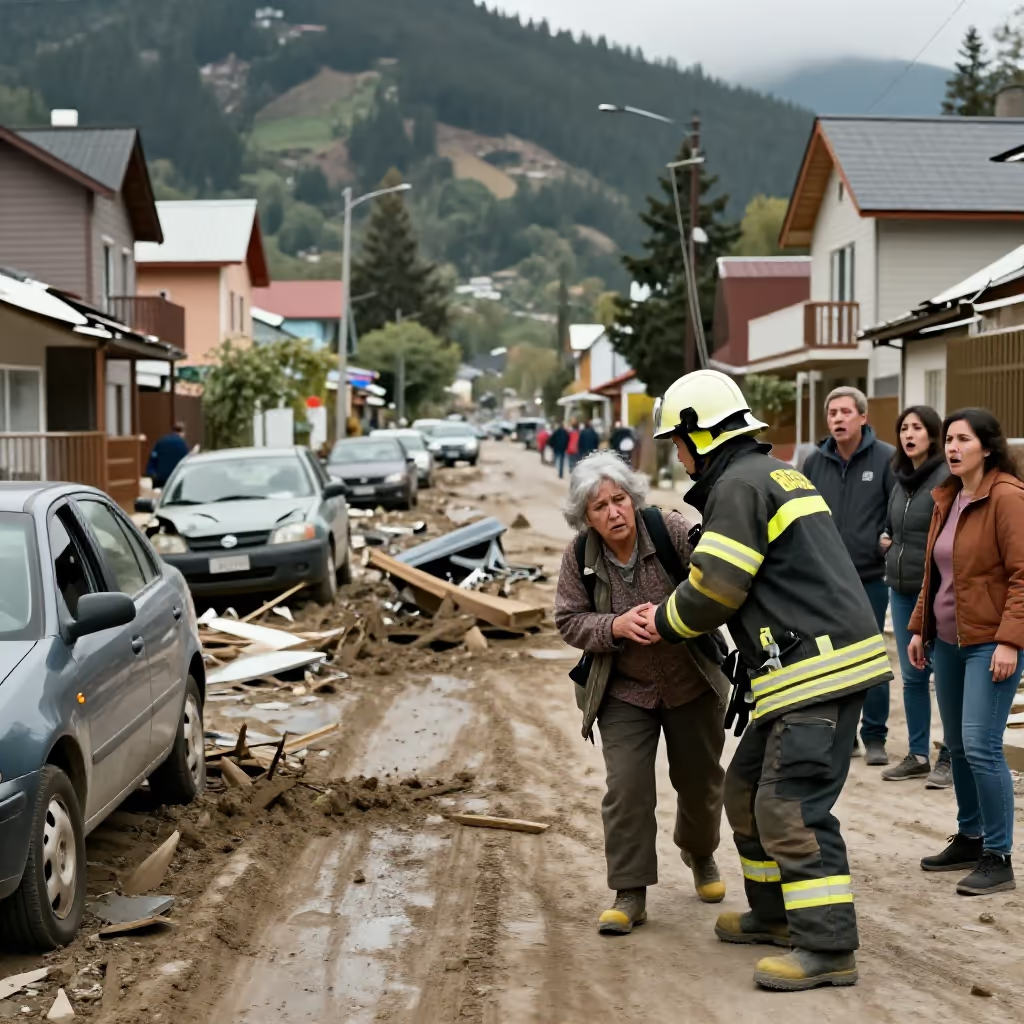
das Unheil
calamity
A very great misfortune, a disaster, or an event with serious consequences.
EXAMPLE
Der schwere Hagelsturm hat in der Landwirtschaft großes Unheil angerichtet.
The severe hailstorm caused great calamity in agriculture.
calamity / disaster
Loading your saved state.
calamity
A very great misfortune, a disaster, or an event with serious consequences.
Der schwere Hagelsturm hat in der Landwirtschaft großes Unheil angerichtet.
The severe hailstorm caused great calamity in agriculture.
The word consists of the negative prefix 'Un-' and the noun 'Heil' (good fortune/well-being). 'Unheil' (calamity/disaster) is therefore literally the opposite of good fortune and describes a great misfortune.
Viele Menschen fürchteten, dass der Krieg neues Unheil über das Land bringen würde.
Many people feared that the war would bring new calamity upon the country.
'Unheil' (calamity/disaster) is an uncountable noun and is used almost exclusively in the singular. You do not say 'vielen Unheilen', but rather 'viel Unheil' (much calamity/a lot of harm).
Die Flut hat viel Unheil verursacht.
The flood caused a lot of harm.
'Unheil' (calamity/disaster) is often combined with certain verbs that describe a negative action. Typical combinations are 'Unheil anrichten' (to cause harm), 'Unheil stiften' (to stir up trouble/cause harm), or 'Unheil bringen' (to bring calamity).
Mit seinen Lügen hat er nur Unheil gestiftet.
With his lies, he only caused harm.
catastrophe
Katastrophe and Unheil can both point to very serious consequences. Katastrophe refers more to the specific extreme event, while Unheil can also mean a destructive threat or the consequences that are looming. Katastrophe is usually more suitable when the event has already occurred; Unheil can also be used for an impending danger.
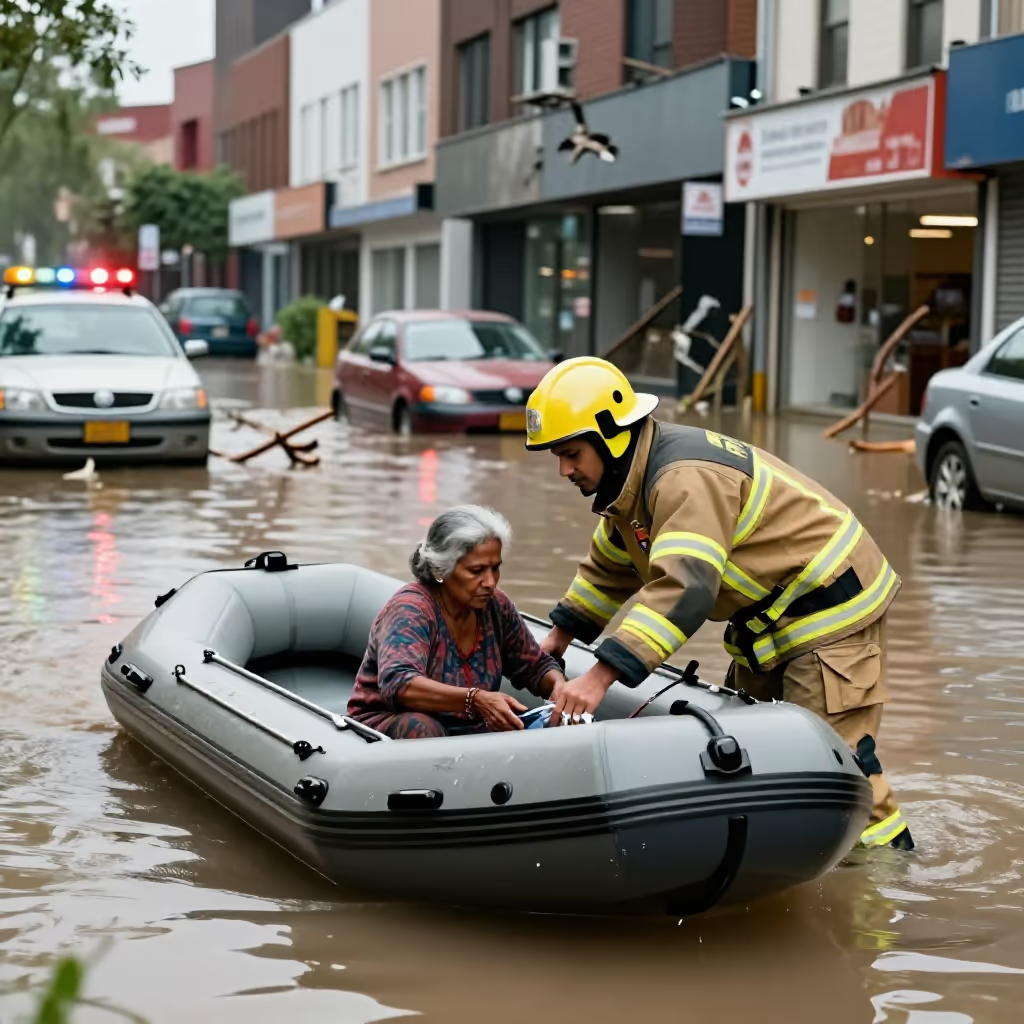
Die dunklen Wolken kündigten für das Dorf großes Unheil an.
The dark clouds heralded great calamity for the village.
Nach dem Erdbeben bezeichneten viele Menschen die Lage als Katastrophe.
After the earthquake, many people described the situation as a catastrophe.