

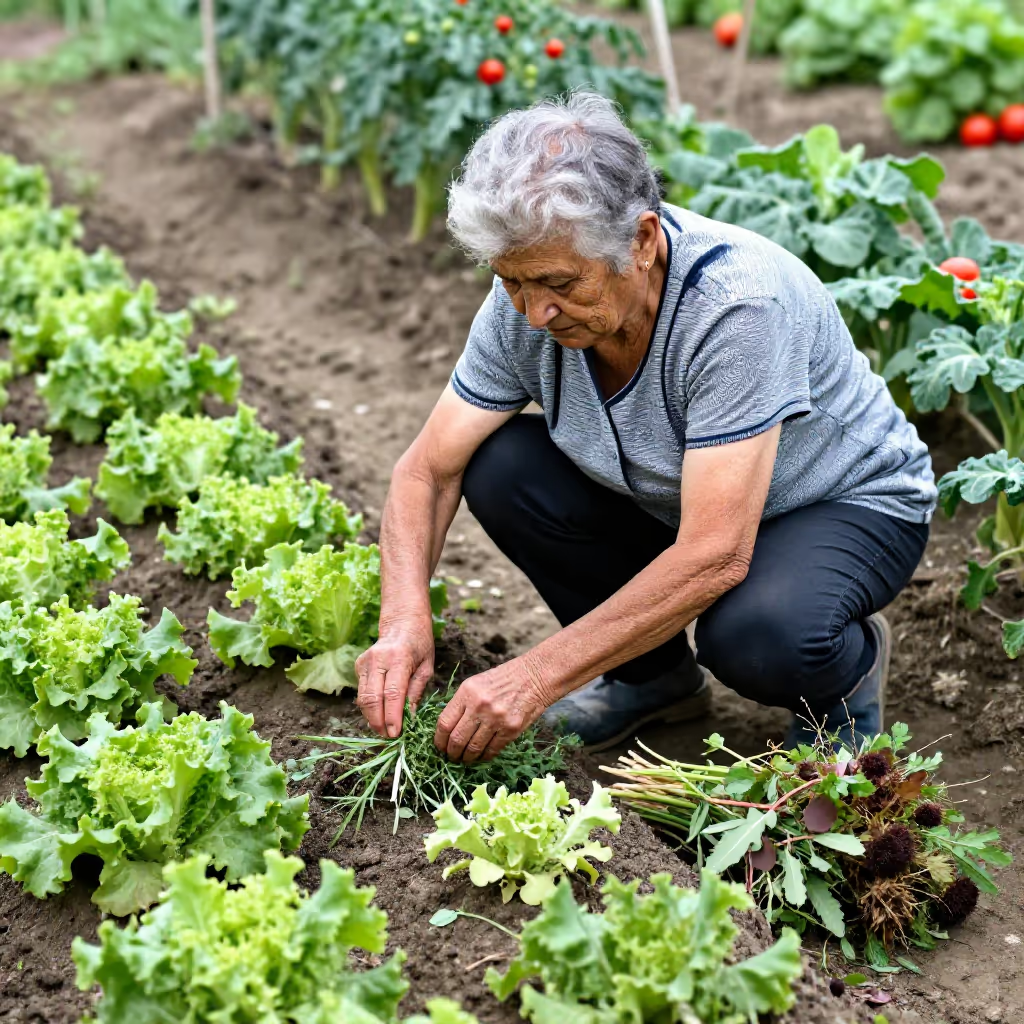
A wild-growing plant that is unwanted in a place because it competes with cultivated plants for nutrients, water, and light.
example
Ich muss am Wochenende unbedingt das Unkraut im Garten jäten.
I absolutely have to weed the garden this weekend.
Usage tips
Word structure
The prefix 'Un-' has a negative meaning here, similar to in 'Unwetter' (severe weather). So 'Unkraut' (weed) is literally a 'bad herb'—a plant that is unwanted in a particular place.
EXAMPLE
Überall zwischen den Rosen wächst Unkraut.
Weeds are growing everywhere between the roses.
Use in the singular
'Unkraut' (weed) is almost always used in the singular as a collective term for all unwanted plants, even when it refers to many individual plants. A plural form is very rare.
EXAMPLE
Der ganze Garten ist voller Unkraut.
The whole garden is full of weeds.
Fixed expression
The proverb 'Unkraut vergeht nicht' (weeds never die) is often said jokingly about people or things that are very resilient and tough, or that you cannot get rid of.
EXAMPLE
Er ist schon wieder auf den Beinen? Tja, Unkraut vergeht nicht!
He's already back on his feet? Well, weeds never die!
Typical verbs
In connection with gardening, the verbs 'jäten' (to weed), 'zupfen' (to pull), or 'entfernen' (to remove) are often used together with 'Unkraut' (weed).
EXAMPLE
Wir müssen dringend das Unkraut im Gemüsebeet zupfen.
We urgently need to pull the weeds in the vegetable bed.
Compare with
confusable
Unkraut vs Schädling
pest
'das Unkraut' and 'der Schädling' can both be a nuisance in the garden or in agriculture, but they do not mean the same thing. 'Unkraut' is an unwanted wild-growing plant, for example among vegetables or on a path. A 'Schädling' is a living organism that causes damage, often an insect, another animal, or even a microorganism. The words can be confused because both can harm plants. Remember: 'Unkraut' is itself a plant in the wrong place; a 'Schädling' attacks or damages plants, animals, or materials.
Unkraut
Nach dem Regen wächst das Unkraut im Garten besonders schnell.
After the rain, the weeds in the garden grow especially quickly.
Schädling
Der Schädling hat viele Blätter der Tomatenpflanze angefressen.
The pest has eaten many of the tomato plant's leaves.