


unschön
unpleasant
Unpleasant, unfortunate, or unfair. Often refers to situations, behavior, or events.
Es gab eine unschöne Szene, als die beiden anfingen, sich zu streiten.
There was an unpleasant scene when the two of them started arguing.
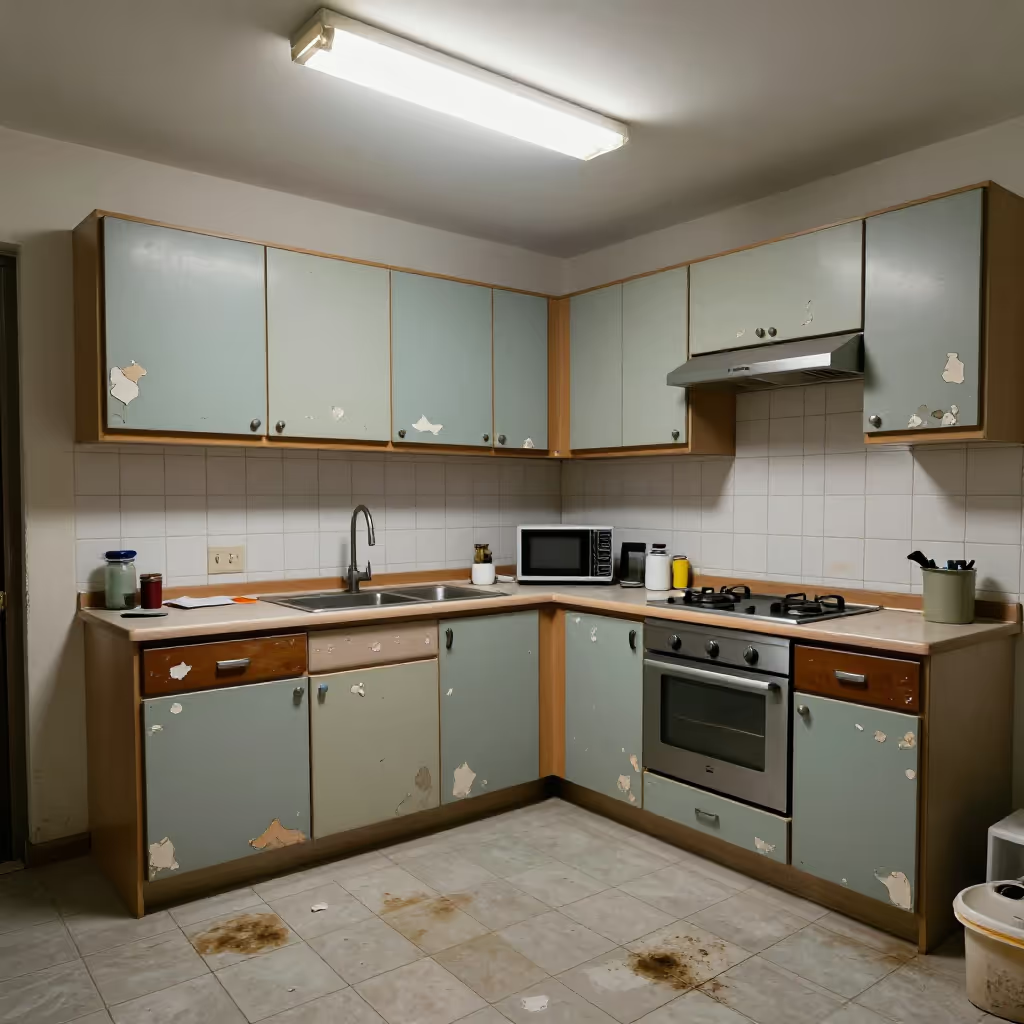

unpleasant / unattractive
Loading your saved state.
unpleasant
Unpleasant, unfortunate, or unfair. Often refers to situations, behavior, or events.
Es gab eine unschöne Szene, als die beiden anfingen, sich zu streiten.
There was an unpleasant scene when the two of them started arguing.

The word is simply made up of the negating prefix 'un-' and the adjective 'schön' (beautiful). So the literal meaning is 'not beautiful'.
Nach dem Regen war ein unschöner Schmutzrand am Auto zu sehen.
After the rain, an unattractive ring of dirt could be seen on the car.
The meaning depends on whether the word is used literally or figuratively. If it refers to the appearance of things, it means 'ugly'. If it refers to situations, behavior, or events, it means 'unpleasant' or 'unfortunate'.
Der unschöne Fleck auf dem Teppich geht nicht mehr raus.
The unattractive stain on the carpet won't come out anymore.
When 'unschön' is used for a situation, it is often an understatement (litotes). It describes a negative event in a restrained, almost formal way.
Es kam zu einer unschönen Auseinandersetzung zwischen den Kollegen.
There was an unpleasant confrontation between the colleagues.
beautiful / nice
'schön' and 'unschön' are opposites when talking about appearance or an experience. You say 'schön' when something is pleasant, enjoyable, or pretty. You say 'unschön' when something is unpleasant, unfortunate, or unattractive. 'unschön' often sounds a bit milder than 'hässlich' (ugly) and is used especially for situations or behavior.

Seine laute Kritik vor allen Kollegen war ziemlich unschön.
His loud criticism in front of all his colleagues was pretty unpleasant.
Der Spaziergang am See war besonders schön.
The walk by the lake was especially nice.