

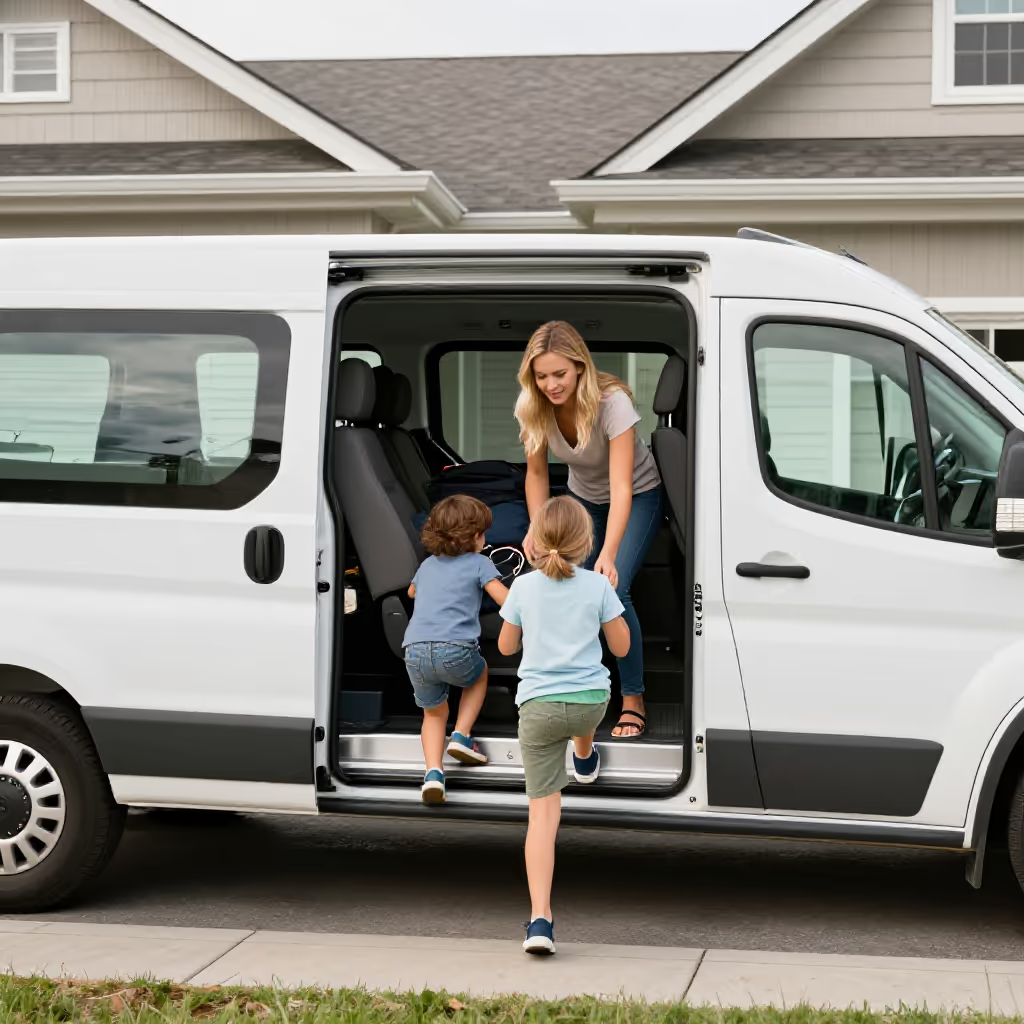
A motor vehicle that is larger than a passenger car and designed to transport several people (MPV/minivan) or goods (small delivery van).
example
Als die Familie größer wurde, kauften sie sich einen Van mit sieben Sitzen.
When the family grew, they bought a van with seven seats.
Usage tips
English loanword
The word 'Van' (van) is a direct loanword from English (an Anglicism). It is used in German with the same meaning and a very similar pronunciation.
EXAMPLE
Wörter wie 'Job' oder 'Van' sind heute ganz normal im Deutschen.
Words like 'Job' (job) or 'Van' (van) are completely normal in German today.
Typical contexts
A 'Van' (van) usually refers either to a large family car ('Familienvan', family van) or to a small delivery vehicle for goods ('Kleintransporter', small delivery van). The context makes clear which type is meant.
EXAMPLE
Für den Umzug haben wir einen Van gemietet.
We rented a van for the move.
Typical verbs
Common verbs used with 'Van' (van) are 'einen Van fahren' (to drive a van), 'einen Van mieten' (to rent a van), or 'sich einen Van kaufen' (to buy oneself a van).
EXAMPLE
Er fährt jeden Tag mit seinem Van zur Arbeit.
He drives to work in his van every day.
Compare with
confusable
Van vs Bus
bus
'der Van' and 'der Bus' are both vehicles in which several people can ride. A 'Van', however, is usually a larger car for a family, a group, or also for smaller transports. A 'Bus' is much larger and often runs as public transport on a fixed route. The words can be confused because both offer more space than a normal car. For city traffic, stops, and timetables, you say 'Bus'. For a private or rented vehicle for a few people, 'Van' fits better.
Van
Für den Ausflug mietet Greta einen Van, damit alle Taschen hineinpassen.
Greta rents a van for the trip so that all the bags will fit inside.
Bus
Der Bus zur Innenstadt hält direkt vor dem Bahnhof.
The bus to the city center stops right in front of the train station.