


vorne
at the front
Indicates a position at the front side or at the beginning of something.
EXAMPLE
Im Bus sitze ich am liebsten ganz vorne.
On the bus, I like sitting right at the front best.
at the front / forward
Loading your saved state.
at the front
Indicates a position at the front side or at the beginning of something.
Im Bus sitze ich am liebsten ganz vorne.
On the bus, I like sitting right at the front best.
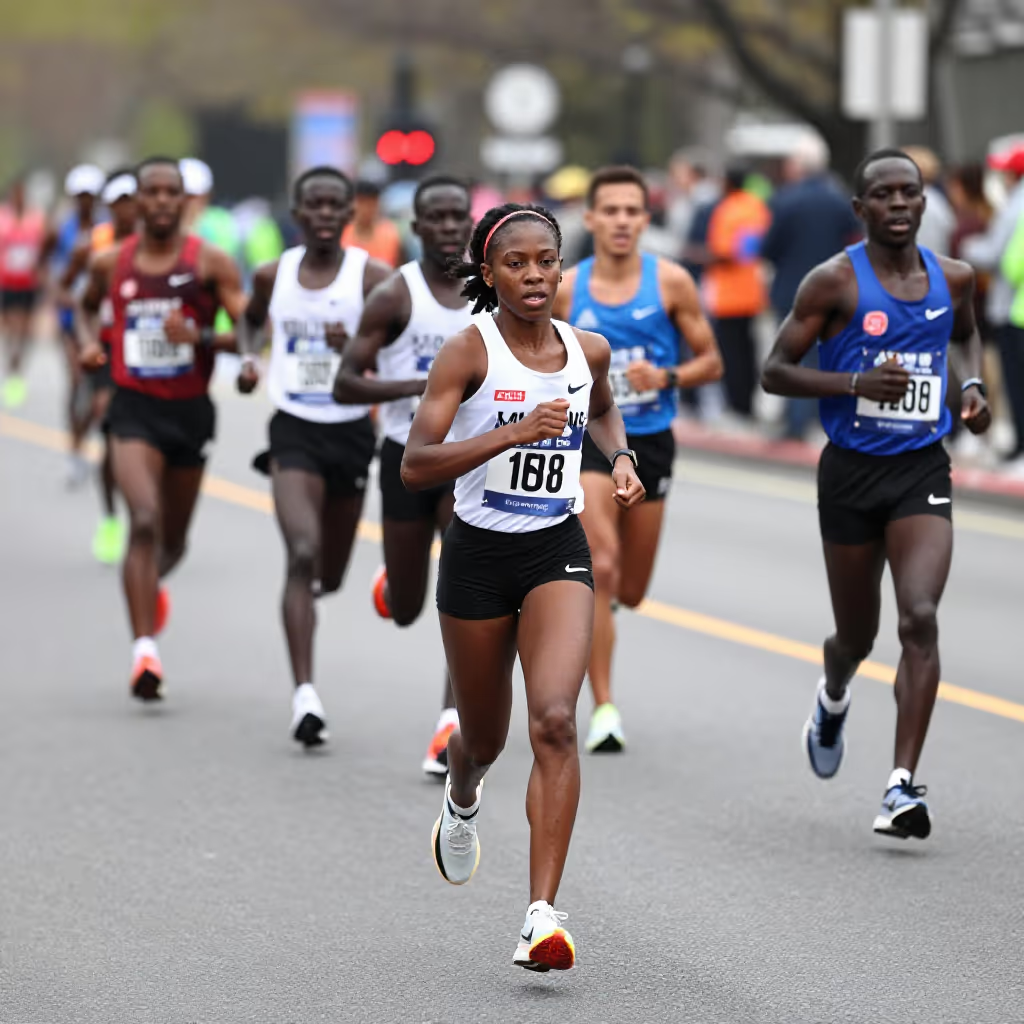
ahead
Describes a leading or frontmost position in a competition, ranking, or development.
Unsere Mannschaft liegt in der Tabelle ganz vorne.
Our team is right at the top of the table.

from the beginning
Means to start something over again from the beginning.
Der Plan hat nicht funktioniert, wir müssen noch einmal von vorne anfangen.
The plan didn't work; we have to start over from the beginning.

forward
Expresses movement toward the front or into the future.
Nach der Krise ist es wichtig, wieder positiv nach vorne zu schauen.
After the crisis, it is important to look forward positively again.
The adverb 'vorne' (at the front) describes a static position. For movement toward the front, the expression 'nach vorne' (forward) is used. This distinction is important for forming correct sentences.
Bitte stellen Sie sich ganz vorne an.
Please stand right at the front.
'Vorne' (at the front) is part of important fixed expressions. 'Von vorne' (from the beginning) means 'from the start' and is often used with verbs like 'anfangen' (to start) or 'beginnen' (to begin). 'Nach vorne' (forward) describes movement or a positive future orientation.
Ich habe alles falsch gemacht, ich muss noch einmal von vorne anfangen.
I did everything wrong; I have to start over from the beginning.
When 'vorne' (ahead/at the front) is used in the context of sports, competitions, or rankings, it means 'at the top' or 'in the lead'. Watch for words like 'Tabelle' (table/standings), 'Rennen' (race), or 'Liga' (league).
Mit diesem Sieg liegt die Mannschaft in der Liga wieder ganz vorne.
With this victory, the team is once again right at the top of the league.
The expression 'nach vorne' (forward) can describe literal movement. Very often, however, it is also used figuratively and then means being optimistic or future-oriented.
Nach dem schweren Jahr blickt die Firma nun wieder zuversichtlich nach vorne.
After the difficult year, the company is now looking forward with confidence again.
ahead / in advance
Vorne and voraus can describe a leading position in a competition. Vorne refers to a position toward the front of the field. Voraus more clearly indicates a spatial lead over others; the size of the lead is often mentioned as well.

Mia läuft im Feld ganz vorne.
Mia is running at the very front of the field.
Mia läuft den anderen zehn Meter voraus.
Mia is running ten meters ahead of the others.