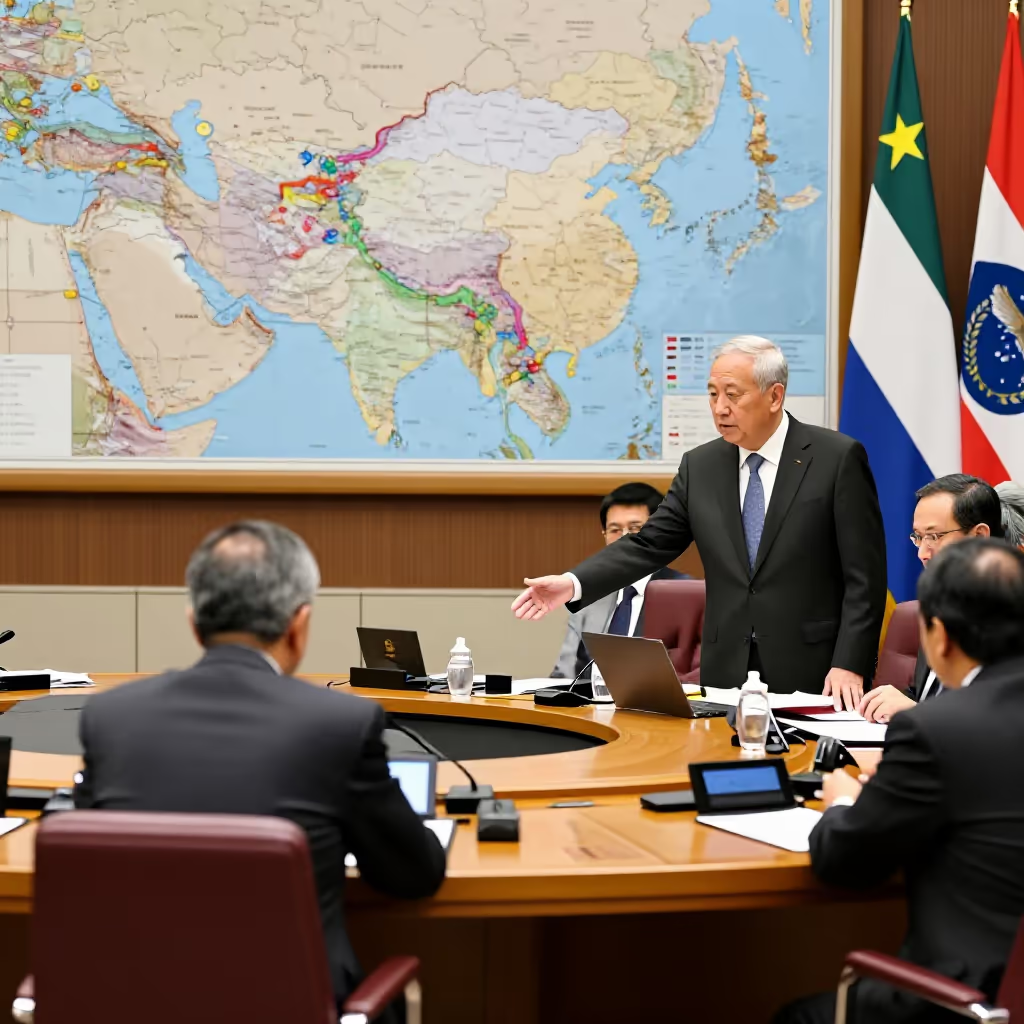
In the Middle Ages, a person, usually a nobleman, who received land or an office from a feudal lord and in return was obligated to loyalty and military support.
example
Der Herzog war ein mächtiger Vasall des Königs.
The duke was a powerful vassal of the king.
Usage tips
Sentence structure
The dependence of a vassal is usually expressed with the preposition 'von' and the dative. In more formal or historical texts, the genitive is also used.
EXAMPLE
Der Graf war ein treuer Vasall von seinem König.
The count was a loyal vassal of his king.
Context clue
The context makes the meaning clear: if texts talk about the Middle Ages, kings, or fiefs, the historical meaning is meant. If the topic is modern politics, economics, or power relationships, it is the figurative, derogatory meaning.
EXAMPLE
Im Geschichtsunterricht lernten wir über die Pflichten der Vasallen.
In history class, we learned about the duties of vassals.
Cultural context
The word is deeply rooted in the European feudal system of the Middle Ages. A vassal received protection and land from a feudal lord and in return swore loyalty and military allegiance to him.
EXAMPLE
Ein Vasall musste seinem Herrn im Kriegsfall mit Soldaten zur Seite stehen.
A vassal had to support his lord with soldiers in the event of war.
Negative meaning
In its figurative meaning, 'Vasall' (vassal) or 'Vasallenstaat' (vassal state) is always negative and critical. It expresses that a person or state has no sovereignty of its own and is completely dependent on another power.
EXAMPLE
In seiner Rede bezeichnete er das Nachbarland abfällig als Vasallenstaat.
In his speech, he disparagingly called the neighboring country a vassal state.
Compare with
near_synonym
Vasall vs Satellit
satellite
'der Satellit' and 'der Vasall' can both express dependence on a stronger power in a figurative sense. 'Satellit' is often used for states, organizations, or people that are strongly controlled by a larger power. 'Vasall' sounds more strongly derogatory and emphasizes that someone has almost no decision-making power of their own. The word comes historically from the Middle Ages, but today it is also used figuratively. In political or critical texts, 'Vasall' can sound harsher than 'Satellit'.
Vasall
In der Debatte nannte der Politiker das Nachbarland einen Vasallen der Großmacht.
In the debate, the politician called the neighboring country a vassal of the great power.
Satellit
Der kleine Staat galt lange als Satellit einer größeren Macht.
The small state was long considered a satellite of a greater power.